

A Guide to Choosing Your 2 Person Backpacking Tent
A 2-person backpacking tent is more than another piece of gear—it’s a portable shelter, a quiet refuge to recharge under the stars. These tents often find a gentle balance between space, weight, and comfort, making them a wonderful choice for shared adventures or solo trips where a little extra room feels welcome.
We’re here to help you walk through the process and find a shelter that feels right for the way you explore.
Your Quiet Place in the Wild
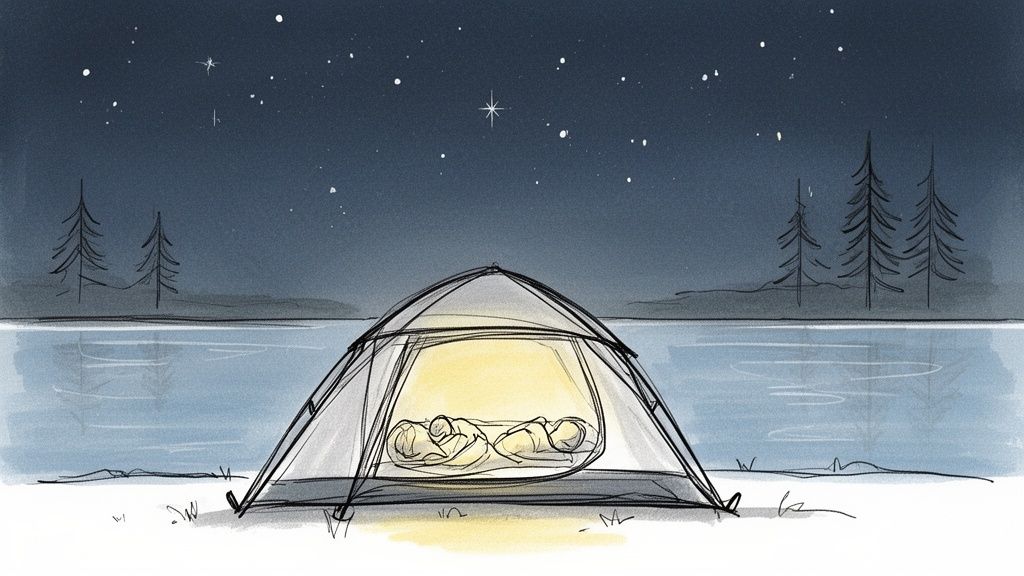
Choosing a backpacking tent often starts with a feeling, not a list of features. It’s about picturing your own quiet space in nature—a reliable shelter from wind and rain, a front-row seat to the sunrise, and a peaceful spot to rest after a long day on the trail. Your tent can be the heart of your camp, a small beacon of warmth and familiarity in the wild.
This guide is meant to accompany you through that process. We believe finding the right tent is about connecting with your personal style of adventure. It can be the key that unlocks shared experiences and memories that stay with you long after you’ve packed up.
Finding Your Balance
There’s a reason shelters designed for two are such a common sight on the trail. A well-designed 2 person backpacking tent strikes a thoughtful balance, offering enough room to be comfortable without adding unnecessary weight. That makes it a versatile choice for many kinds of trips.
- For couples and friends: It’s a shared space to rest and connect at the end of the day.
- For the solo adventurer: It becomes a spacious retreat with plenty of room to organize gear and stretch out.
Our intention is to help you feel supported as you consider your options. This isn’t about finding a "perfect" tent, but about finding the right companion for your outdoor story—a shelter that feels right for you.
Preparing for Your Journey
Of course, creating a safe and comfortable haven in the wild involves more than just the tent. Thoughtful preparation and having the right equipment can bring a welcome sense of peace of mind. For anyone building a reliable setup, understanding the essential survival gear and emergency kit items is a helpful next step.
Throughout this guide, we’ll explore the details that matter, from what “two-person capacity” actually means in the real world to the materials that help keep you dry and comfortable. We hope to help you sort through it all, so you can find a tent that lets you return to the outdoors on your own terms.
Understanding What 'Two-Person' Really Means
The "2-person" label on a backpacking tent can be thought of as a gentle suggestion rather than a strict rule. It’s a bit like a recipe that says it serves two—while true, the actual experience depends on personal space and the situation. This is where we can look past the label and into the reality of sharing a shelter in the backcountry.
This is all about translating abstract numbers into a feeling of comfort and peace of mind. A tent’s capacity is more than its label; it’s about finding a space that truly supports your style of adventure, whether that means a snug fit for two or a spacious retreat for one.
From Floor Plan to Felt Space
The true measure of a tent’s capacity often lies in its dimensions. The floor area, usually measured in square feet, is the most direct indicator of livable space. A standard backpacking sleeping pad is about 20 inches wide, so two pads side-by-side need at least 40 inches of floor width. Many lightweight two-person tents land somewhere between 45 and 50 inches wide, leaving a little room to spare.
A helpful way to get a real feel for this is to mark out the tent’s floor dimensions with tape at home. Lay your sleeping pads down and see how everything fits. This simple exercise can reveal whether a space will feel cozy and connected or just a bit too close for comfort.
A tent's character is shaped by more than its footprint. The slope of the walls and the peak height determine how much usable volume you have for sitting up, changing clothes, or simply waiting out a rainstorm without feeling boxed in.
Cozy for Two or a Palace for One
The ideal capacity of a 2 person backpacking tent is deeply personal. It depends on who you're sharing it with and what you plan to bring inside.
- A Couple or Close Friends: For many partners, the snug dimensions of a standard two-person tent can feel warm, efficient, and intimate.
- Two Friends or Acquaintances: If you both value a bit more personal space, sharing a tighter tent might feel cramped, especially on a multi-day trip.
- Solo Hiker with a Dog: A two-person tent is often a wonderful size for a backpacker and their four-legged companion to rest comfortably.
- Solo Hiker Seeking Space: For the solo traveler who likes to keep their pack and all their gear inside, a two-person model offers a generous amount of room to organize, stretch out, and relax.
This versatility is a key reason why the two-person tent is a popular choice, representing a significant portion of the camping tent market. It’s a testament to its balance of portability and space. For more details on these trends, you can explore a full market analysis on gminsights.com.
To help you visualize this, we've broken down how different campers might experience a typical '2-person' tent.
A Realistic View of Tent Capacity
| Scenario | Best Fit | Considerations |
|---|---|---|
| One Person | Luxurious Space | Plenty of room for gear, changing, and stretching out. A true backcountry palace. |
| One Person + Dog | Perfect Fit | Comfortable space for both of you, with room to keep dog gear inside. |
| Two Cozy People | Snug & Efficient | Great for couples or close friends who don't mind proximity. Maximizes warmth. |
| Two People Needing Space | Tight Squeeze | Can feel cramped, especially with bulky sleeping pads or on long trips. Consider a 3P tent. |
Ultimately, choosing a tent is about matching the shelter to your adventure. Considering these different scenarios can guide you toward a tent that feels less like a specification and more like a sanctuary.
To help you find the right fit, we’ve put together a thoughtful collection of backpacking tents that balance durability, weight, and true livability.
Balancing Weight, Seasonality, and Design
Choosing the right tent is about finding a thoughtful balance between your needs and the realities of the trail. It’s a series of small trade-offs. More durability might mean a few more ounces. An ultralight setup might require a bit more practice to pitch. This isn't about finding the best tent, but about finding the one that feels like a true partner for your adventures.
This thoughtful approach to gear is part of what makes backpacking so rewarding. The community of outdoor enthusiasts continues to grow, and the market for two-person tents reflects this shared interest. This isn’t just about numbers; it’s a sign that more people are discovering the simple, reliable connection that a good shelter provides. You can explore the complete market data on dataintelo.com if you’re curious to learn more.
Understanding Tent Weight
When you’re looking at a tent’s details, you’ll usually see two different weights listed. Knowing what they mean can help you understand what you’ll be carrying.
- Trail Weight: This is the minimum you need for a functional shelter. It includes the tent body, the rainfly, and the poles. Think of it as the essential weight.
- Packed Weight: This is everything that comes in the stuff sack—the tent, fly, poles, stakes, guylines, and bags. It’s the total weight of the package as sold.
Most of the time, the difference is just a few ounces. But on a long trip, every ounce can matter, so it’s good to know which number you’re looking at.
Choosing Your Season
A tent’s season rating isn’t about the calendar month; it’s about the kind of weather it’s built to handle.
A 3-season tent is the workhorse of the backpacking world and a very common choice for a 2 person backpacking tent. Designed for spring, summer, and fall, it offers a great mix of weather protection and ventilation. Plenty of mesh keeps air moving on warm nights, while the rainfly provides a solid defense against wind and rain.
A 4-season tent, on the other hand, is a sturdier shelter built for winter. It uses thicker fabrics, stronger poles, and less mesh to fend off heavy snow and harsh winds. While it offers incredible protection, it’s usually heavier and can feel a bit stuffy in milder weather. For most backpackers, a 3-season tent is a wonderful companion.
The real question isn't "Which tent is better?" It’s "Which shelter will best support the trips I dream of taking?" The goal is to match your gear to your intentions.
This decision tree gives you a simple way to think through how much space you really need based on your camping style.
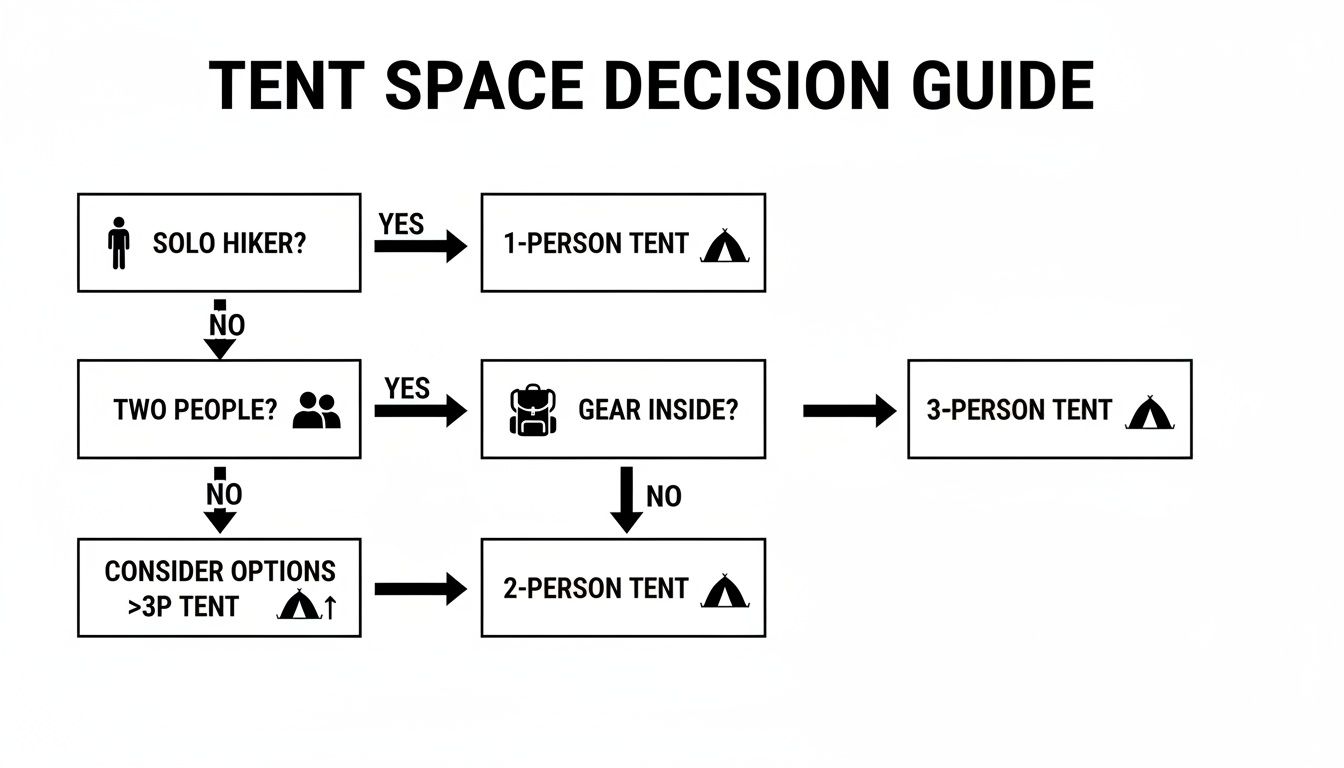
As you can see, a "two-person" tent can feel very different depending on whether you’re solo, with a partner, or bringing your gear inside with you.
Freestanding vs. Non-Freestanding Tents
Another element to consider is the tent’s structure. This choice affects how and where you can pitch your shelter.
A freestanding tent is exactly what it sounds like. Once you connect the poles, the tent body holds its own shape and stands up on its own. You can easily pick it up and move it to find the flattest, smoothest spot before staking it down. This can be a welcome convenience, especially on rocky ground or wooden tent platforms where driving stakes is difficult.
A non-freestanding tent relies on stakes and tension to stand upright, often using trekking poles instead of dedicated tent poles to save weight. They may require a bit more practice to get a taut pitch. For those who enjoy minimizing their pack weight, the savings can be significant.
There’s no "better" design here. They’re just different tools for the same purpose: a comfortable night in the backcountry. The best choice is the one that aligns with your priorities, whether that’s the simplicity of a freestanding tent or the lightweight efficiency of a non-freestanding one.
Exploring Materials, Durability, and Comfort
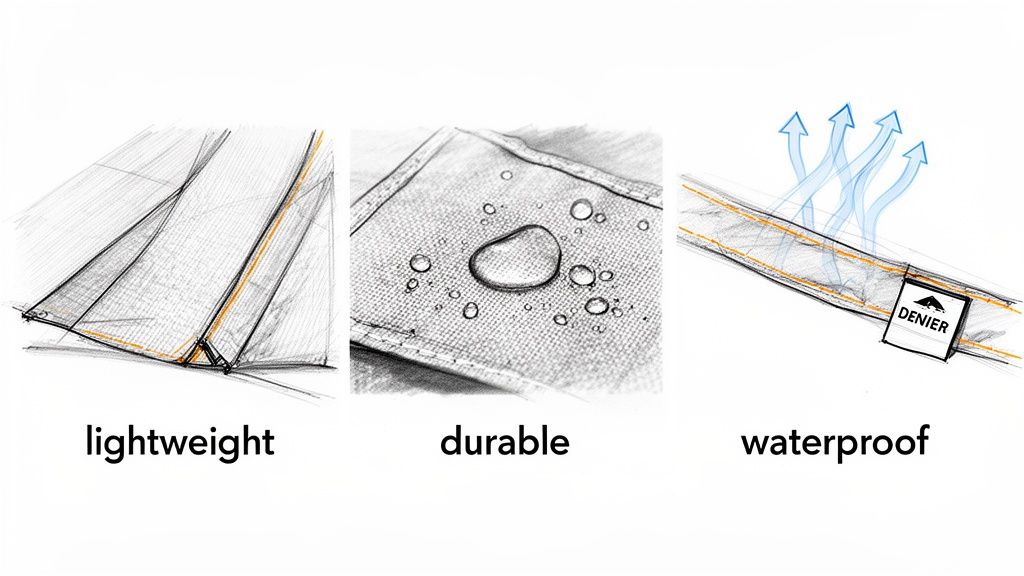
You can tell a lot about a tent just by listening. The quiet rustle of its fabric in the breeze, the confidence you feel in its seams during a downpour—these are the details that matter. This character comes from the materials themselves, which are always a balancing act between strength, weight, and comfort.
Understanding these fabrics isn't about memorizing technical jargon. It’s about appreciating the quiet craftsmanship that turns a collection of textiles into a shelter you can trust.
When you see a term like denier (D), you can think of it like thread count for bedsheets. A higher number, like 70D, means a thicker, tougher yarn. You'll usually find this on tent floors, where durability is important. A lower number, like 20D, points to a finer, lighter thread used for rainflies and tent bodies where weight is a consideration.
That one number gives you a sense of the fabric's resilience. Neither is better than the other; they're just different tools for different jobs, each playing a part in the final shelter. Most backpacking tents use either nylon or polyester, and each has its own qualities.
Understanding Tent Fabrics and Coatings
The two main materials in the tent fabric world are nylon and polyester. They look similar, but they handle the elements in subtly different ways.
- Nylon: Known for its strength-to-weight ratio, nylon is a common choice for quality tents. Its one quirk is that it can absorb a little water and stretch, which sometimes means you might need to re-tighten your guylines after a rainstorm to keep things taut.
- Polyester: This material is naturally more resistant to stretching when wet and stands up well to UV damage from the sun over the long haul. It might be a touch heavier than a similar nylon, but that stability is a welcome trade-off for many.
To keep the rain out, waterproof coatings are added. You’ll usually see silicone (Sil), polyurethane (PU), or a mix of the two (Sil/PU). These coatings are what fend off a storm, turning the fabric into a reliable barrier.
A tent's waterproof rating is measured in millimeters (mm) and tells you how much water pressure the fabric can take before it leaks. A floor rating of 3,000mm and a rainfly rating of 1,500mm are good benchmarks for a dependable 3-season tent.
Livability Features That Matter
Beyond the fabric, the real comfort of a 2 person backpacking tent comes down to its design—the little things that make a shelter feel less like a structure and more like a backcountry home. We call these "livability" features, and they can make all the difference.
One of the most valuable features is the vestibule. This is the covered area just outside the main tent door, created by the rainfly. It’s a perfect mudroom for leaving wet boots, muddy packs, and any gear you don't want tracking dirt inside your sleeping space.
Inside, other details make life easier:
- Internal Pockets: Simple mesh pockets are a wonderful way to organize small gear. They keep your headlamp, phone, or map off the floor and right where you can find them.
- Ventilation: Good airflow is key to managing condensation—that moisture that can build up inside a tent overnight. Look for mesh panels on the tent body and vents on the rainfly.
- Doors: For two people, two doors can be a great convenience. It means no more crawling over your tentmate for a midnight bathroom break.
These features aren’t just extras; they help create a more organized, peaceful, and comfortable camp experience. If you want to dive deeper into the world of material science, you can learn more about tent fabric choices in our related guide.
Building Your Complete Sleep System
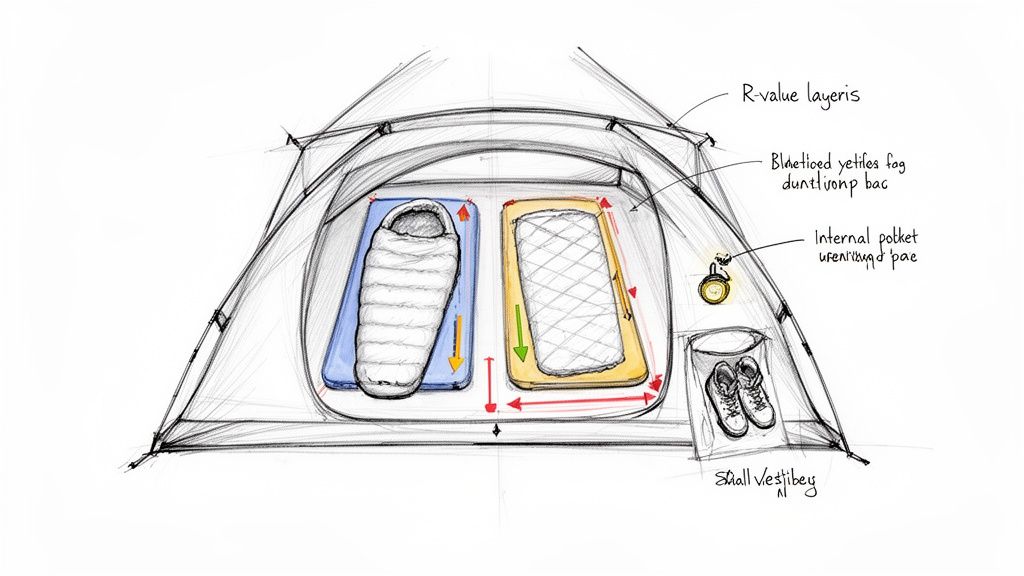
Think of your tent as the outer shell of your backcountry home. It’s the reliable barrier that shields you from wind and rain. But what happens inside that shelter is just as important. Your sleeping pad and sleeping bag are the two other pieces that work together to create a true haven for rest.
The secret to a genuinely restorative night outdoors is to stop thinking about your gear as individual items and start seeing them as a single, integrated sleep system. A good night's sleep isn't a luxury on the trail; it's what fuels the next day's adventure, letting you wake up refreshed and ready for what the trail brings.
The Foundation: Your Sleeping Pad
Your sleeping pad does more than just cushion you from rocks and roots. Its most important job is insulating you from the cold ground, which can pull warmth from your body all night long. This insulating power is measured by an R-value—the higher the number, the better it resists the cold.
Your 3-season tent protects you from the elements coming from above and the sides, but your sleeping pad is what guards you from the cold creeping up from below. A pad with an R-value between 2 and 5 is a great match for the conditions you'll likely face in a 3-season tent. It's a simple pairing that helps you stay warm from every direction.
The Warmth: Your Sleeping Bag or Quilt
Next up is your sleeping bag or quilt, the cozy layer that traps your body heat and keeps you comfortable. The shape of your tent can help you make this choice. A tent with a narrower floor plan often pairs best with a tapered mummy bag, which takes up less space.
On the other hand, if your tent has a wider floor, you might have enough room to sprawl out with a backpacking quilt. Quilts are wonderful for sleepers who toss and turn, offering a freedom of movement that can feel more like your bed at home. There’s no single right answer—it’s all about what helps you sleep best.
Your sleep system is deeply personal. It’s an opportunity to listen to your body and honor its need for rest. A comfortable night is the quiet reward for thoughtful preparation.
Bringing It All Together
When you look at these three pieces as one cohesive unit, you can build a personalized comfort zone that’s perfectly dialed in for you. The goal is a seamless experience where every piece of gear supports the others.
- Your Tent: This is your weather protection and your private space.
- Your Sleeping Pad: It provides important insulation from the ground and welcome cushioning.
- Your Sleeping Bag: This layer retains your body heat, keeping you warm all night.
When you choose these components with care, they create something more than just a place to sleep. They create a space for deep, restorative rest.
If you want to explore this idea further, our guide on how to build a better night's sleep outdoors has even more tips for creating your perfect setup. It’s a rewarding process of discovery that pays off with every peaceful morning you spend on the trail.
Keeping Your Shelter Ready for the Next Trip
Taking care of your tent is more than a chore—it’s a quiet practice that keeps your gear ready for the next adventure. Good maintenance is what can turn a one-season item into a trusted partner for years of trips. It’s a simple routine that protects your shelter and ensures it’s reliable when you need it most.
This starts the moment you break down camp. Instead of rolling your tent, which can force the same creases into the fabric and its waterproof coatings every time, try stuffing it. Gently pushing the tent into its stuff sack creates random, non-repeating folds, which spreads the wear more evenly and can help the coatings last longer. It’s a small habit that makes a difference.
Post-Trip Care and Storage
When you get home, the single most important thing you can do is let your tent air out. Pull it out of its bag and hang it somewhere cool and dry, away from direct sun. A garage, spare room, or covered patio works perfectly. This lets any moisture from condensation or morning dew evaporate completely, preventing mildew from taking hold.
Once it’s completely dry, a quick cleanup is all it needs.
- For dirt and dust: A soft sponge or cloth with cool, plain water is usually enough to wipe down the fabric. It’s best to skip soaps and detergents, as they can strip the waterproof coatings.
- For stubborn spots: If you have to, use a cleaner made specifically for technical tent fabrics. But plain water often works just fine.
- For storage: For long-term storage, it's a good idea to avoid the tight stuff sack. Keep your tent loosely packed in a larger, breathable bag like a mesh sack or an old pillowcase. This lets the fabric relax and helps keep the coatings from breaking down over time.
Simple Repairs in the Field
A small tear on the trail doesn't have to end your trip. It can be an easy fix if you're prepared. A small rip in the mesh or a pinhole in the rainfly can be sealed in minutes with a piece of tenacious tape or a dedicated gear patch. Tossing a small repair kit with a few patches, some seam sealer, and a needle and thread into your pack means you can handle minor issues and continue on your way.
Your tent is your partner out there. Treating it well is how you make sure it’s ready for whatever the next adventure brings.
This mindset of taking care of your gear is part of a bigger picture. The interest in backpacking has grown, and with it, the market for tents has expanded. Modern tents often include innovations for longevity, from ripstop fabrics to UV-resistant coatings. You can discover more insights about backpacking tent trends at accio.com. By maintaining your tent properly, you’re getting the most out of the craftsmanship that went into building it.
Common Questions We Hear From Campers
Even after you've considered the details, a few practical questions often come to mind. This is where we get into the kind of things you might ask a friend who’s spent years dialing in their gear. Think of this as a final conversation to help you feel completely confident in your choice.
How Often Should I Replace My Tent?
A good tent doesn't really have an expiration date. It's often better to think in terms of condition, not years. With a little care and proper storage, a quality backpacking tent can be a trusted shelter for a decade or more.
The time to start looking for a new one is when you see wear that affects its performance. This could be peeling waterproof coatings on the rainfly, fabric that feels brittle from sun exposure, or zippers that no longer close properly. A few patches are a sign of a well-loved tent; widespread failure is a sign it's time for a well-earned retirement.
The goal isn't just to replace gear, but to build a relationship with it. Taking care of your tent is how you extend its life and all the stories it helps you create.
Do I Really Need a Footprint?
A footprint is a durable, custom-cut ground cloth that goes between your tent floor and the ground. While you can get by without one, we often recommend it. Think of it as helpful insurance for one of the most vulnerable parts of your shelter.
Here's why it's worth considering:
- Protection: It adds a layer of protection against sharp sticks, gritty sand, and abrasive rocks that can wear down or puncture your tent floor over time.
- Moisture Barrier: On damp ground, a footprint provides another line of defense to keep moisture from seeping through from below.
- Cleanliness: It helps keep mud, dirt, and tree sap off the bottom of your tent, which makes packing up and cleaning at home so much easier.
For a small weight addition, a footprint can extend the life of your 2 person backpacking tent. It’s one of the simplest additions you can make to your kit.
What Is the Best Color for a Tent?
Tent color can quietly shape your experience outdoors. There's no single "best" color—it really comes down to what you value most in your environment.
Brighter colors like orange or red stand out. This can be a plus for safety in remote areas, as it makes your camp much easier for others to spot. They also create a warm, cheerful glow inside on gray, drizzly days.
On the other hand, more natural, earthy colors like green, grey, or brown blend into the landscape. This is often the choice for campers who follow Leave No Trace principles and want to minimize their visual impact. A low-key tent can give you a greater sense of solitude and is well-suited for times when you'd rather not draw attention. It’s a personal choice that reflects how you want to interact with the wild places you love.
At Fort Robin, we believe the right gear opens the door to quiet moments and shared stories under the stars. We’ve thoughtfully curated our collection to help you find a shelter that feels like your own. Explore our tents and sleep systems to build your perfect home in the wild.

