

Finding Your Best Camping Sleep System: A Guide to Restful Nights Outdoors
The best camping sleep system isn't a single item you can buy off a shelf. It’s the personal combination of a sleeping bag, sleeping pad, and shelter that you put together to find a truly restorative night's sleep outdoors. It’s all about creating a personal sanctuary that balances comfort, warmth, and portability for your specific adventure—so you can wake up ready for the day ahead.
The Quiet Promise of a Good Night's Sleep Outdoors
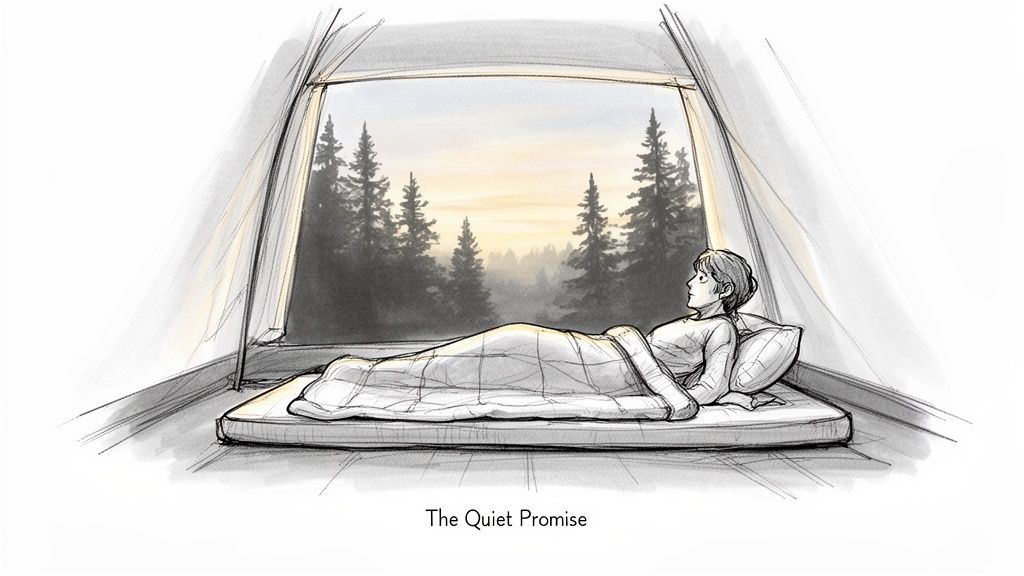
Here's a simple truth every camper knows: a good night’s sleep changes everything. It’s what turns a trip from an endurance test into something genuinely restorative. Waking up cold, stiff, and exhausted can dampen even the most spectacular sunrise. But when you wake up warm and well-rested, you set the tone for the entire day, letting you soak in the quiet moments—that first sip of coffee, the sound of the birds, the soft morning light filtering through the trees.
Think of this guide not as a checklist of gear to buy, but as an invitation to see your sleep system as the very foundation of your outdoor experience. It’s the quiet promise you make to yourself for a great night under the stars.
More Than Just Gear
It’s easy to get lost in technical specs, but the real goal is much simpler. We’re just trying to build a small, temporary home away from home. A space where you can let go of the day, sink into deep rest, and let your body and mind truly recharge. Putting together the right system is less about owning the "best" individual items and more about creating a setup where everything works together to support your well-being.
A thoughtful sleep system does more than just keep you warm—it creates a sense of peace and security. It’s what allows you to truly connect with the calm and beauty of the natural world. It’s the difference between just surviving the night and actually thriving in it.
This focus on comfort isn't just a fleeting idea; it's a huge part of what keeps people coming back to camping. A good night's rest is a key factor in whether first-timers continue to explore the outdoors. In fact, research shows that 78% of novices are likely to camp again if they feel they slept well. This is a big reason the camping equipment industry continues to grow. You can learn more about camping industry trends here.
A Gentle Path to Comfort
Finding what works for you is a personal journey, not a race. Throughout this guide, we’ll walk through each component, from the insulating pad beneath you to the warm bag that cocoons you. We'll explore how these pieces work together—not just technically, but how they contribute to that feeling of being cared for. Our hope is to help you build a setup that feels just right, ensuring your time outdoors is rejuvenating from sunset to sunrise.
Understanding the Three Pillars of Your Sleep System
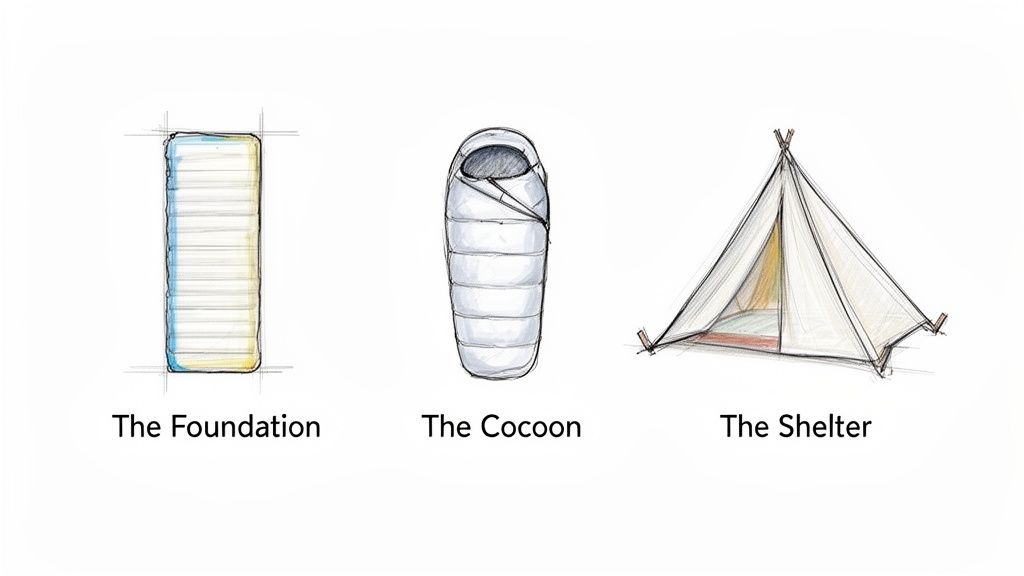
A great night's sleep outdoors is never an accident. It’s built on a simple but effective system where a few key pieces of gear work together. Think of it like building a small, comfortable shelter—each part has a specific role, and when they're all in place, you can settle in for a solid night of rest.
We see this system as having three main pillars. When these are in harmony, you're well on your way to waking up refreshed and ready for the day. Let's look at each one.
The Foundation: Your Sleeping Pad
First up is your foundation—the sleeping pad. It’s easy to think of a pad as just a bit of cushion, but its real job is insulation. The ground is a massive heat sink, constantly pulling warmth from your body, even on a surprisingly mild evening.
Think about lying on a cold tile floor. That instant chill you feel is the floor drawing out your body heat. A sleeping pad acts like a thick rug, creating a thermal barrier that stops that heat loss. This is, without a doubt, its most important function.
Of course, it also provides the cushion and support your body needs to actually relax. A good pad smooths out lumpy, uneven ground and turns it into a welcoming place to sleep. If you want to dive deeper, we have a complete guide on how to choose the right sleeping pad for every adventure that breaks it all down.
The Cocoon: Your Sleeping Bag or Quilt
With your foundation in place, the second pillar is your cocoon: the sleeping bag or quilt. This is the layer that traps the heat your body naturally produces, creating a warm, comfortable microclimate all around you.
A sleeping bag doesn't create heat. It just holds onto yours. It's like wrapping yourself in a warm blanket on a cool night—the blanket keeps your own warmth from escaping into the air. That’s exactly what the insulation in your bag does.
This is a personal piece of the puzzle. It’s not just about a temperature rating; it’s about feeling secure and cozy enough to truly unwind. Whether you like the snug efficiency of a mummy bag or the freedom of a quilt, its purpose is the same: to create your personal bubble of warmth.
A crucial aspect of any sleep system, indoors or outdoors, is temperature control. Understanding how to manage your personal climate, such as by regulating sleep temperature, can greatly enhance comfort and the quality of your rest.
The Shelter: Your Tent or Vehicle
The final pillar is your shelter. This is your tent, your vehicle's rooftop tent, or even a simple tarp—whatever is protecting you and your gear from the elements. It’s your first line of defense against wind, rain, snow, and even morning dew.
Your shelter is like the roof and walls of a house. It creates a protected space where your pad and bag can do their jobs properly. A gust of wind can easily strip the warmth from your sleeping bag, and a bit of rain can ruin its ability to insulate. Your shelter keeps everything inside calm and dry.
But it's more than just physical protection. A shelter offers a psychological boundary, a sense of privacy and safety that separates your personal space from the vastness of the outdoors. It’s the final piece that lets you fully relax, knowing you’re shielded from whatever the night might bring.
When you see how these three pillars—The Foundation, The Cocoon, and The Shelter—work together, you start to see your gear not as individual items, but as a complete, interconnected system. Each one supports the others to deliver on the simple promise of a good night's sleep.
Translating the Language of Outdoor Comfort
Walking into a gear shop or browsing online can feel like learning a new language. Tags are covered in numbers, acronyms, and specs that don’t always connect to the simple goal of getting a good night's sleep. But those technical details aren't meant to be intimidating—they’re just telling a story about the kind of performance you can expect.
Our goal here is to be your translator. By breaking down a few key terms, you’ll see past the numbers and start to understand the real-world comfort they represent. It’s how you turn a confusing choice into a confident one.
To make things even easier, here's a quick reference for the most common terms you'll run into.
Understanding Key Sleep System Terms
A quick reference table to help you understand the most common terms you'll see when choosing your sleep system components.
| Term | What It Really Means | Why It Matters for Your Comfort |
|---|---|---|
| Temperature Rating | A standardized guideline for how warm a sleeping bag should be. | It's a starting point for comparing bags, but your personal comfort depends on many other factors. |
| R-Value | How well a sleeping pad resists heat loss to the cold ground. | A higher number means better insulation and a warmer night's sleep, especially in cooler conditions. |
| Down Insulation | The soft, fluffy plumage from geese or ducks used in sleeping bags. | Offers the best warmth for its weight and packs down incredibly small, but loses insulating power when wet. |
| Synthetic Insulation | Human-made polyester fibers designed to mimic down. | Insulates even when damp, is more affordable, and easy to care for, but is generally bulkier than down. |
Think of these terms as the building blocks for creating your ideal setup. Now let’s look a little deeper into what they mean out on the trail.
Temperature Ratings: A Gentle Guideline
The first thing you’ll notice on a sleeping bag is its temperature rating, like 30°F or -5°C. It’s easy to see this as a hard rule—a guarantee you'll be warm at exactly that temperature. In reality, it’s more of a helpful suggestion.
A bag's rating is a standardized measurement, but your personal comfort is wonderfully unique. Do you tend to sleep warm or cold? What will you be wearing to bed? These factors, along with humidity and wind, all play a role in how you'll actually feel.
Use the rating as a starting point to compare one bag against another. It’s a frame of reference, not a strict limit. For a deeper dive, our complete guide on how to choose the right sleeping bag for camping adventures can help you find your perfect match.
R-Value: The Warmth Beneath You
Next up is R-value, a term you’ll find on every sleeping pad. It might sound technical, but the idea is simple. R-value just measures how well your pad insulates you from the cold ground.
Think of it this way: Lying on a cold tile floor feels chilly because the tile is actively pulling warmth from your body. Now, imagine putting a thick, plush rug on that same floor. The rug creates a barrier, stopping that heat transfer. The rug has a higher R-value than the tile.
That's all an R-value is describing. The higher the number, the more warmth the pad provides.
- A low R-value (1-2) is like a thin beach towel—fine for a warm summer night.
- A mid-range R-value (3-4) is like that thick rug, great for most three-season adventures.
- A high R-value (5+) is like a deeply insulated mattress, designed to keep you warm even on frozen ground.
It’s a simple, direct way to understand how well your foundation will keep you comfortable through the night.
Materials: Down vs. Synthetic
Finally, let’s talk about what’s inside your sleeping bag. The two main players are down and synthetic. Neither is automatically "better"; they just perform differently, like choosing between a wool sweater and a fleece jacket.
Down Insulation
- What it is: The soft, fluffy plumage found under the feathers of geese or ducks.
- Best for: Unbeatable warmth for its weight and an amazing ability to compress into a tiny packed size.
- Keep in mind: Down loses its insulating power when it gets wet and requires specific care to keep it lofty.
Synthetic Insulation
- What it is: Human-made polyester fibers designed to mimic the insulating properties of down.
- Best for: Performing well even in damp conditions, and it's generally more affordable and easier to clean.
- Keep in mind: Synthetic fill is typically heavier and bulkier than down for the same amount of warmth.
The choice comes down to your priorities. Backpacking in dry climates where every ounce matters? Down is probably your best friend. Camping in a damp forest or looking for a more forgiving, budget-friendly option? Synthetic is a solid choice.
Once you understand these core concepts, gear selection stops being a chore. You’re no longer just looking at numbers; you're picturing yourself warm, supported, and ready for a restorative night under the stars.
Building Your System for Different Adventures
The idea of a single "best" camping sleep system is a myth. A far better approach is to find the system that’s right for your adventure. The needs of a family enjoying a weekend at a local campground are completely different from those of a backpacker covering miles deep in the backcountry.
Your ideal setup is a personal one, built not just from gear, but from an understanding of where you're going. By matching your choices to your journey, you create a space that truly feels like home, wherever you lay your head.
For Family Car Camping Adventures
When your vehicle does all the heavy lifting, you’re free to prioritize deep, restorative comfort over saving ounces. Car camping is an invitation to create a genuinely plush and welcoming outdoor bedroom where relaxation is the main goal.
Think about a sleeping pad that’s both thick and wide. A self-inflating mattress or a deluxe air pad, often 3-4 inches thick, can smooth over any lumps and bumps on the ground. Since weight isn't a concern, you can choose materials that are softer and quieter, ensuring a peaceful night for everyone.
Pair this foundation with a spacious, rectangular sleeping bag. Unlike the snug fit of a backpacking bag, a rectangular shape offers room to stretch out and move around. You might even consider a double bag for two. For an extra touch of home-like comfort, you can even explore options like camp cots, which elevate you off the ground entirely. If you're curious, we break down why camp cots are the secret to better sleep outdoors.
For Overlanding and Rooftop Tents
Vehicle-based adventures like overlanding blend mobility with the comforts of a dedicated basecamp. Here, your sleep system is often integrated directly into your vehicle, so durability and an all-in-one setup become key.
Most rooftop tents come with a built-in foam mattress, which is a great starting point. You can seriously upgrade this by adding a self-inflating pad or a memory foam topper. This not only adds cushioning but also significantly boosts insulation—critical since you're elevated and more exposed to air circulation from below. A pad with an R-value of 4 or higher is a smart choice for three-season comfort.
For warmth, you have a lot more flexibility. Many overlanders leave a dedicated down or synthetic comforter and full-size pillows in their rooftop tent full-time. This approach makes setup incredibly simple—just pop the tent, and your bed is ready.
This simple flowchart can help visualize how to make gear choices based on expected conditions.
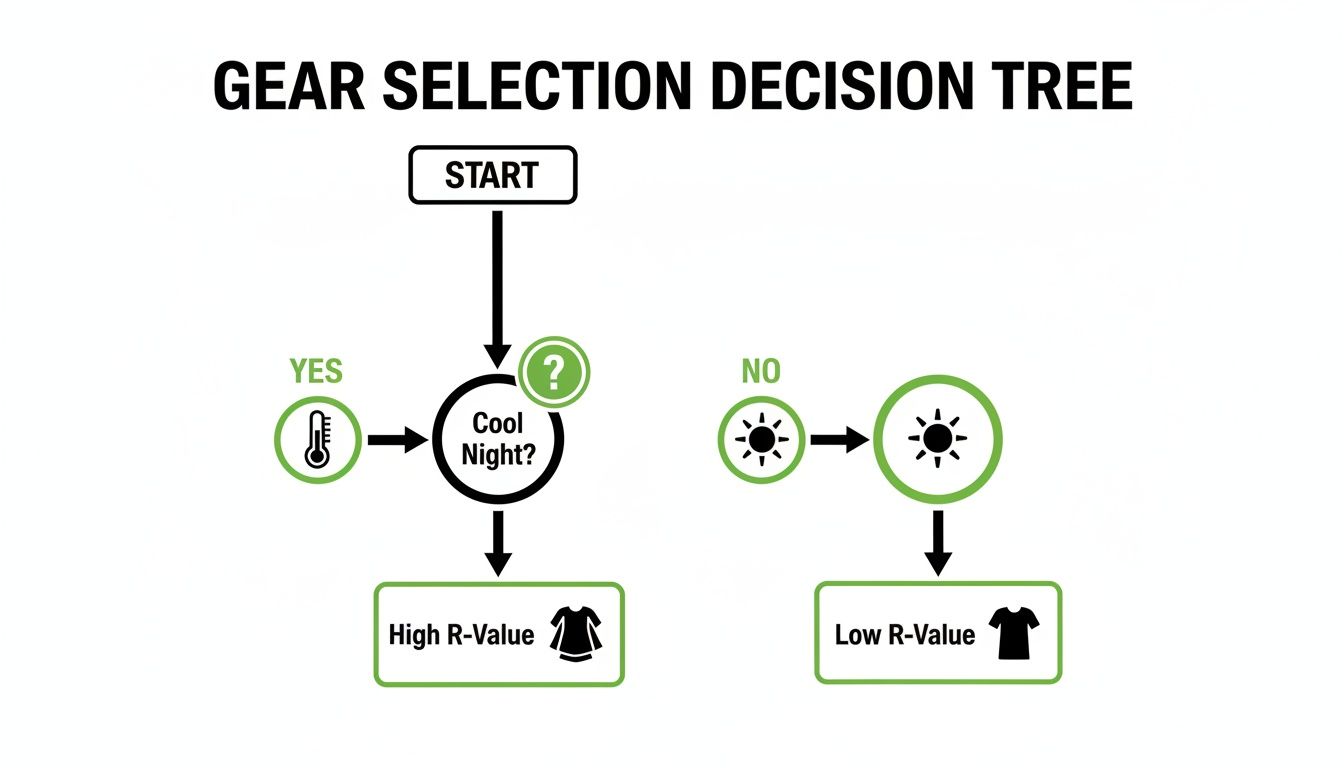
As you can see, simply anticipating the temperature helps you decide whether to prioritize a higher or lower R-value in your sleeping pad for a comfortable night.
For Quiet Backpacking Trips
Backpacking is a practice of thoughtful balance. Every item is carried on your back, so each choice is a careful negotiation between weight, packed size, and the comfort your body needs to recover. This is where a truly cohesive system shines.
Your sleeping pad needs to be both lightweight and insulating. An ultralight air pad is often the perfect companion here, offering impressive comfort and warmth for a packed size that can be as small as a water bottle. Look for a pad with an R-value appropriate for the season you’ll be in—around 2-4 for summer and 4+ for the shoulder seasons.
Your sleeping bag should follow the same logic. A down-insulated mummy bag will give you the best warmth-to-weight ratio, compressing down to save precious pack space. Alternatively, an ultralight quilt can save even more weight and offer more freedom of movement for those who find traditional bags restrictive.
Every component must work together. An ultralight bag is only as good as the insulated pad beneath it. This synergy is the heart of a successful backpacking sleep system, ensuring that the gear you carry is working as efficiently as possible to give you the rest you need.
When preparing for more demanding conditions, especially in winter, the stakes are higher. For these situations, a practical guide to camping in snow and staying warm is indispensable. Building the right system isn't about having the most expensive gear; it's about making smart, informed choices that honor the adventure ahead.
Caring for Your Gear So It Can Care for You
Your sleep system is one of your most important pieces of gear. It’s what recharges you for the next day’s adventure. So, when you get home, giving it a little attention isn’t just a chore—it’s how you make sure it’s ready for the next trip.
A few simple steps will keep your sleeping bag and pad in good shape for years to come. Think of it as an investment. Taking care of your gear ensures it can keep taking care of you, night after night.
Storing Your Sleeping Bag
After a trip, the single most important thing you can do for your sleeping bag is to let it breathe. Leaving it crammed in its small stuff sack for weeks on end can compress its loft, which is what traps warm air and keeps you comfortable.
To keep that insulation fluffy and effective, here’s what to do:
- Air It Out: First thing, hang your bag up to air dry completely, even if it doesn’t feel damp. A day or two indoors or in a shady, breezy spot is perfect.
- Store It Loosely: Never store it long-term in its compression sack. Use the large, breathable mesh or cotton sack it came with. If you lost it, a big laundry bag or an old pillowcase works just as well.
- Find a Good Spot: Keep the loosely stored bag somewhere cool and dry, away from direct sun, like the top of a closet or under your bed.
Think of your sleeping bag’s insulation like a big, fluffy sponge. When it’s compressed, it can’t hold air. Storing it loosely lets that "sponge" stay open and ready to trap the warmth your body creates on a cool night.
Showing Your Sleeping Pad Some Love
Your sleeping pad takes a lot of abuse, protecting you from rocks, roots, and the cold, hard ground. Its care is just as simple and just as critical. A little post-trip attention prevents nasty surprises, like a slow leak on your next outing.
The goal is to keep it clean and store it properly so the materials don’t break down. Wipe off any dirt with a damp cloth and mild soap, then let it dry completely.
For storage, the best practice is to leave it unrolled and partially inflated with the valve open. This lets any internal moisture escape and helps the foam or insulation keep its shape. Slide it under a bed or stand it up behind a door in a closet. These small habits are what ensure your foundation stays solid and reliable for every trip.
An Invitation to Restful Nights
Choosing the right camping sleep system is a quiet, personal journey. It’s about more than specs and features—it’s about creating a space where you can truly rest and soak in the best parts of being outdoors. The calm of a misty morning, a shared story around the fire, a sky full of stars… these are the moments a good night’s sleep makes possible.
We believe that a solid night of rest is the foundation for connection, whether it’s with your family, your surroundings, or yourself. It’s what makes every other part of the adventure feel richer and more present, and we think that experience should feel accessible and welcoming to everyone.
Your Companion in Comfort
At Fort Robin, we see ourselves as a steady companion on that journey. We believe in thoughtful curation and straightforward guidance, gently removing the guesswork so you can focus on what really matters. We're here to offer a helping hand, not to tell you what to do.
We are a small, family-owned space built on a simple idea: to help people reconnect with the outdoors on their own terms. Integrity and authenticity guide every choice we make, from the gear we select to the advice we share.
We invite you to explore your options with curiosity and confidence. Whether you’re planning your first family campout or your tenth backcountry trip, you have a partner in building a foundation for comfort. Our hope is that with a little support, you can spend less time worrying about gear and more time out there, making memories.
The outdoors is waiting. We’re honored to help you prepare for a restful night, so you can wake up ready to welcome the day.
Common Questions About Building a Sleep System
Getting your gear dialed in always brings up a few questions. That's a good thing. It means you're thinking about what really works. Here are a few common ones we hear, with some straightforward advice to help you feel good about your choices.
Is an Expensive Sleeping Pad Really Worth It?
This is probably the most common question we get, and it’s a fair one. While you don't need to buy the most expensive pad on the market, a quality sleeping pad is one of the smartest places to invest in your comfort.
Think of it this way: your sleeping bag generates warmth, but your pad is what stops the cold ground from stealing it. A pad with a good R-value (that's its insulation rating) is like a shield. The higher the number, the stronger the shield. It's the unsung hero of your whole setup, quietly making sure you stay warm all night.
How Do I Choose the Right Temperature Rating?
It’s easy to get hung up on the temperature rating on a sleeping bag, but think of it as a helpful guideline, not a hard rule. A 30°F bag, for example, is built to keep the "average" sleeper comfortable when it dips to around that temperature.
But here’s the thing: nobody is "average." We all sleep differently. If you know you tend to get cold at night, a great rule of thumb is to pick a bag rated 10-15 degrees colder than the lowest temperature you actually expect. That little buffer is your insurance policy for a cozy night, no matter what.
Your comfort is personal. The numbers on a tag are a guide, but listening to your own body's needs is what truly matters when creating a sleep system that feels right for you.
What Is the Difference Between a Quilt and a Sleeping Bag?
A traditional sleeping bag is a full-body cocoon. Simple, effective, and it wraps you up completely. A camping quilt, on the other hand, is more like a high-performance comforter for the outdoors. It lays over you and usually clips to your sleeping pad, relying on the pad’s insulation to keep your back warm.
Quilts are often lighter and feel less restrictive, which a lot of people love. Sleeping bags offer that classic, all-around warmth that you can just zip up and forget about. The best choice is simply the one that sounds like it fits how you want to sleep.
At Fort Robin, we believe finding the right gear should feel reassuring, not overwhelming. We're here to help you build the foundation for restful nights and great mornings outdoors. Explore our curated gear and start your journey.


