

Finding the Right Solar Panels for Your Camping Adventures
Choosing solar panels for camping is less about technical specifications and more about matching your gear to your adventure. While high-efficiency monocrystalline panels are a common choice, the right size and style truly depend on how you travel. A smaller 110W panel might be a good companion for shorter trips, but if you're bringing power to a whole family setup or a camper, you might find that larger 400W options better suit your needs.
Finding Quiet Power for Your Outdoor Adventures
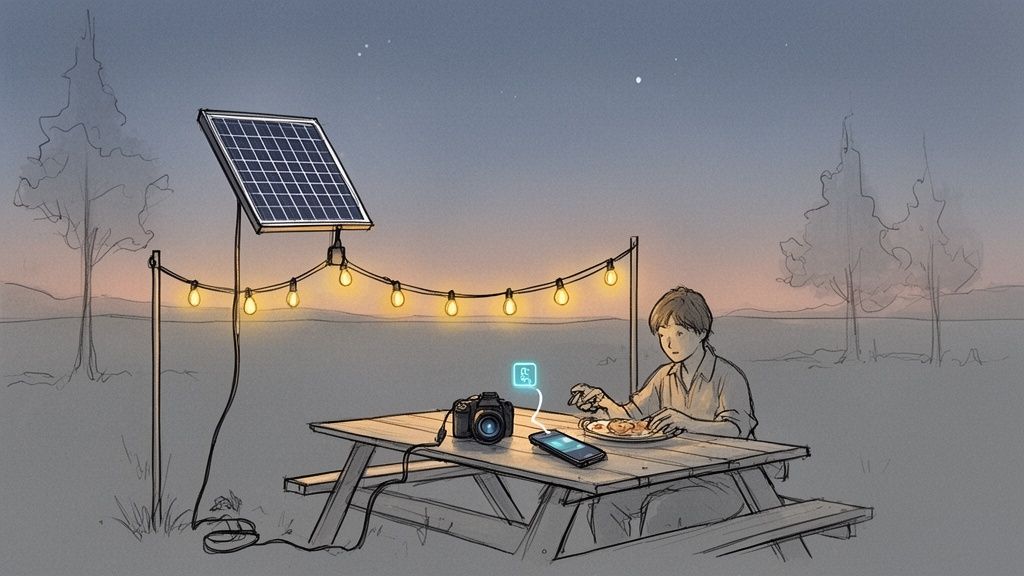
Bringing solar power along isn’t about recreating your living room in the middle of the wilderness. It's about quietly extending the good moments. Think of powering a string of lights for dinner under the stars, keeping a camera battery ready for that perfect sunrise shot, or making sure your GPS is prepared for the day’s hike. This guide is here to help you move past the technical language and find a comfortable fit for your style of camping.
Different Panels for Different Paths
Picking a solar panel is a lot like choosing a trail—the best one depends on where you're headed. The three main types of portable solar panels each serve a different kind of camper. Understanding these differences is the first step in finding the right power source for your adventures.
| Panel Type | Best For | Key Characteristic |
|---|---|---|
| Monocrystalline | The camper who values efficiency and needs reliable power in a small footprint. | High efficiency (20-24%), performs well even in lower light. |
| Polycrystalline | The camper setting up a stationary basecamp who prefers a more affordable option. | Slightly less efficient (15-18%) than mono but more budget-friendly. |
| Thin-Film | The adventurer with unique mounting needs, like on a curved van roof. | Lightweight and flexible, but requires more surface area for power. |
The real goal isn't just to find the most powerful panel. It's to find the one that fits seamlessly into your rhythm, adding a bit of ease without overcomplicating things.
For most campers, a portable solar panel is just one part of the system. It works hand-in-hand with a portable power station, which is essentially a smart battery that stores the energy you collect from the sun. To get a better feel for how these two pieces work together, you can read more about our experience with the BLUETTI EB3A Portable Power Station. Our hope is that you feel prepared and at ease, ready to enjoy the quiet moments that the outdoors has to offer.
Understanding the Language of Solar Power
Before picking the right solar panel for your trips, it helps to get comfortable with a few key ideas. Think of it less like a technical lecture and more like learning a few phrases in a new language—just enough to navigate with confidence. Knowing these terms helps you move from wondering what you need to knowing what’s right for you.
You'll almost always see three terms: watts, volts, and amps. It’s easy to feel overwhelmed, but a simple analogy makes it clearer. Picture yourself filling a water bottle from a stream.
- Volts (V): This is the water pressure. It’s the force pushing the electrical current forward.
- Amps (A): This is the flow rate of the water. It represents how much electrical current is moving through the wire.
- Watts (W): This is the total power—how fast your bottle fills up. It’s simply volts multiplied by amps (Volts x Amps = Watts).
A higher wattage rating means a solar panel can “fill” your power station or battery faster in good, sunny conditions. This single number is often the gentlest way to understand a panel's potential.
The Three Families of Solar Panels
When you start looking at portable solar panels, you’ll find they mostly fall into three categories. Each has its own personality, suited for different kinds of outdoor life—much like choosing between a lightweight backpacking tent and a roomy canvas one.
Monocrystalline Panels These are made from a single, pure silicon crystal, which gives them that signature dark, uniform look. Because the crystal is so pure, electrons can move more freely, making these panels very efficient. This means they generate more power from a smaller surface area, which can be helpful when space in your vehicle or backpack is limited.
Polycrystalline Panels You can usually spot these by their blue, marbled appearance. They’re made by melting down multiple silicon fragments, a less intensive process that makes them a bit more affordable. The trade-off is slightly lower efficiency. They are a solid, dependable choice for a stationary basecamp where a slightly larger panel size isn't a concern.
Thin-Film Panels Just like the name says, these panels are lightweight and often flexible. They're made by depositing a super-thin layer of photovoltaic material onto a flexible backing. While they are the least efficient of the three, their adaptability is unmatched—they can be mounted on curved surfaces like the roof of a van or an A-frame trailer.
For most campers, the decision often comes down to a simple trade-off between efficiency and footprint. A monocrystalline panel typically provides the most power for its size, making it a common choice for anyone who needs to pack light but still wants reliable energy.
Monocrystalline silicon panels are a popular choice for good reason. Their efficiency—typically 20-24% compared to 15-18% for polycrystalline—means they can provide more watts per square foot. In the camping world, this efficiency has made them a frequent companion for many off-grid setups.
Getting a handle on these basics allows you to look past marketing claims and focus on what really matters for your time outside. To see how these different panel types translate into real-world gear, you're welcome to look at our collection of camp power and solar panels. With this groundwork laid, you'll be ready for the next section, where we’ll explore matching a panel to your specific style of camping.
How to Match a Solar Panel to Your Camping Style
Picking the right solar panel isn’t about specifications—it’s about your adventure. A panel that’s perfect for a solo backpacker will feel different from one for a family at a basecamp, and an overlander needs something else entirely. The goal is to find a power source that quietly supports your trip, no matter what it looks like.
This is where your personal needs and the practical realities of your travels meet. Let’s look at how different panels fit the rhythm of three common camping styles.
The Minimalist Backpacker
For backpackers, every ounce counts. Your entire world is on your back, and power is a simple tool measured in grams. The needs are straightforward: keep essential gear like a phone, GPS, or headlamp running for safety and navigation.
Portability is everything here. A small, foldable panel, usually in the 30-60W range, is often a good fit. These panels are light enough to strap to the outside of a pack, soaking up sun while you hike. They won’t run a cooler, but they’ll provide just enough energy to keep your small devices topped off.
- Portability: The focus is on ultra-light, foldable designs that pack down to almost nothing.
- Power Output: A lower wattage (30-60W) is usually plenty for directly charging small electronics or a pocket-sized power bank.
- Durability: Flexibility and a low-profile design are often more important than extreme ruggedness.
This flowchart gives you a simple way to visualize the trade-offs at a glance.
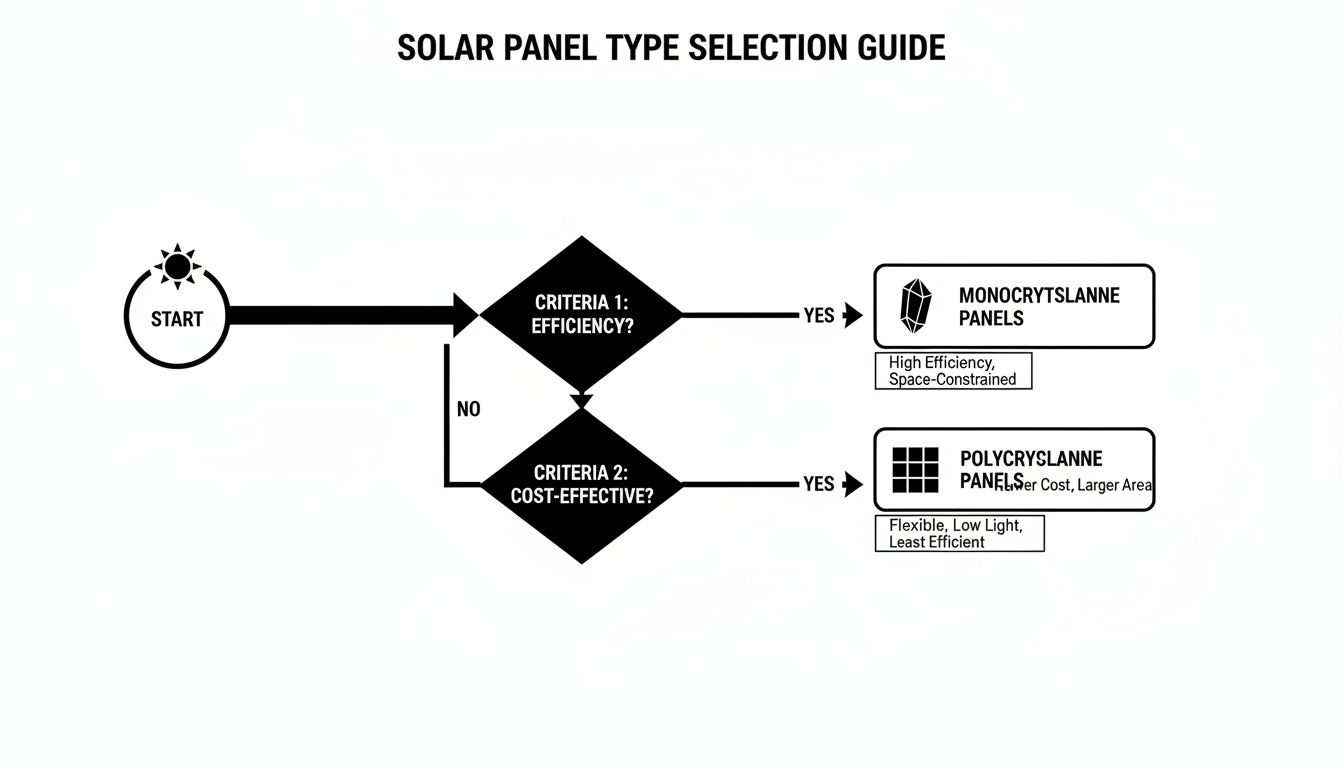
It walks you through the core decisions every camper makes, balancing efficiency, cost, and how you plan to use it.
The Family Car Camper
The family car camper has a different set of needs. With a vehicle nearby, weight isn't as much of a concern. Instead, the focus is on creating a comfortable, functional basecamp. Power is for shared experiences—running camp lights for a late-night card game, keeping a speaker going, or making sure the kids’ tablets have enough battery for a quiet morning.
A mid-range foldable panel, typically 100W to 200W, often hits a sweet spot. It offers enough power to charge a medium-sized power station that can handle multiple devices and small appliances all weekend long. A versatile 50W portable solar charger can also be a great starting point for smaller family needs.
For family camping, a slightly heavier but more durable panel often brings more peace of mind. The ability to survive an accidental bump or a sudden downpour is invaluable when kids and pets are part of the adventure.
This style of camping is about creating a home away from home, and having a reliable source of power can make that experience more relaxed and enjoyable for everyone.
The Vehicle-Based Overlander
The overlander’s journey is often longer and more remote, calling for a power system that’s both robust and self-sufficient. Their vehicle is a mobile home base, sometimes for weeks at a time. Here, power isn't just a comfort; it can be essential for running a portable fridge, communication systems, and extensive camp lighting.
Higher power outputs and durability are key considerations. Overlanders usually choose between large, high-wattage foldable panels (200W-400W) or semi-permanent rigid panels mounted on a roof rack. Rigid panels are a "set it and forget it" solution, constantly charging the system while driving or parked. Large foldable panels, on the other hand, let you park the rig in the shade while placing the panels in direct sun.
- Portability: It’s less about weight and more about how it stores. Rigid panels are fixed, while large "blanket" style panels fold down flat.
- Power Output: High wattage (200W+) is often needed for energy-hungry appliances like a fridge/freezer and for quickly recharging large power stations.
- Durability: This is paramount. Panels have to withstand constant exposure, vibrations from rough terrain, and potential impacts.
A Situational Guide to Choosing Your Camping Solar Panel
To make it even simpler, this table helps you think through your own camping style and match it with the right kind of panel. It's less about the technical details and more about how you actually get outside.
| Camping Style | Primary Power Needs | Key Panel Considerations | Ideal Power Output |
|---|---|---|---|
| Minimalist Backpacker | Charging a phone, GPS, or headlamp. | Ultralight, extremely packable, foldable design. | 30W – 60W |
| Family Car Camper | Running lights, speakers, charging multiple devices. | Easy setup, good durability, balanced power and size. | 100W – 200W |
| Vehicle-Based Overlander | Powering a fridge, comms, and extensive lighting. | High durability, fixed or large foldable, weather-proof. | 200W+ |
Ultimately, the best solar panels for camping are the ones that fade into the background, letting you focus on the experience itself. By reflecting on how you travel, you can find a solution that feels less like a piece of gear and more like a natural part of your time outdoors.
Building Your Complete Off-Grid Power System
Choosing a solar panel is a great first step, but it’s only one piece of a larger system. To turn raw sunlight into usable electricity for your phone, fridge, or lights, you need all the components to work together. Think of it as a small team where each part has a specific job, all contributing to power your adventures.
The most straightforward setup these days is pairing a solar panel with a portable power station. These all-in-one boxes are incredibly convenient, packing a battery, a charge controller, and an inverter into a single, user-friendly unit. It’s a gentle introduction to off-grid power that removes much of the guesswork.
The alternative is a more traditional, DIY approach. This involves connecting a solar panel to a separate charge controller, which then feeds power into one or more deep-cycle batteries. While this route offers more customization for bigger setups, it also requires more know-how to get everything wired up correctly.
Ensuring Everything Works Together
A reliable power system is built on compatibility. Just like a key fits a specific lock, your solar panel’s connector needs to match the input on your power station or charge controller. A small mismatch here can prevent the whole system from working.
Most portable solar panels use one of a few common connectors. You’ll often see names like MC4, Anderson Powerpole (APP), or 8mm barrel plugs. Good quality panels and power stations usually include a few adapters, but it’s always wise to double-check that your panel’s plug fits your power station’s port before you head out.
This small detail is important for a safe, efficient transfer of energy. For anyone wanting to dig deeper, there are some wonderful guides on understanding solar panel connectors and how they all work.
Think of your power system like a small watershed. The panel is the rain collector, the cables are the streams, and the power station is the reservoir. For the reservoir to fill, the streams have to connect and flow freely.
Getting this right allows you to build a self-sufficient system for extended time off-grid, which is becoming more common as more people discover the joys of vehicle-based camping.
Positioning Your Panel for the Sun
Once everything is connected, the final step is simply giving your panel a clear view of the sun. Where you place it has the single biggest impact on how much power you’ll generate. It’s a simple act that can make a world of difference.
Here are a few gentle suggestions for getting the most out of your panel:
- Find Direct Sunlight: This sounds obvious, but even the partial shade from a single tree branch can reduce your panel’s output. Take a minute to find a spot with a completely unobstructed view of the sky.
- Angle Toward the Sun: The best angle is perpendicular to the sun’s rays. Most portable panels have built-in kickstands to make this easy. As the sun moves, adjusting the angle every couple of hours can make a noticeable difference in your charging speed.
- Keep It Clean: A thin layer of dust, pollen, or morning dew can act like a filter, blocking some of the light. A quick, gentle wipe with a soft cloth is all it takes to keep the cells working well.
Building a power system doesn't have to be a complicated technical chore. By choosing parts that work together and giving your panel a little attention, you can create a quiet, dependable source of energy that makes your time outdoors that much more enjoyable.
Caring for Your Solar Panel
A solar panel is more than just a piece of gear; it’s a quiet companion on your adventures. With a little care, it can be a trusted source of power for years to come. Thinking about its upkeep isn't a chore—it’s just a simple way to ensure it’s ready when you need it.
Just like any other piece of well-loved equipment, a bit of attention between outings makes all the difference.
Gentle Cleaning and Thoughtful Storage
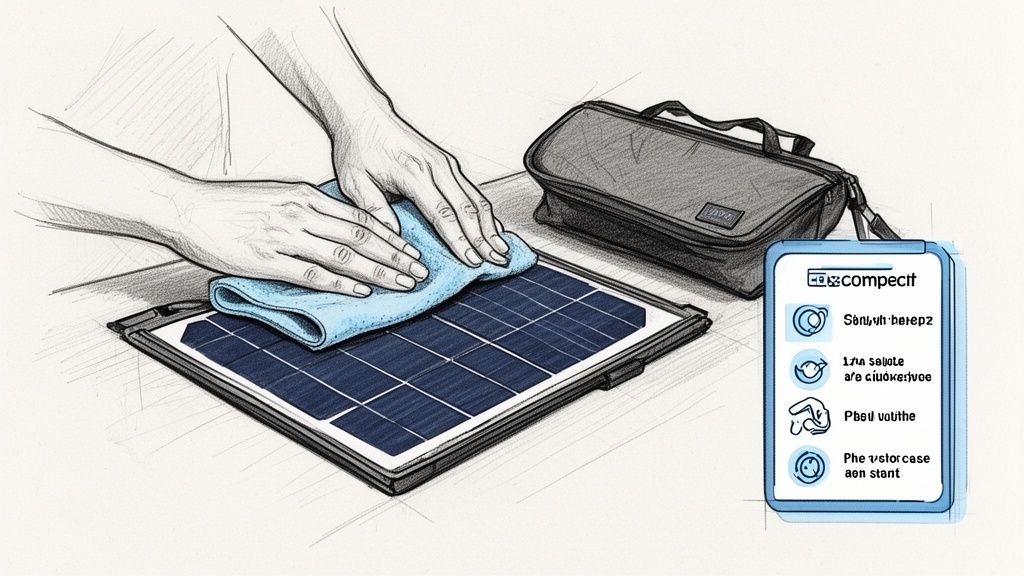
Over time, a fine layer of dust, pollen, or water spots can settle on your panel’s surface, quietly reducing its ability to soak up sunlight. A simple, gentle cleaning is all it takes to restore its full potential.
- Use a soft, non-abrasive cloth: A microfiber towel is perfect. It's best to stay away from harsh brushes or scouring pads that could scratch the surface.
- Start with a dry wipe: This removes most of the loose dust and debris without turning it into mud.
- Use clean water and mild soap: If grime is stubborn, a little bit of gentle soap in water will do the trick. Just be sure to rinse it completely.
To learn more about this process, it can be helpful to read about how to clean solar panels for maximum efficiency. Once your trip is over, storing your panel properly protects it from damage. A dedicated carrying case is ideal for preventing scratches and dings. Store it in a cool, dry place away from extreme temperatures.
"A well-cared-for solar panel is an act of reciprocity. By tending to our gear, we also tend to our commitment to preserving the quiet, beautiful places we love to explore."
A Note on Simple Troubleshooting
Occasionally, you might notice your panel isn't charging as fast as you'd expect. Before you start to worry, a few simple checks usually solve the problem.
First, make sure all the connections are snug and secure. Next, double-check that the panel has a clear, direct view of the sun—even a small shadow from a tree branch can significantly impact its performance. These small acts of care ensure your panel remains a reliable friend, ready for whatever adventure comes next.
A Simple Checklist for Your Solar Journey
Let's bring it all together. This last step isn’t about specs or charts; it’s about taking a minute to think through your own trips. These questions are your compass, pointing you to a solar setup that actually fits how you camp, so it becomes a reliable companion instead of just another piece of gear.
The best solar panels are the ones you forget are even there—they just work, quietly supporting your time outside without a lot of fuss. Answering these questions honestly is the best way to get there.
Defining Your Power Needs
First, what does power really do for your camping experience? Is it for safety, simple comforts, or staying connected?
- What devices give you peace of mind at camp? This could be a GPS for navigating backroads, a phone to check in with family, or a headlamp for moving around after dark.
- What simple comforts make a trip better? Maybe it’s a small speaker for music around the fire, a string of lights for camp ambiance, or keeping your camera battery full to capture the moments that matter.
- What does a successful day of off-grid power look like to you? Is it just keeping the essentials topped off, or is it running something bigger, like a small powered cooler for fresh food?
Your answers here create your personal energy needs. This isn't about getting the most watts possible. It's about powering the small things that make a trip meaningful. Knowing this helps you find what you need, without over-buying or coming up short.
Considering Practical Realities
Next, think about the logistics of bringing a solar panel along for the ride. How will it fit with the gear you already have and the places you love to go?
- How much space are you willing to give up for your power source? Consider your vehicle, your pack, and your campsite. A smaller footprint might be more valuable to you than maximum output.
- What’s your preference for setup and teardown? Do you want a quick, all-in-one panel you can just unfold, or are you okay with a few extra steps if it means more power?
- What kind of weather and terrain do you usually camp in? This will guide your decision on durability and weather resistance, making sure your panel can handle the reality of your adventures.
This simple, thoughtful process is the surest way to find a solar solution that feels like a natural part of your camping style. It helps you choose gear on your own terms, leaving you feeling confident and ready for whatever trip comes next.
Common Questions About Camping Solar Panels
When you're thinking about adding a solar panel to your camping gear, a few questions often come up. It's less about technical specs and more about making sure your setup works how you expect it to. Here are straightforward answers to what most campers ask.
Getting these details sorted out ensures you find a solar setup that genuinely fits how you camp, bringing a little more ease and readiness to your time outside.
How Much Power Do I Really Need for a Weekend?
For a typical weekend trip, a 100W panel paired with a small-to-medium power station is often a wonderful sweet spot. It's usually more than enough to keep your essentials—phones, headlamps, maybe a small speaker or a string of lights—topped off without any worry.
If your plans are a bit bigger, like running a portable fridge to keep food fresh or charging multiple devices for the whole family, stepping up to a 200W panel might be a good move. It just gives you that extra breathing room and peace of mind.
Can I Still Get Power on Cloudy Days?
Yes, you can, though your output will definitely be lower. Modern panels, especially the monocrystalline ones we’ve talked about, are surprisingly good at capturing ambient light even when the sky is gray. Your devices will charge much more slowly, but you won't be left completely without power.
Think of it as a trickle instead of a steady flow. It’s a good reminder to be a little more mindful of your energy use on overcast days, but it’s nice to know your panel is still working for you.
The most important thing for families is usually a balance of durability and simplicity. A sturdy, foldable panel that’s easy to set up and can handle a few bumps brings far more value—and less stress—than a complex or fragile system.
What Should I Do if My Panel Stops Charging?
If your panel isn't charging like it should, a few simple checks usually solve the problem. Before you start to worry, just take a moment to look over your setup.
- Check the Connections: Make sure all the cables are plugged in snugly, both at the panel and at your power station. A loose connection is the most common reason for charging issues.
- Look for Shadows: Even the shadow from a single tree branch can reduce your panel's output significantly. It needs a completely clear, unobstructed view of the sky to work its best.
- Give It a Wipe: A fine layer of dust, pollen, or morning dew can act like a filter. A quick, gentle wipe with a soft cloth can make a huge difference.
At Fort Robin, we believe the right gear should feel like a natural part of your adventures, quietly supporting your time outdoors. Our collection of power solutions is chosen to do just that, helping you stay comfortable and connected on your own terms. Explore our camp power and solar collection to find a companion for your next trip.

