

How to Plan a Camping Trip: A Calm and Practical Guide
Planning a camping trip doesn't start with a checklist. It starts with a feeling. Before you even think about gear or destinations, take a moment to picture your ideal escape. This simple shift turns planning from a chore into the first intentional step of the adventure itself.
Begin with Your Ideal Outdoor Experience
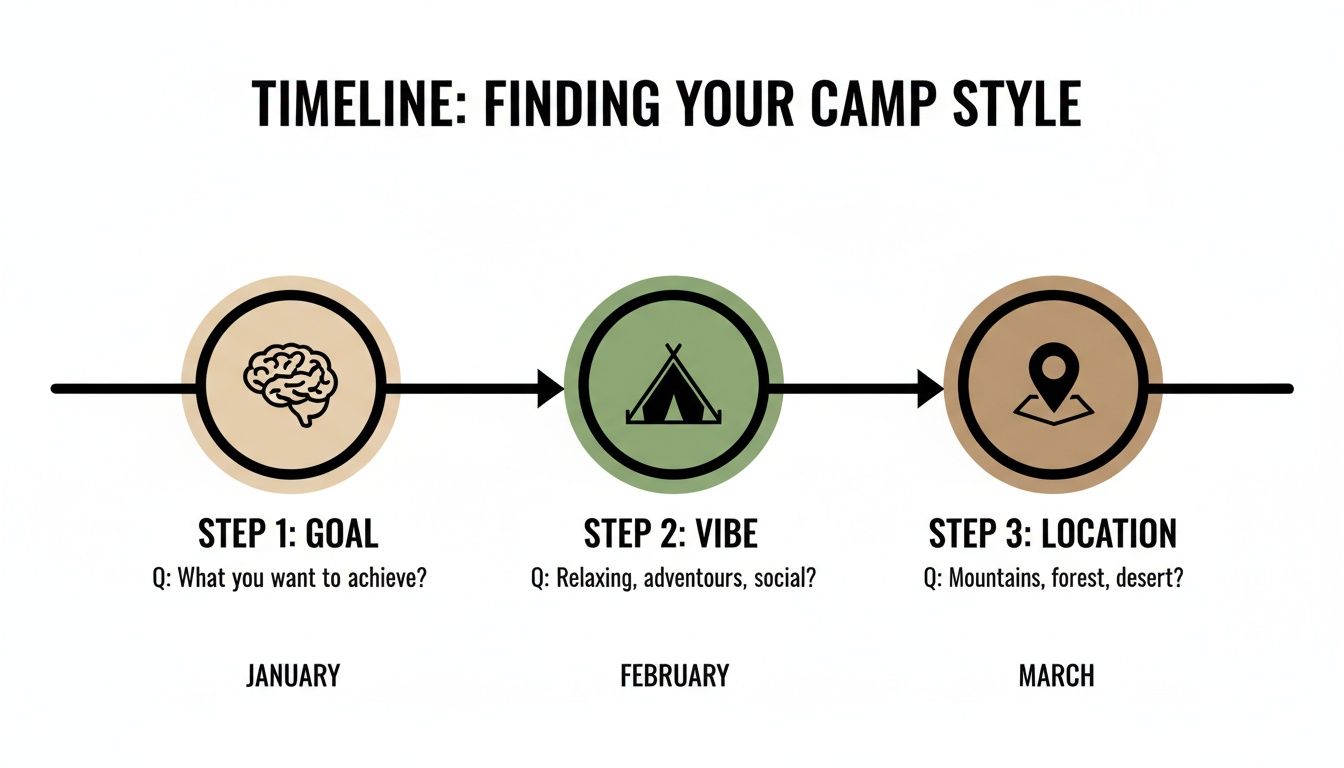
Before you start searching for campsites or pulling bins from the garage, ask yourself what you’re really looking for. Planning becomes a whole lot easier when you start with your "why." The goal isn't just to sleep outside; it's to reconnect with nature, your family, or just a quieter part of yourself.
What’s the vibe? Are you picturing a bustling state park, filled with the happy sounds of kids on bikes and the smell of a dozen campfires? Or are you dreaming of the deep quiet of a remote forest, where the only sounds are the wind and your own crackling fire? There’s no right way to camp. The best trip is the one that lines up with what you need.
Finding Your Camping Style
Pinpointing the experience you want will guide every other decision you make, from location to gear. A trip built for solitude looks very different from one designed for social time.
Think about what fits you right now:
- Quiet Reflection: This might lead you to a secluded walk-in site or a dispersed camping spot in a national forest where you can truly get away from it all.
- Family Bonding: Look for established campgrounds with amenities like playgrounds, easy trails, and ranger programs. These spots are built for creating shared memories.
- A Personal Challenge: Maybe you’re drawn to a multi-day backpacking trip that tests your skills and rewards you with views you have to earn.
- Simple Comforts: Sometimes, the goal is just to read a book in a comfy chair, sip coffee slowly in the morning, and feel the sun on your face.
When you start with the feeling you want to create, planning becomes an act of intention. It transforms a to-do list into a thoughtful process of bringing a vision to life.
Once you know your goal, the next steps feel intuitive, not overwhelming. If you're just starting out, figuring out what's possible is a huge part of the fun. We cover more on this in our guide on what to expect as a first-time camper. This approach ensures that from the very beginning, your trip is designed to deliver the exact kind of restoration you need.
Creating Your Camping Trip Timeline
A good plan doesn't just happen in the final hours before you leave. The best camping trips start weeks, sometimes months, in advance with a simple timeline. Think of it less like a rigid schedule and more like a gentle guide—breaking down the prep work into small, manageable pieces. This approach turns a potential last-minute scramble into a peaceful part of the adventure itself.
When you give yourself room to breathe, you can make decisions with care, not pressure. You have time to find that perfect campsite, coordinate with friends, and thoughtfully gather your gear. Each small step builds anticipation, ensuring you feel calm and ready when it’s finally time to hit the road.
Six to Eight Weeks Before Your Trip
This early window is for dreaming big and locking down the essentials. With camping more popular than ever, booking your spot well in advance has become helpful.
Gone are the days of snagging a prime weekend spot on a whim. The demand for campsites has grown, with rentals now making up over 61.7% of the global market. In some popular areas, finding an open site is up to five times harder than it was just a few years ago. And with the number of U.S. campers expected to hit 80.88 million by 2029, early booking is your best bet for getting the site you really want. You can dive deeper into these camping trends over at Grandview Research.
Here’s what to focus on now:
- Research and Reserve Your Campsite: Start exploring national parks, state forests, or private campgrounds that match the vibe you're after.
- Request Time Off: Get your vacation days approved before your schedule fills up.
- Invite Friends or Family: Lock in dates with everyone you want to bring along.
Getting these big pieces handled early means you can relax, knowing the foundation of your trip is solid.
A simple timeline makes the whole process smoother. Here's a breakdown of how you might spread out your tasks to keep things manageable and stress-free.
A Gentle Camping Planning Timeline
| Timeframe | Key Focus Areas | Example Tasks |
|---|---|---|
| 6-8 Weeks Out | Big Picture & Reservations | Research locations, book your campsite, request time off work, and invite your crew. |
| 3-4 Weeks Out | Gear & Meal Planning | Do a full gear inventory (test your tent!), plan your menu, and make a list of needed supplies. |
| The Final Week | Packing & Final Prep | Buy groceries, pack your clothes and gear, do food prep (chopping veggies), and check your vehicle. |
| Day Before | Last-Minute Items | Pack the cooler with fresh food and ice, download offline maps, and do a final gear check. |
This gentle pace turns what could be a chore into an enjoyable part of the experience, building excitement one step at a time.
Three to Four Weeks Out
With your destination secured, it’s time to shift your focus to the tangible details—what you’ll eat, what you’ll wear, and what gear will make your campsite feel like a home away from home.
Start by sketching out a simple meal plan. Think easy breakfasts, packable lunches for the trail, and satisfying dinners around the campfire. This doesn't have to be complicated, but having a plan now will make your grocery run much easier later.
Next up: a full gear shakedown. Pull out your tent, sleeping bags, camp chairs, and cooking setup. This is the perfect time to pitch your tent in the backyard to check for rips or broken poles and fire up your stove to make sure it’s running smoothly. You want to discover a leaky air mattress now, not when you’re miles from home.
A well-paced plan doesn't just get you ready; it helps you savor the anticipation. Each small task, from checking your gear to planning a meal, becomes a quiet moment of connection to the adventure ahead.
By taking care of this a few weeks out, you give yourself plenty of time to repair, replace, or borrow anything you need without the last-minute panic.
The Final Week
The last week is all about bringing the pieces together so that on departure day, you can just load up and go.
- Go Grocery Shopping: Grab all your non-perishable items early in the week. Wait until the day before you leave to buy fresh stuff like meat, dairy, and produce.
- Pack Your Bags: Get your clothes, toiletries, and personal items packed. Using packing cubes can be a helpful way to keep things organized.
- Prep Your Food: Do any chopping, mixing, or marinating you can ahead of time. Prepping taco meat or pancake mix at home and storing it in reusable containers makes campsite cooking a breeze.
- Check Your Vehicle: A quick check of your tire pressure and a full tank of gas is always a good idea. If you're heading somewhere remote, double-check your spare tire and emergency kit.
- Download Your Digital Goods: Don’t count on having cell service. Download offline maps for your area, plus any playlists, podcasts, or audiobooks you want for the trip.
When your departure day arrives, the only things left should be packing the cooler and loading the car. This thoughtful approach transforms prep work from a stressful chore into a calming ritual, setting the stage for a truly restorative trip.
Gathering Your Gear with Intention
Your gear isn’t just a random assortment of stuff; it's the foundation for comfort and confidence in the outdoors. It's easy to get lost in a long packing list, but a better approach is to think about the why behind each piece. The goal is to build a thoughtful collection of tools that turns a patch of dirt into a warm, inviting home away from home.
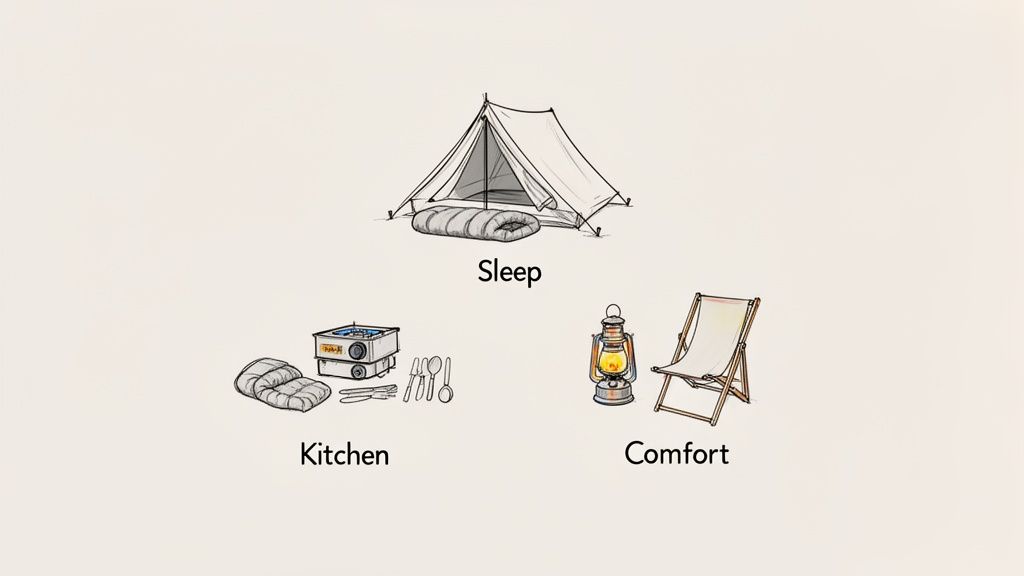
When you start planning, it helps to think in categories rather than tackling one massive list. I always break it down into three core systems: your sleep setup, your camp kitchen, and your living space. This way, you make sure all the essential needs are met, creating a basecamp that’s both functional and restorative.
Building Your Sleep System for Restful Nights
A good night's sleep can make or break a camping trip. Nothing’s worse than shivering all night on cold, hard ground. Your sleep system is your sanctuary, and it has three key components that have to work together.
First up is your shelter—the tent. For families, a larger tent you can stand up in provides welcome space for changing clothes and organizing gear. Overlanders might go for a durable rooftop tent that keeps them off the ground and deploys in minutes. Solo backpackers, on the other hand, will prioritize a lightweight, compact shelter that disappears in their pack.
Next is your sleeping pad, which is arguably the most important piece for comfort and warmth. It’s what insulates you from the cold ground. Finally, your sleeping bag or quilt provides the top layer of warmth. Always choose a bag rated for temperatures a bit colder than you expect; it’s much easier to cool down than it is to get warm.
Creating an Inviting Camp Kitchen
Sharing a meal outdoors is one of the best parts of camping. A well-organized kitchen setup makes the whole experience smooth and enjoyable, turning cooking from a chore into a cherished ritual.
Your kitchen really starts with a reliable stove. A simple two-burner propane stove is perfect for car campers, while overlanders might have a more integrated kitchen system built into their rig. Backpackers will need a tiny, lightweight stove that runs on an isobutane canister.
From there, you build out your kitchen essentials:
- Cookware: A pot for boiling water, a skillet, and a coffee maker are often all you need to get started.
- Tableware: Pack reusable plates, bowls, and utensils for everyone. A dedicated wash basin system helps keep things tidy and contained.
- Food Storage: A quality cooler is non-negotiable for keeping food fresh. Always use wildlife-proof containers or your vehicle to store food securely overnight.
This intentional approach to your camp kitchen means you’ll spend less time digging for a spatula and more time enjoying the sizzle of breakfast in the crisp morning air.
Designing a Comfortable Living Space
Your campsite is more than just a place to sleep—it’s your living room, dining room, and front porch all rolled into one. A few thoughtful additions can transform an empty spot into a cozy and comfortable haven.
Comfortable seating is a must. A sturdy camp chair for each person creates a natural gathering spot around the fire. A portable table provides a central surface for meals, card games, or just setting down your morning coffee.
Lighting also plays a huge role in creating ambiance. While a headlamp is essential for tasks, a few strategically placed lanterns or string lights can cast a warm, inviting glow over your entire site. This simple touch makes camp feel safer and more welcoming after the sun goes down.
Thinking about your gear as a complete system—sleep, kitchen, and living—helps you pack with purpose. It shifts the focus from just bringing 'stuff' to intentionally creating a space that supports rest, connection, and joy.
This mindful approach to gathering gear is becoming more common as people discover the outdoors. The global camping and caravanning market is growing, with projections hitting USD 92.73 billion by 2030. Car camping, the fastest-growing segment, is perfect for families loading up SUVs with rooftop tents and awnings—essentials curated for vehicle-based explorers. With 81.1 million Americans camping annually, the focus is shifting toward quality gear that makes these experiences more accessible. You can explore more on the evolving distribution strategies and market trends that are reshaping the outdoor industry.
Ultimately, your gear serves one purpose: to help you feel at ease in nature. By gathering it with intention, you're not just packing for a trip; you're setting the stage for connection, comfort, and lasting memories.
Planning Meals for Memorable Moments
Food just tastes better outdoors. It’s more than fuel; it’s a way to gather, slow down, and connect. The sizzle of bacon at dawn or the simple joy of a perfectly toasted marshmallow—these are the moments that stick with you. Planning your camp meals is really about planning the moments you want to create.
A little forethought in your home kitchen can completely transform your time at the campsite, turning cooking from a chore into a relaxing part of the experience. It’s all about setting yourself up for success so you can spend less time scrambling and more time soaking it all in.
Design a Simple and Satisfying Menu
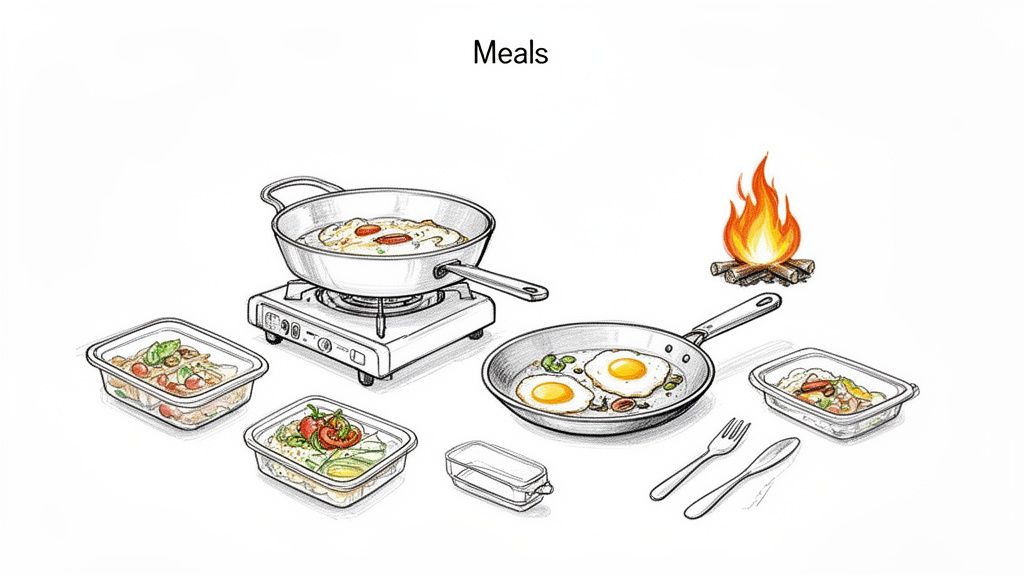
The secret to a great camp menu is simplicity. Think one-pot wonders, make-ahead dishes, and meals that require minimal cookware. Your goal is easy cooking and even easier cleanup.
When you’re planning a weekend trip, go for an easy win on the first night. Arriving at a campsite, especially after dark, can be hectic. Having a dinner that’s already prepped and just needs reheating lets you settle in without the stress.
Here are a few ideas that always work well:
- Breakfasts: Oatmeal with pre-mixed dry ingredients, breakfast burritos wrapped in foil to heat over the fire, or a simple "just-add-water" pancake mix.
- Lunches: Sandwiches with fillings made at home, charcuterie-style boards with cheese and crackers, or a hearty soup packed in a thermos.
- Dinners: A pre-made chili or stew, foil-packet meals with sausage and veggies, or walking tacos where all you have to do is warm up the ground beef.
By focusing on simple, hearty meals, you give yourself the gift of time. The best camp food isn't complicated; it's the food that brings everyone together around the fire with smiles on their faces.
This approach keeps your camp kitchen manageable and lets the focus stay on the experience itself. A little planning goes a long way, especially when you figure out how to wash dishes while camping efficiently.
Prep at Home for a Low-Stress Campsite
Your home kitchen is your best friend before any camping trip. The more you can get done before you leave, the less you'll have to worry about at the campsite where counter space is a luxury and light can be scarce.
Think of it as setting your future self up for success. Pre-chopping vegetables, marinating meats, and mixing spices at home saves an incredible amount of time and effort. Pack everything in labeled, reusable containers or zip-top bags, ready to go.
Here’s a practical prep workflow:
- Chop and Store: Dice onions, peppers, and other veggies. Keep them in airtight containers.
- Mix and Measure: Combine spices for each recipe in small bags. Measure out pancake mix or coffee grounds so you don't have to bring bulky original packaging.
- Pre-Cook When Possible: Brown ground beef for tacos or chili. Hard-boil a few eggs for quick snacks.
- Crack Your Eggs: Instead of risking a carton of broken eggs, crack them into a sealable bottle or jar. A dozen eggs fit perfectly in a 32-ounce bottle, making scrambled eggs completely mess-free.
This prep work also minimizes the trash you have to pack out, which is a key part of following Leave No Trace principles.
Storing Food Safely Outdoors
Proper food storage at the campsite is all about two things: keeping your food fresh and keeping wildlife safe. A well-organized cooler and a secure bin for dry goods are non-negotiable parts of any camp kitchen.
Start with a quality cooler. Pre-chill it the night before with a sacrificial bag of ice. Before you pack it with food, drain the water and add fresh ice or frozen blocks. Pack your meals in reverse order—dinner for the first night goes on top, breakfast for the last day on the bottom.
For dry goods, a sturdy, latching storage bin is perfect. It keeps everything organized and protects your food from curious critters. At night, or anytime you leave your campsite, all food, coolers, and scented items (like toothpaste) must be stored in your vehicle. This is the single most reliable way to prevent unwanted encounters with bears, raccoons, and other wildlife. It keeps them wild and your trip peaceful—a simple step that shows you're a responsible guest in their home.
Preparing for a Safe and Comfortable Trip
The best kind of relaxation outdoors comes from a quiet confidence in your own preparedness. When you know you’re ready for what the weather might bring or how to handle a small scrape, you’re free to soak in the beauty around you. This isn’t about worrying—it’s about taking thoughtful care of yourself and the places you visit.
This simple, proactive mindset turns potential anxieties into easy, actionable steps. A few intentional preparations before you leave home build a foundation of safety and comfort, paving the way for a truly restorative trip.
Know Your Environment Before You Go
Every outdoor space has its own unique character and rhythm. Taking a few moments to understand your destination is an act of respect that also happens to be the smartest way to ensure your comfort and safety.
Start by checking the weather forecast a few days out, and then check it again right before you leave. Weather in the mountains or near large bodies of water can change in a heartbeat. Knowing the expected highs and lows helps you pack the right layers, while being aware of potential rain or wind helps you find the most sheltered spot for your tent.
It’s also wise to learn about the local wildlife. A quick search on the park’s website will tell you if you need to be mindful of bears, raccoons, or other curious animals. This simple bit of knowledge informs crucial habits, like storing all food and scented items in your vehicle to keep both your supplies and the wildlife safe.
Setting Up a Secure Campsite
Once you arrive, a few key logistics can make a world of difference. Choosing the right spot for your tent is about more than just a nice view; it's about creating a stable, restful, and dry space to call home.
Look for a flat, durable surface free of sharp rocks or roots. If the ground is slightly sloped—and it often is—always position your tent so you'll be sleeping with your head uphill. Before you pitch anything, it's a good practice to lay down a footprint or tarp. This creates a simple but effective barrier against moisture and cold seeping up from the ground.
For those whose adventures are vehicle-based, a quick check-in with your rig is essential.
- Tire Pressure: Make sure your tires are properly inflated for the terrain you'll be covering, especially if you're heading down gravel or dirt roads.
- Essential Fluids: A quick look at your oil and coolant levels provides serious peace of mind before you venture away from services.
- Recovery Gear: If you're overlanding, double-check that your recovery kit is easily accessible—not buried under a week's worth of gear.
A well-prepared campsite is a peaceful one. These small acts of setting up—checking your surroundings, securing your space—are calming rituals that connect you to the place you’ve come to enjoy.
Practice Gentle Stewardship
A safe and comfortable trip extends beyond our own needs; it includes caring for the environment that hosts us. The Leave No Trace principles are a simple, powerful framework for enjoying the outdoors responsibly.
This means packing out everything you pack in, including small food scraps. It means respecting wildlife by observing from a distance and never, ever feeding them. It also means being considerate of other visitors by keeping noise levels down, allowing everyone to enjoy the quiet sounds of nature.
Finally, a well-stocked first-aid kit is one of the most essential pieces of gear you can carry. While you hope not to need it, having supplies for minor cuts, blisters, or insect bites is a simple way to ensure small issues don't become trip-ruining problems. For anyone looking to build a reliable kit, our thoughts on how to be prepared for every family adventure can offer a helpful starting point. These proactive steps are the quiet work that makes for a truly wonderful time outdoors.
Common Camping Planning Questions Answered
Even the most organized trip plan leaves a few lingering questions. Below are answers to some of the most common ones we hear, based on years of experience setting up camp in all sorts of conditions.
How Far in Advance Should I Book a Campsite?
This one really depends on where you want to go. For popular national or state parks, especially on a holiday weekend, you’ll want to book 6 to 12 months ahead. Those spots can disappear the minute reservations open.
For less famous spots or if you’re traveling in the off-season, booking 1 to 3 months out is usually a safe bet. If you're the spontaneous type, your best options will be first-come, first-served campgrounds or finding a dispersed camping area.
What Is the Biggest Mistake First-Time Campers Make?
Hands down, it's underestimating how much a good night's sleep matters. A cold, uncomfortable night on the ground can ruin an otherwise amazing trip. Don’t skimp on your sleep system.
Invest in a quality sleeping pad with an R-value that matches the temperatures you expect, a comfortable sleeping bag, and a pillow (even an inflatable one). Another pro tip: do a trial run in your backyard. Pitch the tent, inflate the pad, and fire up the stove. It's much better to work out the kinks at home.
Taking the time to test your setup at home transforms your first night at the campsite from a test run into a restful experience. It's a small act of preparation that pays off in comfort and peace of mind.
How Much Should I Budget for a Weekend Camping Trip?
Your budget can swing pretty widely, but a good starting point for a family is around $150-$250 for a weekend. That's assuming you already own the major gear. This estimate usually covers campsite fees, gas for the car, food, and a bundle of firewood.
With over 11 million new U.S. households getting into camping in the last five years, daily spending has settled at around $200 per household. Planning for that amount helps make sure you're covered for the essentials and a few small extras. For a deeper dive into current costs and trends, check out the 2025 Camping & Outdoor Hospitality Report.
At Fort Robin, we believe the right gear can make all the difference in creating a comfortable home away from home. Explore our curated collections to find everything you need for your next adventure, from sleep systems to camp kitchens, at https://fortrobin.com.
Written with the Outrank tool

