

Finding Comfort and Warmth Outdoors: A Guide to the Insulated Sleeping Pad
An insulated sleeping pad is the quiet foundation of a warm, comfortable night outdoors. It’s a simple thermal barrier between your body and the cool ground. More than just a cushion, its main purpose is to prevent heat loss, helping you stay warm from sundown to sunrise. It is the unsung companion for a good night's sleep under the stars.
Finding Rest and Warmth Under the Stars
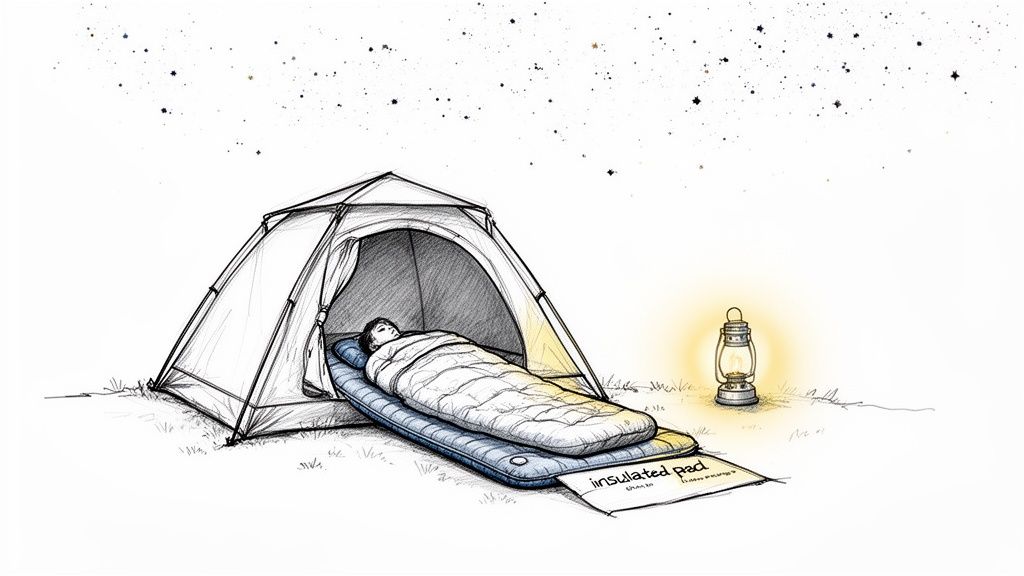
There’s a unique quiet that settles in after sunset, when the world calms down and the stars begin to show. It’s in these moments we often look for a deeper connection with the outdoors—a sense of peace that can be hard to find in everyday life. But that quiet connection can be quickly interrupted by a night spent tossing and turning, feeling the cold ground seep into your bones.
Many of us have been there, waking up stiff and chilled, feeling more tired than when we laid down. It’s easy to think that discomfort is just part of camping. But real, restorative rest is possible, and it often starts with a simple, thoughtful foundation for warmth.
The Foundation of a Good Night's Sleep
An insulated sleeping pad is that foundation. It’s the quiet companion in any camp setup, working all night to hold the cold at bay. Its purpose goes far beyond simple cushioning; it’s about creating your own personal space of warmth and comfort.
Understanding how it works is a small step that can completely transform your outdoor experiences. This guide will walk you through what makes these pads so essential, leaving you feeling welcome to get back outside on your own terms.
A great night's sleep isn't just about being comfortable—it's about waking up with a clear mind and a full heart, ready for the day. And if you're exploring other sleep setups, you might be interested in our thoughts on why camp cots are the secret to better sleep outdoors.
What Is an Insulated Sleeping Pad?
At its core, an insulated sleeping pad is a simple but incredibly thoughtful piece of gear. It’s designed to do two things really well. The first is clear: provide a soft cushion between you and the hard, uneven ground. That alone can be the difference between a restless night and a great one.
But its second job is far more important—acting as a thermal barrier. The cold ground is a massive heat sink, constantly trying to pull warmth away from your body. This process, called conduction, is the fastest way to get chilled outdoors, no matter how wonderful your sleeping bag is.
An insulated pad helps to slow this transfer of warmth. Without it, you’re essentially sleeping on a cool surface, which encourages your body to use precious energy all night just to stay warm. The pad creates a stable, insulated surface that lets your sleeping bag do its job and invites you to get deep, restorative rest.
More Than Just an Air Mattress
It’s easy to mistake an insulated pad for a basic air mattress you might use for house guests, but they are worlds apart. While both use air for cushioning, a standard air mattress offers almost no protection from the cold. The air inside it can move freely, letting the ground’s chill pass right through.
An insulated sleeping pad is specifically designed to trap heat. Inside, you’ll find materials like synthetic fibers, down feathers, or even special reflective films that create thousands of tiny, still-air pockets. These pockets stop air from circulating, which is the key to preventing your body heat from escaping and the ground’s cold from creeping in. It’s this thoughtful design that turns a simple cushion into an essential piece of outdoor gear.
An insulated sleeping pad does more than cushion; it helps conserve your body's energy. By slowing heat loss to the cold ground, it allows your sleeping bag to work as intended and provides the foundation for a truly restorative night's sleep.
This focus on real-world warmth and comfort has resonated with many people. The community of people using high-quality sleeping pads has grown, reflecting a broader desire for more enjoyable, sustainable time outdoors. Valued at USD 500 million in 2024, the global market is expected to more than double in the coming years. It’s clear that more and more people are discovering just how valuable a good night’s sleep outside can be. You can dive deeper into these trends with insights from Verified Market Reports.
Introducing R-Value: A Simple Measure of Warmth
To help make sense of how well a pad resists the cold, the outdoor industry came up with a simple rating called R-value. You don't need a science degree to understand it—the concept is wonderfully straightforward.
- A higher R-value means more insulation. A pad with an R-value of 4 is twice as warm as a pad with an R-value of 2.
- It’s a universal standard. This number lets you compare the warmth of different pads on an even playing field, no matter the brand, style, or materials inside.
Think of R-value as a simple warmth score. It helps you pick the right tool for the conditions. A low R-value is well-suited for mild summer nights, while a high R-value is important for keeping you warm when the temperature drops. Understanding this one number is a helpful step toward building a sleep system that keeps you comfortable, season after season.
Understanding R-Value and Insulation Materials
Think of an insulated sleeping pad like a thermos for your body. It doesn't create heat, but it does an incredible job of stopping the cold ground from stealing the warmth you naturally produce. A pad’s performance really comes down to two things: its R-value, which is a measure of its insulating power, and the materials inside that do the quiet work of trapping warmth.
Finding the right combination for you can lead to a pad that feels perfect for your adventures.
The R-value is just a straightforward number that tells you how well a pad resists heat loss. The higher the number, the warmer you'll sleep. It's a universal standard, which makes it easy to compare different pads and match your gear to the season.
A pad with an R-value around 2 is great for mild summer nights, while something with an R-value of 6 is what you’ll want when the ground is frozen. It’s a simple way to know what to expect before you even unroll it.
Decoding the Warmth Rating
Choosing the right R-value is all about thinking ahead to the conditions you'll face. A good night's sleep often depends more on matching your pad’s warmth to the temperature of the ground, not just the air. The cold ground is persistent and will pull heat from you all night long without a proper thermal barrier.
To make it simple, we put together a quick guide to help you match R-values with the seasons.
Seasonal R-Value Guide
| Season | R-Value Range | Typical Ground Temperature | Best For |
|---|---|---|---|
| Warm Weather | 1-2 | Mild to Warm | Summer trips, low-elevation camping, desert nights. |
| Three-Season | 2-4 | Cool to Cold | A helpful range for most spring, summer, and fall adventures. |
| Cold Weather | 4-6 | Cold to Frozen | Late-season trips, winter camping, high-altitude treks. |
| Extreme Cold | 6+ | Deeply Frozen | Mountaineering, polar expeditions, or for those who sleep very cold. |
This table can serve as a solid starting point. Remember, if you tend to sleep cold, it never hurts to choose a pad with a slightly higher R-value for extra peace of mind.
An insulated sleeping pad is designed to do two key jobs: provide a comfortable cushion against the hard ground and create that important thermal barrier to keep you warm.
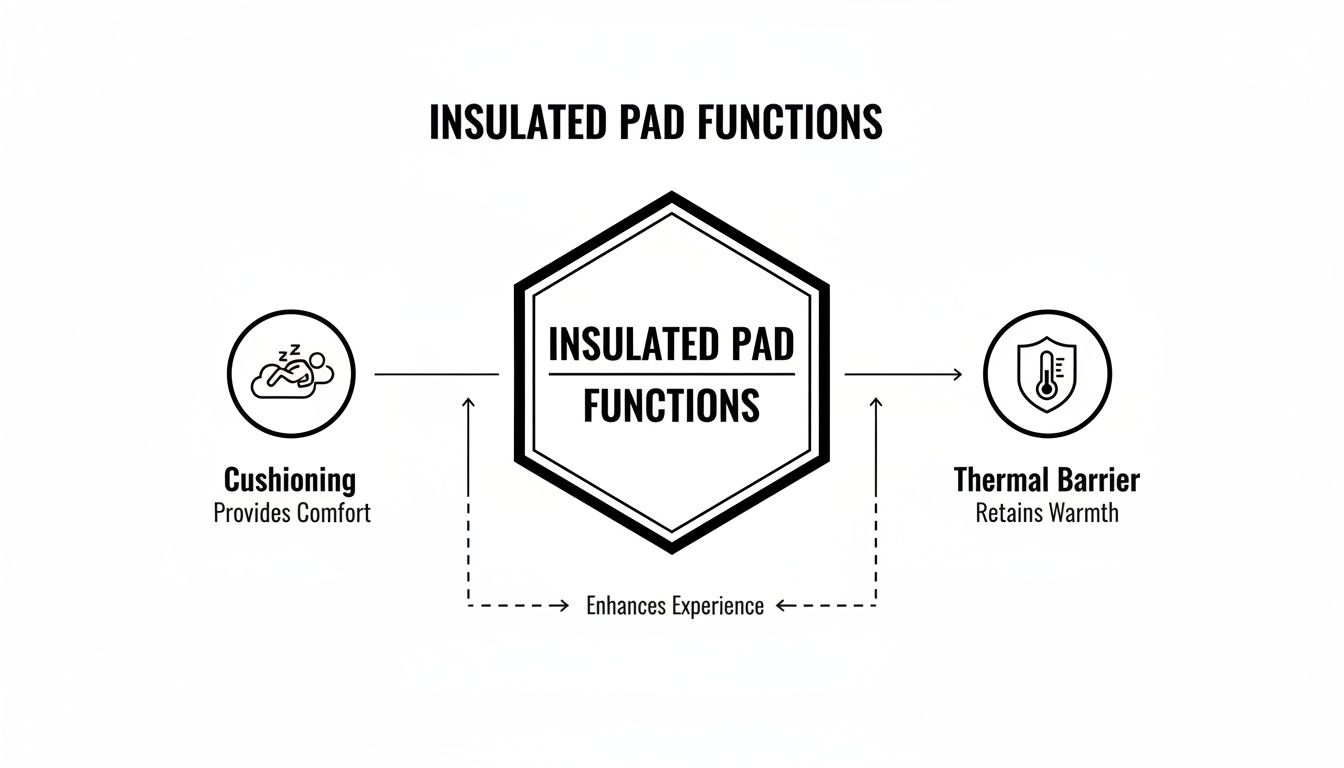
As this shows, it's the combination of cushioning and warmth that leads to a truly restorative night outdoors.
The Materials That Keep You Warm
The quiet work of an insulated sleeping pad happens on the inside. Different materials are used to trap air and slow your body heat from escaping into the ground. Most pads use one of three common approaches to create that cozy layer between you and the earth.
Synthetic Insulation
Imagine a lightweight fleece jacket tucked inside your sleeping pad. That's essentially how synthetic insulation works. It’s made of fine, tangled fibers that create thousands of tiny air pockets. These pockets trap your body heat, holding a layer of warmth right next to you all night.
Synthetic fill is a wonderful choice. It’s reliable, performs well even if a little moisture gets inside, and offers a fantastic balance of warmth, durability, and comfort. It's a trusted option for a huge range of conditions.
The goal is to find a pad that feels like an extension of your own desire for rest and reconnection. It's not about the highest specs, but about what will reliably keep you warm and comfortable, allowing you to wake up ready for the quiet beauty of a new day.
Down Insulation
Down—the soft, lofty plumage from geese and ducks—is nature's super-insulator. Its incredibly fine clusters create a three-dimensional structure that traps a significant amount of air for its weight. A down-filled pad can feel exceptionally warm and compresses down to a surprisingly small package, which can be a real plus for backpackers.
The one thing to keep in mind is that down loses some of its insulating power when it gets wet. Because of this, it’s usually best for dry, cold environments where its amazing warmth-to-weight ratio can really shine.
Reflective Films
Some innovative pads take a different approach, using thin, metallic films inside their air chambers. These films work much like an emergency space blanket by reflecting your body heat right back toward you. This technology is incredibly lightweight and adds a serious warmth boost without adding much bulk or weight.
Early versions of these pads had a reputation for making a crinkly sound, but modern designs are much quieter. Their efficiency has made them a popular choice in many of today’s lightest and most packable sleeping pads.
This kind of thoughtful engineering is what really separates a modern pad from older designs. The best insulated pads use special baffles and foam that can increase warmth by up to 30% compared to a simple, uninsulated air pad. We've come a long way from the basic foam mats of the 1980s. By 2024, these advanced, packable pads had captured over 40% of the market as their packed size shrank enough to fit easily inside a water bottle pocket. You can learn more about these market trends on IndustryGrowthInsights.com.
Choosing a Pad for Your Style of Adventure
All the technical details—R-value, insulation type, weight—are only half the story. The other half is yours. It’s about how you get outside, what makes you feel comfortable, and the kind of quiet mornings you’re hoping to wake up to.
Choosing a sleeping pad gets a whole lot easier when you stop seeing it as just another piece of gear and start seeing it as a companion for your specific way of exploring. Let's walk through a few different journeys and the kind of rest each one invites.
The Family Car Camper
When the whole family piles into the car for a weekend at a favorite campground, the adventure is all about connection. It's about building a temporary home away from home. The drive is part of the fun, and nobody is counting every ounce in a backpack. Here, comfort is a welcome friend.
For the car camper, the priorities might look a little different:
- Generous Cushioning: With no real limits on weight or size, a thicker, plusher pad makes a world of difference. It can smooth over lumpy, uneven ground and deliver a level of comfort that feels wonderfully luxurious under the stars.
- Durability: This pad might get used by kids, dragged in and out of a big tent, or tossed on a ground tarp that isn't perfectly clear of twigs. A tough outer fabric that resists scrapes and punctures can offer great peace of mind.
- Simplicity: Ease of use is a gift. A self-inflating pad that does most of the work for you, or a large air pad with a high-volume pump sack, means less time fussing with gear and more time around the campfire.
The car camper’s insulated sleeping pad is the foundation for a shared space of rest. It’s less about shaving grams and more about creating a soft, warm, and inviting place for stories and a deep, restorative sleep.
The Vehicle-Based Overlander
The overlander’s world is one of self-reliance and exploration, often pushing into remote landscapes where you bring everything you need with you. The vehicle is a carefully organized basecamp, and a sleeping pad is a welcome piece of that system.
Their needs are a blend of simple ruggedness and thoughtful design:
- Robust Construction: An overlanding pad should be tough enough to handle life on the road. It might get used in a rooftop tent, on the floor of an SUV, or placed on a cot under an awning. Durability is a key consideration.
- Serious Comfort and Warmth: After a long day of driving washboard roads or hiking a new trail, a good night's sleep is invaluable. A high R-value and thick cushioning help ensure you stay warm and comfortable, even when the temperature unexpectedly drops in the backcountry.
- Practical Shape: Many overlanders look for rectangular pads that fit perfectly side-by-side, which helps to remove that annoying gap between you and your partner. It’s a small detail that makes a shared sleep setup feel much more unified and comfortable.
The overlander's choice is often a thick, durable, and highly insulated pad that slots right into their mobile camp. It’s a reliable piece of gear that promises consistent comfort, night after night, wherever the trail decides to take them.
The Quiet Backpacker
For the backpacker, every single item is a conscious choice—a constant balancing act between necessity and weight. The journey is measured in footsteps, and the destination is often a quiet spot far from everything. Here, efficiency is valued.
The backpacker’s needs are shaped entirely by the trail:
- Low Weight and Packability: A great pad is one that almost disappears in your pack. Modern insulated sleeping pads offer incredible warmth while packing down to the size of a 1-liter water bottle, which is a wonderful innovation for anyone carrying their home on their back.
- High Warmth-to-Weight Ratio: Backpackers often look for a pad that delivers serious insulation without adding a lot of ounces. This is where advanced materials like reflective films and high-quality down really shine, offering high R-values in a featherlight package.
- Reliability: When you're miles from the trailhead, a gear issue is more than a minor inconvenience. A pad with a reputation for durability, along with a field repair kit, offers the confidence to explore deeper into the wild.
The backpacker’s insulated pad is a true marvel of engineering. It’s the warm, soft space they unroll at the end of a long day’s hike—a small comfort that makes a massive difference out there. As you think about your own trips, you might find our complete guide to choosing the right sleeping pad for every adventure helpful.
Your ideal sleeping pad is the one that meets you where you are. It aligns with your pace, your priorities, and your personal definition of comfort, ensuring your time outdoors is restorative in every sense.
How Your Pad Creates a Complete Sleep System
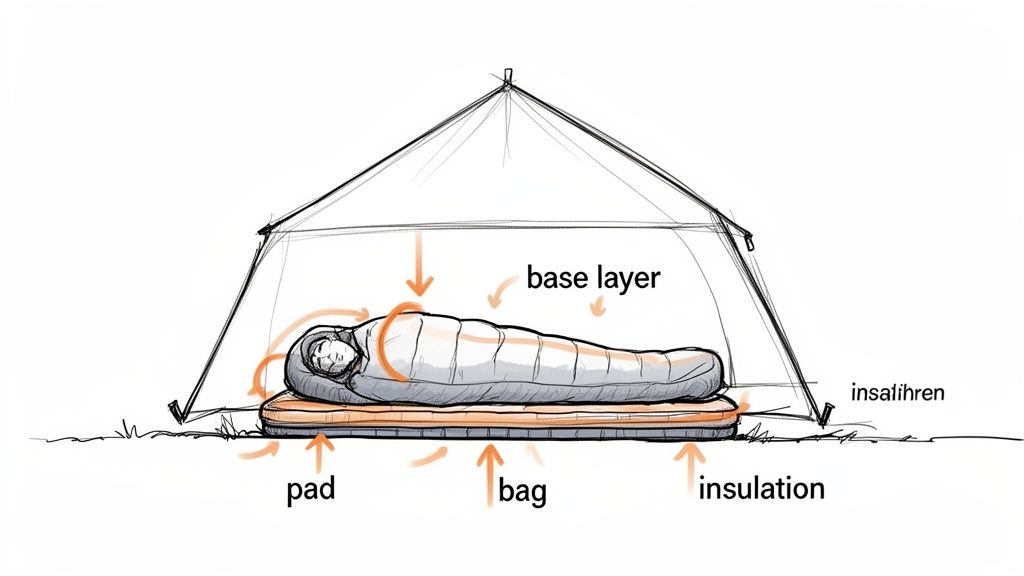
An insulated sleeping pad is a fantastic foundation for a good night's rest, but it doesn't work alone. The best nights outdoors happen when we stop seeing our gear as individual items and start thinking of it as a complete system where every piece has a job. Your sleeping pad, your bag, and your shelter are a team—and each one needs the others to perform at its best.
Think of it like dressing for a cold day. You wouldn't just throw on a heavy winter coat over a t-shirt and expect to be warm. In this setup, your insulated pad is that important base layer. It’s the part of your sleep system that helps slow the cold ground from stealing your warmth, freeing up your sleeping bag to do what it was designed for: keeping you cozy.
The Partnership Between Pad and Bag
That temperature rating on your sleeping bag is a promise, but it’s a promise that assumes you have proper insulation underneath you. A bag rated for 20°F can’t live up to that rating if it’s sitting on a flimsy pad with an R-value of 1. The cold ground will simply pull your body heat right through the compressed insulation on the bottom of the bag, which can leave you shivering no matter how puffy the top is.
This is why understanding R-value can be so helpful. When you pair your pad’s warmth with your bag’s temperature rating, you create a more complete circle of insulation. The pad guards you from the ground, and the bag guards you from the air, working together to keep you comfortable all night.
A warm sleeping bag on a cold sleeping pad is an incomplete system. True warmth comes from ensuring the ground beneath you is just as insulated as the air above you.
More and more campers are realizing that comfort comes from this systemic approach. The market for insulated pads is growing right alongside the sleeping bag industry, as people pair them up for the best performance. A pad with an R-value of 4.5, for example, can keep your sleeping surface up to 10 degrees warmer than the ground—a significant difference when the weather turns. For more on these market dynamics, check out DataIntellents.com.
Matching Your Gear to the Conditions
Building a great sleep system isn't about chasing the highest numbers; it's about being thoughtful. It’s about checking the forecast, knowing the season, and picking the right combination of tools for the adventure you have planned.
Here are a few simple ways to think about pairing your gear:
- For Cool Spring and Fall Nights: A three-season sleeping bag (rated around 15°F to 30°F) is a perfect match for an insulated pad in the R-value 3-4 range. This combination will handle the vast majority of camping conditions with ease.
- For Balmy Summer Evenings: When the ground itself is warm, you can often feel comfortable with a lighter quilt or bag and a pad with an R-value of 2 or less. In this case, cushioning is often more important than insulation.
- For Cold Winter Camping: This is where your system really shines. A winter bag (rated 0°F or lower) benefits from a pad with an R-value of 5.5 or higher. Many seasoned winter campers will even stack a closed-cell foam pad under their inflatable one for extra warmth and failsafe protection.
Once you start thinking this way, you move beyond just buying gear and start assembling a sleep system you can truly trust. For a deeper dive, our guide on how to build a better night's sleep outdoors has even more ideas. It’s about building that quiet confidence that comes from knowing you’re prepared for whatever the night brings.
Caring for Your Insulated Sleeping Pad
Your sleeping pad is one of the most important pieces of gear in your pack. It’s the foundation of a good night's sleep outdoors, and taking a few moments to care for it ensures it will be ready for your next trip—and many more after that.
Think of it less like a chore and more like a simple ritual. A little attention when you get home from an adventure goes a long way in extending the life of your gear.
Simple Steps for Cleaning and Storing
Proper care starts the minute you walk in the door. Before you think about putting your pad away, give it a quick cleaning to remove any dirt, sweat, or body oils that can break down the fabric over time.
- Gentle Cleaning: Use a soft cloth with a bit of mild soap and lukewarm water to wipe down the entire surface. It's best to steer clear of harsh detergents, as they can damage the pad’s materials and protective coatings.
- Thorough Drying: Once it’s clean, leave the valve open and let the pad air dry completely. Trapped moisture can lead to mildew, so a little patience here is key.
After it's clean and dry, how you store your pad is the single most important factor for its longevity.
Storing an insulated sleeping pad is like letting a muscle relax. Keeping it unrolled with the valve open allows the internal insulation to decompress and maintain its loft, ensuring it can do its job of keeping you warm for years.
Find a cool, dry place like under a bed or in the back of a closet. It's best not to store it compressed in its stuff sack for long periods. This can permanently crush the foam and insulation, which can reduce its ability to keep you warm when you need it most.
Making Repairs in the Field
Even the most well-cared-for pad can get a puncture. A stray rock or thorn doesn’t have to ruin your night, though. Most pads come with a small patch kit, and knowing how to use it is a skill that brings quiet confidence to any trip.
If you hear that telltale hiss, don't panic. If you're near water, you can submerge the inflated pad and look for a stream of bubbles to pinpoint the leak. Mark the spot, dry the area thoroughly, and apply the patch following the kit’s instructions. It’s a simple fix that turns a potential trip-ender into a minor inconvenience.
A Few Final Questions
As you get ready to choose an insulated pad, it's normal for a few last questions to come to mind. Here’s some straightforward advice to help you feel confident before your next trip.
Can I Use My Backpacking Pad for Car Camping?
Absolutely. There's no rule against it, and using the gear you already own is always a thoughtful choice. A lightweight backpacking pad will certainly do the job of keeping you warm and cushioned.
The main difference you'll notice is comfort. Car camping pads are often luxuriously thick and wide because you don't have to carry them on your back. If you find your backpacking pad feels a bit narrow after a few nights, you might decide a plusher car camping model is a welcome addition to your kit for those trips where space is no object.
Can I Stack Two Sleeping Pads for More Warmth?
Yes, and this is a classic approach for cold-weather camping. R-values are additive, so you can simply add them together to get the total insulation of your setup. For instance, putting a closed-cell foam pad (R-value of 2) under your inflatable pad (R-value of 4) gives you a combined R-value of 6.
Stacking pads is a time-tested method for four-season comfort. It not only boosts your insulation from the frozen ground but also adds a layer of puncture protection—a helpful failsafe in case your air pad springs a leak.
This approach creates a seriously warm and reliable foundation, letting you sleep soundly even when the temperature really drops.
How Do I Find a Leak in My Pad?
Hunting for a pinhole leak can feel a little tedious, but it just takes some patience. The easiest way is to fully inflate the pad and submerge it in a bathtub or a calm lake.
Press down gently on the pad and look for a tiny, steady stream of bubbles. That's your spot. If you’re not near water, mix a little soap and water in a spray bottle, mist the pad, and watch for a bubble to form and grow. Once you spot it, circle the hole with a permanent marker so you don't lose it, let the area dry completely, and apply a patch from your repair kit.
At Fort Robin, we believe the best gear is just a tool to help you reconnect with the quiet and beauty of the outdoors. An insulated sleeping pad is your invitation to a warm, restorative night's sleep, so you can wake up ready for whatever the day has in store.
Explore our curated sleep systems and find the foundation for your next adventure at https://fortrobin.com.

