

Finding Your Shelter in the Wild: A Guide to the Single Person Backpacking Tent
A single person tent for backpacking is more than just a piece of gear; it’s your private shelter in the wild. It’s the quiet, protected space where you can rest, recharge, and connect with the outdoors on your own terms.
Finding Your Quiet Place in the Wild
Choosing a solo tent is a personal decision. It’s an invitation to think about what you really need to feel secure and comfortable when you’re out there alone. Instead of focusing on technical specifications, think of it as creating a temporary home—a quiet spot just for you. This guide is here to walk you through that process, gently and thoughtfully.
The right single-person tent becomes a reliable companion, one that fits your style of adventure. Maybe you need a lightweight shelter for long, reflective days on the trail. Or perhaps you prefer something a bit roomier for slow mornings with a warm drink. Either way, the goal is the same: to find a space that feels right.
The Core Elements of Comfort
To get started, let’s explore three fundamental ideas that shape how a tent feels in the wild. Think of these less as technical specs and more as personal preferences that define what comfort means to you.
- Weight: How much a tent weighs directly impacts the feel of your hike. A lighter pack can free you up to cover more ground or simply move with more ease.
- Space: This is your personal bubble. It’s about having enough room to sleep well and organize your gear without feeling cramped.
- Protection: At its core, a tent provides security from the elements. It allows you to rest deeply, knowing you’re shielded from wind, rain, and insects.
Your tent is the boundary between you and the wild—a thin wall that fosters a deep sense of connection by providing a safe place from which to observe, listen, and simply be.
As you look for your perfect spot in the backcountry, remember the importance of sustainable camping practices that preserve these wild places. Our choices, from the gear we carry to how we interact with the land, help keep these quiet places special for everyone. This guide will help you make a choice that serves your needs while honoring the landscapes you love.
Matching Your Tent to Your Journey
Choosing a one-person backpacking tent isn’t about finding the "best" one on the market. It’s about finding the right one for you—a shelter that matches the kinds of trips you have in mind. Think of it like picking a jacket for the weather. You wouldn’t grab a light windbreaker for a snowstorm or a heavy parka for a warm summer evening.
The same logic applies to your tent. The term "season rating" may sound technical, but it's really just a simple way of describing what kind of weather a tent is built to handle. It helps you anticipate the conditions you’ll most likely meet out on the trail.
When you're getting started, picking the right gear is a meaningful part of preparing for your time away. This is a key part of planning your backpacking trip, and it helps you think through all these little details before you leave home.
Tent Season Ratings at a Glance
For most backpacking trips, you'll be looking at what is often called a "3-season" tent. This term describes a range of conditions, not a strict set of calendar dates. A 3-season tent is a versatile companion, built to handle the generally mild weather of spring, summer, and fall. It offers a welcome balance of ventilation, bug protection, and strength for moderate rain and wind.
On the other end of the spectrum are 4-season tents. These are specialized shelters built for challenging conditions, specifically winter mountaineering. They’re designed to shrug off heavy snow and stand up to strong winds, often with less mesh and more robust fabric to trap warmth. They are your steadfast guardians in true alpine environments.
The table below gives a quiet overview to help you match a tent's rating to your plans.
| Season Rating | Best For | Key Feature |
|---|---|---|
| 3-Season | Spring, summer, and fall backpacking | Balances weather protection with excellent ventilation |
| 4-Season | Winter camping and mountaineering | Built to withstand heavy snow and high winds |
For most solo journeys, a 3-season tent is a wonderful choice, providing the right blend of protection and breathability. You can find plenty of thoughtfully selected shelters in our collection of backpacking tents.
Finding Your Comfortable Pace with Weight
Just as important as the weather is the rhythm of your travel. The discussion around tent weight isn't about a competition for the lightest pack; it's a personal conversation about comfort and pace. How you want to move through the wild will point you toward the right shelter.
A solo backpacking tent can range from sturdy and spacious to wonderfully light. Neither is better—they just serve different kinds of trips. A slightly heavier, more comfortable tent might be perfect for relaxed weekend getaways where you linger at camp. A lighter model, on the other hand, can feel liberating on long-distance treks where every ounce is felt over many miles.
The interest in lighter gear has grown as more people take on long trails. The market for ultralight backpacking shelters is projected to reach USD 5.62 billion by 2025, with thru-hiking on U.S. trails like the Pacific Crest Trail increasing 84% from 2019 to 2024.
Choosing a tent's weight is about honoring your body and your energy. It’s about ensuring that carrying your home on your back feels empowering, not burdensome, allowing you to fully appreciate the quiet beauty around you.
Understanding How Your Tent Takes Shape
A backpacking tent is your home in the wild, and just like any home, it needs a structure. Tents get their shape in two main ways, and understanding the difference is the first step to finding the right one for you. It's less about which is "better" and more about which one fits your hiking style and the places you plan to explore.
Think of one style as a small cabin. You can build the whole thing, then pick it up and move it to find the perfect flat spot. That's a freestanding tent. It uses its own pole system to create the entire structure, meaning it holds its shape without a single stake in the ground.
The other style is more like a simple tarp shelter. It gets its strength and shape from tension, relying on stakes, guylines, and often your trekking poles to create a taut, storm-worthy pitch. This is a non-freestanding tent. It's designed to work with the ground it's pitched on.
The Ease of a Freestanding Shelter
The biggest draw of a freestanding tent is its gentle convenience. Because the poles support the entire structure, setup is usually intuitive. You can pitch it almost anywhere—a huge advantage on rocky ground, sandy washes, or granite slabs where getting a stake in is challenging.
This self-supported design offers a quiet confidence on the trail. After a long day, the simple, predictable process of setting up camp can feel reassuring. It also makes cleaning out your tent a breeze; just lift it, shake out the dirt, and you're done.
The Lightness of a Non-Freestanding Design
Non-freestanding tents, on the other hand, are built for the minimalist. By using a simpler pole set (or none at all), they reduce weight and pack down impressively small. For long-distance hikers mindful of every ounce, this makes a welcome difference over hundreds of miles.
These shelters do require a bit more practice to pitch well. You'll need ground that can hold a stake and the know-how to get the tension just right. But many backpackers find this process rewarding. It’s a skill that connects you more deeply to your gear and your surroundings.
Choosing between these two styles isn't a technical decision—it's a philosophical one. Do you value the gentle convenience of a self-supporting structure, or the mindful, lightweight efficiency of a minimalist shelter?
This simple flowchart can help you visualize which path makes the most sense for your trips.
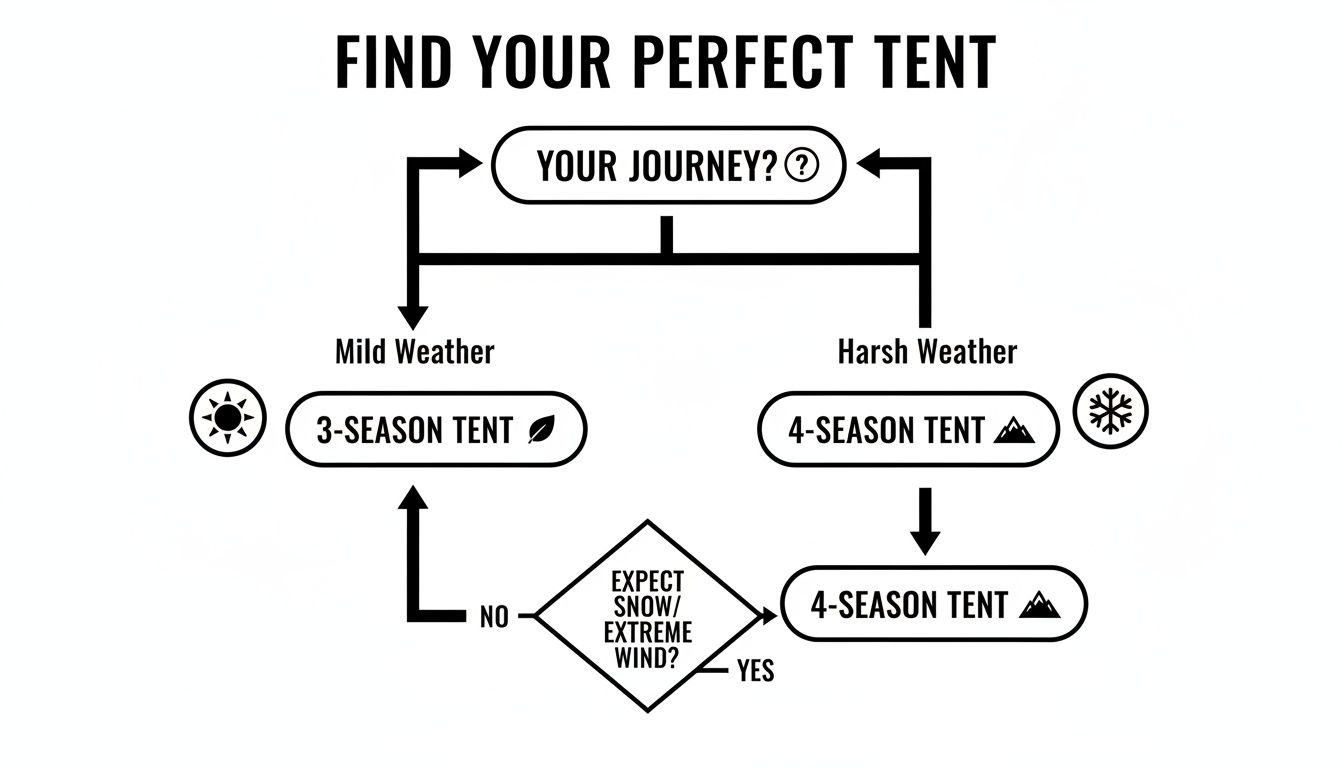
As the chart shows, the weather you expect is a significant factor. Both freestanding and non-freestanding designs come in 3-season and 4-season models, so you can pick a shelter that matches the forecast while staying true to your preferences on weight and setup.
Creating Your Comfortable Space Inside
Now we move from the structure of the tent to the feeling of being inside it. A single-person backpacking tent is your personal haven, and its interior dimensions are what transform it from mere shelter into a comfortable space to rest and reflect. We'll look at the simple elements that create this sense of comfort, helping you wake up feeling restored and ready for the day ahead.
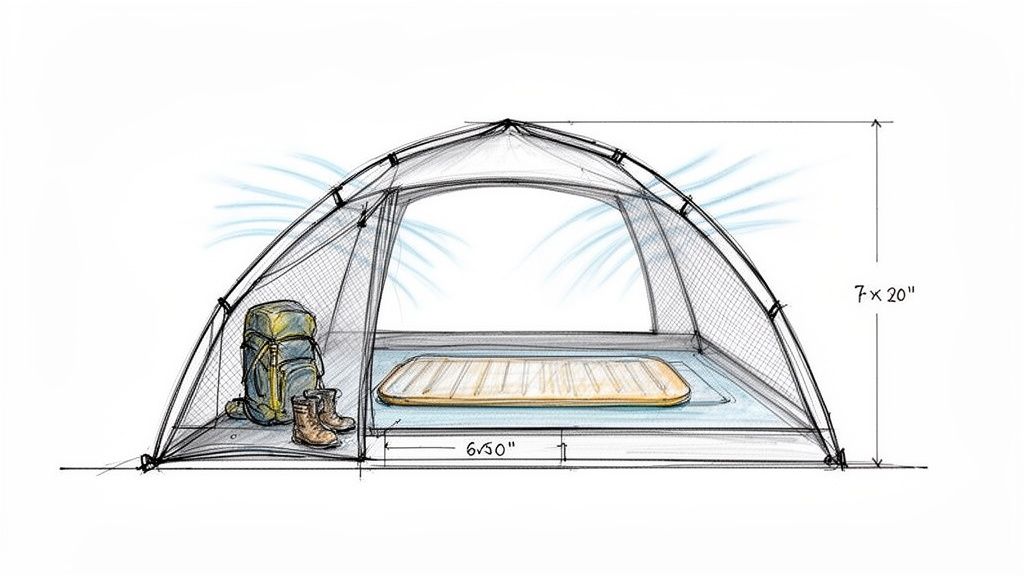
Think of the tent's floor area as your personal living room in the wild. It’s the measured space where you’ll sleep, stretch out tired muscles, and keep a few essential items close at hand.
Defining Your Personal Footprint
When you see measurements for a tent's floor, they can seem abstract. But on the trail, even a few extra inches of width or length can make a world of difference. It's the space that lets you lay out your sleeping pad without it touching the walls, or sit up and change clothes without feeling boxed in.
The dimensions of your shelter directly influence your comfort. Before choosing, it helps to consider a few personal factors:
- Your Height: If you're tall, a tent with a longer floor plan prevents your head or feet from pressing against the damp tent walls.
- Your Sleeping Style: Do you sleep perfectly still, or do you toss and turn? A wider tent floor offers more room to move around without bumping into the walls.
- Your Gear: Consider what you like to keep inside with you. A book and a headlamp might be all you need, or you may prefer to bring your entire backpack in for the night.
A tent's floor area isn't just about technical specifications; it’s about the quiet comfort of having enough room to breathe, to settle, and to feel at home in your small corner of the wilderness.
The demand for these thoughtfully designed shelters is growing, with the 'Capacity 1 People' tent category seeing noticeable growth in 2023. Performance in the field shows how well these designs balance weight and space; some freestanding models weigh as little as 16 ounces while offering 21 square feet of interior room—a wonderful ratio for long-distance hikers. You can explore more insights on this trend in the full market report.
The Value of a Sheltered Porch
A vestibule is like your tent’s front porch. It’s the covered area outside the main sleeping space but still protected by the rainfly. This simple feature is incredibly useful for keeping your inner sanctuary clean and dry. It's the perfect place to leave muddy boots, a wet rain jacket, or your pack, ensuring your sleeping area remains a peaceful, uncluttered retreat.
Letting Your Tent Breathe
Ever woken up inside a tent to find the walls damp, even when it didn't rain? That’s condensation. Think of it like a foggy car window on a cool morning—it’s the result of your warm breath hitting the colder tent fabric.
Proper ventilation is the key to managing this moisture. A well-designed tent allows air to flow, carrying that moist air out before it can condense on the walls. This is often achieved through a combination of features:
- Mesh Panels: Large sections of mesh in the tent body allow air to circulate freely while keeping bugs out.
- Rainfly Vents: Small, prop-open vents in the rainfly create a path for warm, humid air to escape from the top of the tent.
- High and Low Venting: Some tents are designed to pull cool, dry air in through low vents and push warm, moist air out through high vents, creating a natural chimney effect.
A dry tent is a comfortable tent. Good ventilation means you'll wake up more refreshed, and your gear—especially a down sleeping bag—will stay drier and loftier. How your tent interacts with your other gear is a key part of a good night's rest, and you might be interested in our guide on how to choose the right sleeping pad to complete your sleep system.
The Materials That Offer Peace of Mind
When you’re tucked into your tent after a long day on the trail, the materials of your shelter are what stand between you and the elements. This isn't about memorizing technical terms; it's about having quiet confidence in the fabrics and poles keeping you safe and dry. When you understand your gear, you can trust it. And when you trust it, you can truly rest.
Most tent bodies and rainflies are made from either nylon or polyester. Each one handles the outdoors a little differently. Nylon is incredibly strong for its weight, but it can sag a bit when it gets wet. Polyester is a little heavier, but it holds its shape well and resists stretching, even in a downpour.
You'll often see a number followed by "D," like 75D or 20D. This is the fabric's denier, which is just a simple way of measuring a thread's thickness. A lower number like 20D means a finer, lighter thread—the kind you’ll find in very lightweight tents. A higher number like 75D points to a thicker, more robust thread chosen for durability.
The Art of Staying Dry
Of course, the fabric is only half the story. To keep rain out, tent materials get treated with waterproof coatings. This is where your shelter’s reliability really comes from, turning it into a trustworthy refuge during an unexpected storm.
You’ll generally run into two types of coatings:
- Polyurethane (PU) Coatings: A classic and effective waterproofing method applied to the inside of the fabric. It does a wonderful job keeping water out but can degrade over many years of use.
- Silicone-Impregnated Nylon (Silnylon): This process infuses silicone directly into the nylon fibers, making the fabric itself water-repellent, stronger, and more slippery. It’s incredibly durable and long-lasting.
Some of the lightest and most refined shelters use a material called Dyneema Composite Fabric (DCF). Imagine a fabric that is stronger than steel for its weight and completely waterproof on its own, no coating needed. It's a remarkable material for anyone who wishes to shed every possible ounce from their pack.
The Framework of Your Shelter
The poles are the bones of your tent. They provide the structure that stands up to wind and supports the fabric, so they need to be both strong and light—a balance that modern materials achieve beautifully.
Most backpacking tent poles are made from high-quality aluminum. It has a fantastic strength-to-weight ratio, is resilient, and if it ever bends under extreme stress, it often does so without snapping. This makes it a dependable and forgiving choice for most trips.
For those seeking the absolute lightest setup, carbon fiber poles are an option. They are incredibly lightweight and stiff, but they can be more brittle than aluminum. They require a gentler hand and careful use, but the weight savings are significant.
Choosing your tent's materials is an act of trust. It's about selecting a combination of fabric and poles that gives you the peace of mind to sleep soundly, knowing your small home in the wild is dependable and secure.
This thoughtful approach to materials is becoming more common. Backpacking tents, especially for solo adventurers, are a growing part of the global camping market as more people seek minimalist outdoor experiences. In fact, 2024 saw a 25% increase in the use of eco-friendly materials like recycled polyester, reflecting a shared desire to protect the wild places we love. You can discover more insights about these outdoor trends on Fortune Business Insights.
A reliable tent is a core part of your sleep system. You might also be interested in our guide on how to choose the right sleeping bag for camping adventures.
Finding Your Perfect Solo Shelter
We’ve covered a lot of ground together—from season ratings and fabrics to the quiet details of poles and vestibules. Now comes the most important part: matching all that information to you. Picking a tent isn’t about finding the "best" model on the market. It’s about finding the one that best fits the adventures you’re actually planning.
The right shelter is the one you don’t have to think about. It fades into the background, letting you focus on the good stuff—the wind rustling through the pines, the last light of a sunset, or just the simple peace of being alone in a wild place. Every choice you make, from weight to interior space, shapes that experience.
A Few Questions to Ask Yourself
To help you reflect, here are a few gentle questions. There are no right or wrong answers, just honest ones that will point you toward the right gear.
-
Where will you really be camping? Picture your go-to spots. Are you in sheltered forests with soft ground? Or are you drawn to exposed, rocky ridgelines where staking out is a challenge? The terrain itself is a wonderful guide for choosing between a freestanding or non-freestanding tent.
-
What does comfort mean to you on the trail? Is it having enough interior space to spread out your gear and sit up straight? Or is comfort a lighter pack that lets you cover more miles with less effort? Be honest about what makes a trip more enjoyable for you.
-
How does this tent fit with your other gear? Your tent is just one piece of your mobile home. It has to work with your sleeping bag and pad to create a complete sleep system. Think about how the dimensions will accommodate your pad and whether your bag’s loft will touch the tent walls.
Your tent is more than just equipment. It’s the place you’ll rest, dream, and plan your next day’s hike. Choosing it is an act of preparation that ensures you have a safe, reliable haven to return to after a long day on the trail.
At the end of the day, the goal isn't to own the most advanced gear, but to have gear that feels right and helps you get outside more often. A well-chosen single person tent for backpacking becomes a trusted companion—a quiet, dependable shelter that supports your time in nature. It's the piece of gear that lets you be fully present, ready for whatever the trail brings your way.
Answering a Few Common Questions
Choosing a solo backpacking tent is a personal decision, and it’s normal to have a few questions. We’ve answered some of the most common ones we hear to help you find the right shelter with confidence.
Can I Just Use a 2-Person Tent for Solo Backpacking?
Absolutely. Plenty of solo backpackers opt for a 2-person tent to get more interior space. Having extra room for your gear, for stretching out on a rainy day, or just to feel less confined can be a real luxury on the trail.
The trade-off is almost always weight and packed size. A 2-person tent will usually be heavier and bulkier than its solo counterpart. If you’re focused on covering long miles and keeping your pack as light as possible, a dedicated single person tent for backpacking will probably feel much better on your back.
Ultimately, the "right" amount of space is whatever makes a shelter feel like your refuge. For some, that’s a snug cocoon; for others, it's a more spacious retreat.
How Do I Care For My Tent to Make It Last?
A little bit of care goes a long way in extending the life of your tent. The most important thing is to air it out completely after every trip to prevent mildew from setting in. If it’s dirty, just gently wipe it down with a damp cloth. For stubborn spots, use a mild, non-detergent soap.
When you’re storing it, keep it loose in a breathable bag instead of cinched down tight in its stuff sack. This simple step helps the fabrics and waterproof coatings stay healthy for years. With just a little mindful care, your tent will be a reliable companion for countless adventures to come.
At Fort Robin, we believe the right gear should quietly support your connection with the outdoors. Explore our thoughtfully curated collection of tents and shelters to find the perfect companion for your solo journeys at https://fortrobin.com.

