

Finding a Lightweight Backpacking Stove for Your Adventures
Choosing a lightweight backpacking stove isn't about finding one perfect answer. It's about discovering what feels right for you. For some, the ideal companion is a simple, light burner that gets water boiling for morning coffee. For others, it’s a versatile system with fine-tuned simmer control for preparing more thoughtful trailside meals.
The Quiet Joy of a Warm Meal on the Trail
There’s a simple, profound satisfaction that comes from making a hot meal in the wild. As the sun dips below the rideline or the morning mist settles in the valley, the soft hiss of a stove can feel like a quiet promise of comfort and restoration. It’s a small ritual that grounds us, turning the simple act of eating into a moment of peace.
The right stove is more than just another piece of gear; it’s a quiet, reliable companion. Its real value is in how seamlessly it fits into your adventures, letting you focus on what truly matters—sharing a laugh over dinner, the warmth of a mug in your hands on a cold morning, or just watching the sunset.
Finding the Stove That Fits Your Story
Picking a stove is a personal decision, one that reflects your own approach to the outdoors. The needs of a solo thru-hiker are worlds apart from a family enjoying a weekend at their favorite campsite. This guide is designed to help you explore your own priorities with quiet confidence.
We'll look beyond technical details and focus on the experiences these tools make possible. The goal isn't to crown a single "best" stove but to help you find the one that feels like a natural extension of your own outdoor story.
Your trail kitchen is a place of connection—with your food, your companions, and the landscape around you. The right stove supports this connection without becoming the center of attention.
Think of this process as a thoughtful exploration, an invitation to consider what truly improves your time outside. Let's start by looking at the different types of stoves and what each one brings to the trail. Once you understand the fundamentals, you can make a choice that feels steady, dependable, and right for you.
Your Trail Kitchen Starts With the Right Stove
A backpacking stove is the heart of any trail kitchen. It’s a simple tool that brings warmth, comfort, and a good meal to your time outdoors. Choosing one isn't about getting lost in technical specifications; it's about understanding which design fits the kind of adventures you have in mind.
Each stove type has its own personality and purpose.
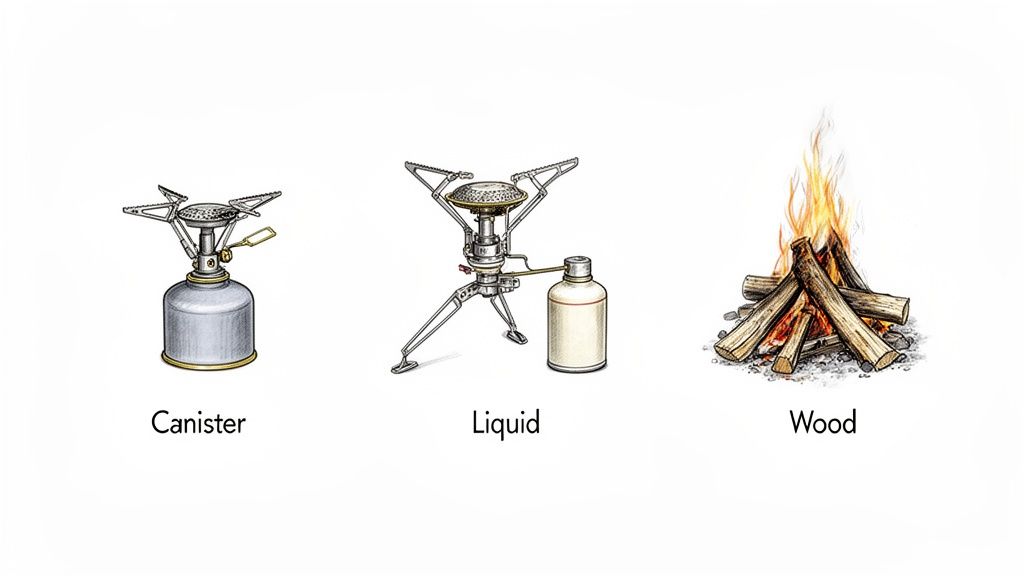
Most options fall into one of three main categories: canister stoves, liquid fuel stoves, and alternative fuel stoves. Let's look at them as potential companions for your journey, not just as products on a shelf.
Canister Stoves: The Simple Companion
For most people, canister stoves are the picture of convenience. These systems feature a burner that screws directly onto a pre-pressurized, self-sealing fuel canister. There’s no priming, no pumping, and almost no fuss.
Their charm is in their simplicity. You attach the fuel, turn the valve, strike a lighter, and you have a flame. This gentle operation makes them a welcoming choice for weekend trips, fair-weather adventures, and anyone who values ease of use. They are often wonderfully lightweight and compact, easily disappearing inside a cook pot.
A canister stove lets you focus on the moment, not the mechanics. Its real gift is its quiet efficiency, letting you brew your morning coffee or prepare a quick meal with minimal interruption to the gentle rhythm of the trail.
This ease of use is something many people are looking for in their outdoor gear. It reflects a desire for equipment that is both capable and straightforward, supporting the experience rather than becoming the focus of it.
Liquid Fuel Stoves: The Steadfast Workhorse
Liquid fuel stoves offer a different kind of reassurance. These systems use a separate, refillable fuel bottle that connects to the stove with a fuel line. They run on white gas, a highly refined fuel that performs exceptionally well in cold temperatures where canister pressure can fade.
The process is a bit more hands-on—you have to prime the stove to vaporize the fuel before lighting it—but that effort comes with tangible benefits. They are steadfast companions for winter camping, high-altitude trips, and international travel where you may not find canisters. Plus, because the fuel bottle is refillable, you create less waste over time.
For anyone heading into demanding conditions or who prefers the sustainability of a refillable system, the liquid fuel stove is an incredibly reliable partner.
Alternative Fuel Stoves: A Connection to the Land
Finally, you have stoves that invite a deeper connection with your surroundings. These alternative fuel systems, like wood-burning or solid-fuel tablet stoves, draw their energy from the landscape itself or from simple, compact fuel sources.
A wood stove uses small twigs and pinecones, turning a few minutes of mindful foraging into a hot meal. A solid-fuel stove uses small, featherlight tablets that are well-suited for an emergency kit or an ultralight setup focused purely on boiling water.
These stoves appeal to those who enjoy a more elemental, self-sufficient experience. They’re a quiet reminder of our own resourcefulness and our connection to the wild places we explore.
Before we move on, let's put these three companions side-by-side to see where they really shine.
A Gentle Comparison of Backpacking Stove Types
| Stove Type | Best Suited For | Ease of Use | Cold Weather Performance |
|---|---|---|---|
| Canister Stoves | Most 3-season backpacking, weekend trips, and anyone prioritizing convenience and low weight. | Excellent. Twist on, light up. Very little learning curve. | Fair to Good. Performance drops as temperatures near freezing. Some models handle cold better than others. |
| Liquid Fuel Stoves | Winter camping, high-altitude expeditions, international travel, and large groups. | Fair. Requires priming and occasional maintenance. It's a skill you learn. | Excellent. Unbeatable performance in sub-zero conditions and at altitude. |
| Alternative Stoves | Ultralight enthusiasts, emergency kits, and trips where you can reliably find dry wood. | Varies. Wood stoves require fire-tending skills. Solid fuel is very simple. | Varies. Wood stoves work well if fuel is dry. Solid fuel is reliable but slow. |
Each stove type has its place. Understanding these core designs helps you see which one best complements your style of adventure, ensuring you have warmth and nourishment on all your journeys.
You can browse our own curated selection of dependable stoves and cooking systems to see these types in action.
What Really Matters in a Backpacking Stove
Picking a backpacking stove isn’t about winning a numbers game. It’s about understanding a stove’s personality. The real test comes on a windy ridge or a cold morning when a hot coffee is the only thing on your mind. Let’s look past the marketing and talk about the traits that actually shape your time on the trail.
Think of each feature as a promise—a promise of freedom, warmth, a good meal, or simple reliability. When you see them that way, you can find a stove that feels like a true partner for your adventures.
Weight and Packability: The Feeling of Freedom
When we talk about stove weight, what we're really talking about is freedom. Every ounce you don't have to carry is a little less strain on your back, a bit more energy for that last mile, or just a lighter feeling as you move through the wild. The lightest stoves are true marvels of engineering, with some weighing as little as an ounce.
Likewise, packability isn’t just about how small a stove gets. It’s about the quiet satisfaction of a well-organized pack where everything has its place. Many canister stoves are designed to nest perfectly inside a small pot with a fuel canister, creating a self-contained kitchen no bigger than a grapefruit.
This kind of efficiency means less time digging through your pack and more time enjoying the view. It's a small detail that brings a sense of calm and order to life on the trail.
Boil Time: A Measure of Patience
Boil time is often held up as a key measure of stove performance. It’s simple: how fast can it turn cold water into hot water? For thru-hikers and anyone covering big miles, a fast boil time can be a welcome comfort, meaning you burn less fuel and get more time to rest.
But it’s also about patience. When you're chilled to the bone after a day of hiking in the rain or waking up to a frosty morning, those few minutes can feel like an eternity. A stove that fires up and gets the job done quickly is a huge comfort, delivering warmth and energy right when you need it most.
A stove's ability to boil water quickly is more than a technical spec; it's a small act of kindness on a cold day, a swift and reassuring response when your body needs warmth.
The search for a great lightweight backpacking stove often centers on this blend of speed and fuel economy. Some systems can bring a couple of cups of water to a boil in under three minutes, even in a stiff wind. That kind of efficiency is a testament to smart design and can offer real peace of mind in tough conditions.
Simmer Control: The Key to a Good Meal
Boiling water is a stove’s main job, but the ability to hold a low, steady flame—what we call simmer control—is what separates a basic water-boiler from a true backcountry kitchen. Not all stoves are created equal here. Many ultralight models are built for one thing: full-throttle power.
A stove with good simmer control, on the other hand, opens up a world of culinary possibilities. It’s the difference between just-add-water meals and actually cooking. It lets you gently simmer a sauce, cook rice without burning it to the bottom of your pot, or even bake a little trailside bannock.
This level of control invites a slower, more mindful approach to your meals. Dinner becomes a relaxing ritual instead of a rushed chore, letting you enjoy the simple process of making good food in a beautiful place.
Wind Resistance: A Quiet Dependability
Finally, there's wind resistance—perhaps the most underrated but critical quality in a stove. Wind is the enemy of an open flame, constantly stealing heat, slowing boil times, and wasting precious fuel. A stove that can stand up to a breeze is a partner you can count on.
Designers tackle wind in a few different ways:
- Integrated Windscreens: Many stove systems have windscreens built right in to shield the flame.
- Burner Head Design: A wider or recessed burner head is less exposed to gusts, helping it maintain a steady, efficient flame.
- Radiant Burners: Some advanced stoves use a burner that glows hot instead of producing a tall flame, making them nearly impervious to wind.
This quiet dependability means you can set up your kitchen almost anywhere without having to hunt for a perfectly sheltered spot. It’s the confidence of knowing that no matter what the weather throws at you, a hot meal is never far away.
Matching Your Stove to Your Personal Journey
A stove is more than just hardware—it’s a trail companion that sets the rhythm for your days outdoors. Finding the "best" backpacking stove isn't about one perfect product. It's about finding the one that fits the adventures you actually go on. The most important qualities aren't on a spec sheet; they're in how well a stove aligns with your personal style.
To find your match, it helps to picture a few different paths. Each one comes with its own set of needs and a different relationship with the trail. By seeing which story resonates most with you, your own priorities will start to become clearer.
This simple decision tree can help you visualize which qualities—speed, control, or weight—matter most on your personal journey.
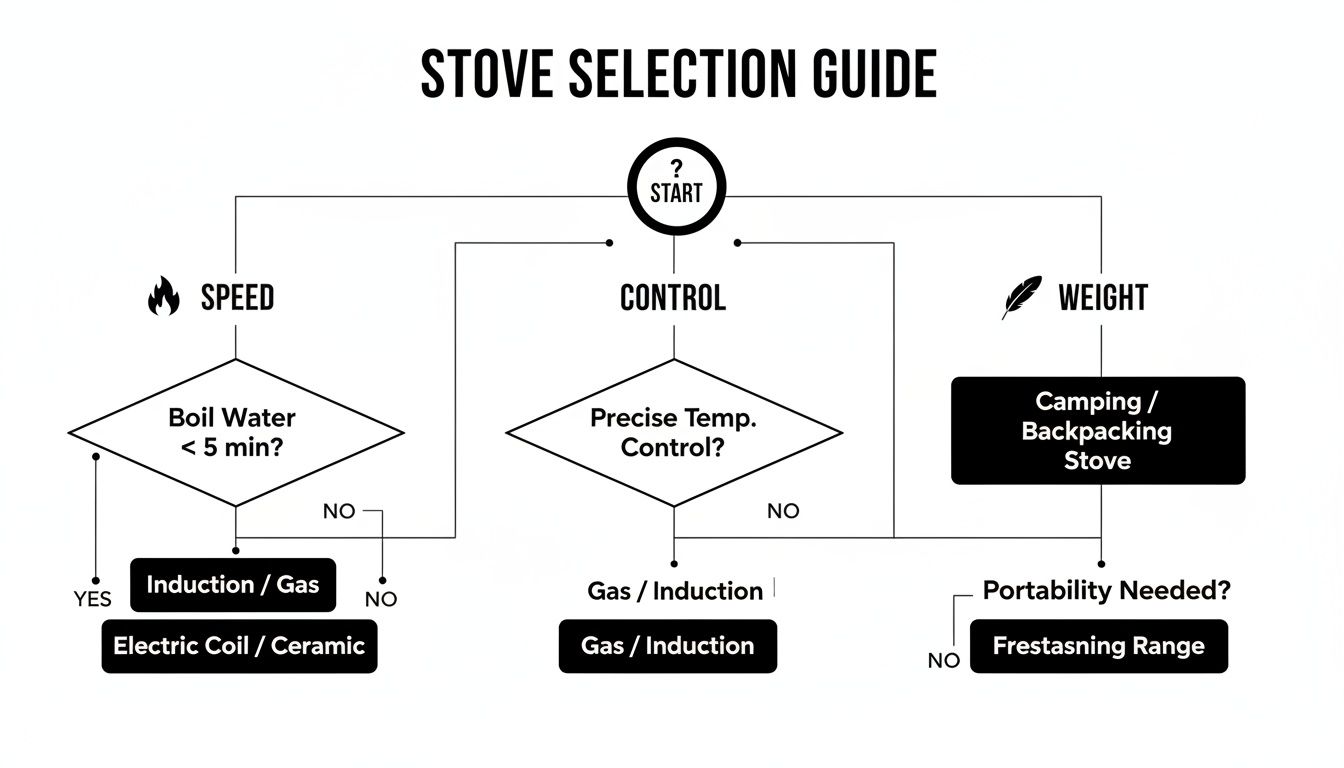
As the flowchart shows, prioritizing different needs leads you toward a stove that truly fits your purpose, whether that means a fast boil, fine-tuned cooking, or the lightest possible load.
For The Thru-Hiker
Imagine walking from dawn to dusk for weeks or even months. For a thru-hiker, every ounce is accounted for, and every minute of rest is precious. Here, a stove’s role is defined by pure, stripped-down efficiency.
The ideal companion for this long walk is ultralight, often weighing less than a deck of cards. It needs to boil water fast for rehydrating a meal or making morning coffee, giving you more time to rest tired muscles. Fuel efficiency is critical, as is finding that fuel in small trail towns. A simple, reliable canister stove is often the thru-hiker’s most trusted partner for its simplicity and speed.
For those who measure their journey in thousands of miles, a stove is a tool of momentum. Its value lies in its near-invisibility, performing its simple task reliably before disappearing back into the pack.
The need for these featherweight systems has inspired remarkable innovation in outdoor gear. This reflects a broader interest in thoughtful, purpose-built equipment that helps people move through the wild with greater ease and focus.
For The Winter Wanderer
Now, picture a landscape hushed by snow, where the air is sharp and cold. For the winter wanderer, a stove is a lifeline. Its most important quality is unwavering reliability in conditions that can render lesser gear useless.
In sub-freezing temperatures, standard canister stoves can lose pressure and fail. This is where a liquid fuel stove proves its worth. Its ability to perform in extreme cold makes it an essential tool for melting snow and preparing hot, calorie-dense meals to fight off the chill. The process is more hands-on—requiring priming and care—but this deliberate ritual becomes a comforting part of the winter camp routine.
The stove for this journey prioritizes robust performance and cold-weather dependability over absolute minimum weight. It’s a workhorse built for the elements, offering peace of mind when you need it most.
For The Family Basecamp
Finally, think of a weekend by a lake, surrounded by family or friends. At the basecamp, the stove is the heart of the kitchen, a gathering point for shared meals and stories. Efficiency is still valued, but it’s balanced with the desire to cook, not just boil.
Here, a larger, more stable stove with excellent simmer control is the perfect fit. It allows for more ambitious meals—pancakes in the morning, a simmering pot of chili at night. The ability to hold a low, steady flame turns cooking from a chore into a creative, joyful act.
Weight is less of a concern since gear is often carried a short distance. Instead, the focus is on capacity, stability, and the versatility to support larger pots and more elaborate recipes. This stove helps create the nourishing experiences that form the fondest memories of time spent together outdoors.
Each of these paths reveals a different truth about what makes a stove "best." By thinking about the adventures that call to you, you can find a stove that not only meets your needs but enriches your time outside. Exploring a curated collection of lightweight backpacking stoves can help you see how these different qualities come to life in various designs.
Caring for Your Trusted Trail Companion
Your stove is more than just gear. It’s the tool that delivers a hot meal after a long day and a warm cup of coffee at sunrise. Treating it well isn't a chore; it's a simple ritual that ensures it’s ready for the next adventure.
This isn’t about complex repairs. It’s about building small, intentional habits before and after each trip. A few moments of care will keep your stove reliable for years, deepening your connection to a critical piece of your kit.
Simple Rituals for a Reliable Stove
Routine care builds confidence. When you know your stove inside and out, you trust it to perform when you need it most. These quick checks are easy to fold into your packing and unpacking process.
- Inspect Seals and O-Rings: Before every trip, take a quick look at the rubber O-rings and seals where the stove meets the fuel. They should be pliable, not cracked or brittle. A bad seal is a common failure point and a critical safety check.
- Clean the Fuel Line: If you're running a liquid fuel stove, get in the habit of occasionally running a cleaning wire through the fuel line. This clears out soot and keeps fuel flowing smoothly for a clean, consistent flame.
- Keep Burner Heads Clear: After you cook, make sure no food has boiled over onto the burner. A quick wipe or a gentle pass with a small brush keeps the ports clear for an efficient flame.
Caring for your gear is a form of respect—for the tools that support you, for the investment you've made, and for the adventures they make possible. It's a quiet act of stewardship.
Storing Your Stove and Fuel with Intention
How you store your gear between trips is just as important as how you use it. Proper storage protects your stove and fuel, making sure they’re ready to go when you are. A little mindfulness here prevents headaches later.
- Stoves: Always store your stove in a dry, protected place. The stuff sack it came with is perfect for keeping dirt and dust out of its delicate parts.
- Canisters: Disconnect fuel canisters before storing them. Find a cool, dry, well-ventilated spot away from direct sun or heat sources like a furnace or water heater.
- Liquid Fuel Bottles: For long-term storage, it's best to empty the fuel from your bottles. This stops the fuel from degrading and gumming up your stove’s internals.
Safety as an Act of Respect
Ultimately, using your stove safely is the highest form of care. It’s about respect for yourself, your campmates, and the wild places you explore.
Always set up your stove on a flat, stable surface far away from your tent, dry grass, or other flammable materials. Pay attention to the wind, and never leave a lit stove unattended. These simple habits create a secure camp, letting you relax and enjoy the simple pleasure of a warm meal under the stars.
A Simple Checklist for a Thoughtful Choice
Choosing a stove is a personal decision, a quiet conversation between what you need and what’s possible. The goal here isn't to give you a final answer, but to help you reflect. The best lightweight backpacking stove is the one that feels like a natural partner on your specific adventures.
To help sort through it all, consider these questions. Let them guide you to a choice that feels right not just for your pack, but for how you like to spend your time outside.
Your Trail Cuisine
The food we eat outdoors is often a source of simple joy and deep comfort. Thinking about your trailside meals brings a lot of clarity to this decision.
- What kind of meals do you actually cook on the trail? Are they simple, just-add-water bags, or do you enjoy the slow process of cooking something more involved?
- Is your morning coffee a quick ritual to get the day started, or is it a quiet moment you like to savor?
- Do you typically cook for one, or are you often sharing a meal with others?
These questions aren't about right or wrong; they're about understanding the role food plays in your outdoor experience. The answers will tell you whether you need a fast water boiler or a stove with more delicate simmer control.
Your Sense of Simplicity
Simplicity means something different to everyone. For some, it’s the lightest possible weight. For others, it’s the ease of pushing a button.
What does simplicity truly mean to you on the trail? Is it the freedom of an ultralight pack, the convenience of a quick setup, or the self-reliance of using fuel you can find around you?
Thinking about this helps you align your stove choice with your personal philosophy of adventure. It ensures your gear supports your ideal experience rather than complicating it. This kind of mindful preparation is a cornerstone of any good journey, much like creating thoughtful packing lists for camping ensures you have what you need without being weighed down.
Your Most Common Adventures
Finally, think about the landscapes that call to you most often. Your stove should be a reliable companion in the places you love to explore.
- Where do you see yourself using this stove most? On weekend trips in familiar forests, long treks through remote mountains, or cold-weather escapes?
- How important is reliability in challenging conditions, like strong winds or freezing temperatures?
Your answers will point you toward a stove built for the environments you frequent. By reflecting on your own trips and aspirations, you can make a confident choice—finding a trusted companion that will help create warm memories for years to come.
Common Questions About Backpacking Stoves
As you get closer to picking a stove, a few practical questions always pop up. It's the small details that build confidence on the trail. Here are some straightforward answers to the questions we hear most often.
What Is the Difference Between an Integrated Stove System and a Standalone Stove?
Think of it as the difference between a specialized tool and a versatile one. Each has its place, depending on what you need from your camp kitchen.
An integrated stove system is an all-in-one unit. You get the burner, pot, and a heat exchanger, all designed to work together perfectly. Their biggest advantage is efficiency—they boil water incredibly fast, even in a breeze. This makes them a great choice if you mostly just need hot water for drinks or dehydrated meals.
A standalone stove is just the burner. This setup gives you the freedom to pick your own cookware. You can pair it with a tiny titanium pot for a solo trip or a bigger one when you're cooking for two. That flexibility is perfect for anyone who likes to do a little more actual cooking on the trail.
How Do I Know How Much Fuel to Bring on My Trip?
Figuring out fuel is a skill you build with experience. It feels like guesswork at first, but you'll quickly get a feel for how your stove runs.
A good starting point for canister stoves is to plan on boiling about one liter of water per person, per day. That usually covers coffee in the morning and a pouch meal at night.
Learning your stove's fuel burn is a gradual process. Start by packing a little extra. After a few trips, you’ll know exactly what you need without even thinking about it.
Keep in mind that wind, cold, and high altitudes all make your stove work harder and use more fuel. Melting snow is another huge fuel drain. The more you get out, the better you'll get at planning for these things.
Can I Fly on an Airplane with My Backpacking Stove and Fuel?
Flying with your stove is easy, it just takes a little prep.
You can pack your stove in either checked or carry-on luggage. The critical part is making sure the stove is completely clean and free of any fuel residue or vapor. Airlines are very strict about this for safety reasons.
Fuel itself—canisters or liquid fuel bottles—is never allowed on a plane. The simplest solution is to just buy fuel when you land. A quick online search will almost always point you to an outdoor shop near your destination, so you can get what you need and get on with your trip.
At Fort Robin, we believe the right gear just works, letting you focus on the adventure itself. Check out our collection of stoves and cook systems to find a reliable partner for your next trip. https://fortrobin.com

