

A Quiet Foundation: Thoughtful packing lists for camping
A good packing list is more than a way to remember your gear. It's the quiet groundwork for a meaningful trip, creating space for connection and spontaneity by tending to the essentials ahead of time. It is the first step in preparing not just your equipment, but your mindset for the experience ahead.
Start With Intention: Why a Packing List Is Your First Piece of Gear
Before a single item is pulled from the closet, it’s worth taking a moment to consider why a list matters. It is more than a simple to-do; it's the first step in intentionally crafting the experience you hope to have.
We see this process not as a chore, but as an act of care—for yourself, your gear, and anyone you’re heading out with.
The Mindful Shift in Packing
A thoughtful list moves you from a mindset of hurried, last-minute gathering to one of calm, deliberate preparation. That small shift can have a gentle ripple effect on your whole trip.
- It quiets your mind. Knowing you have what you need can ease the background anxiety of forgetting something important.
- It honors your intentions. Your list becomes a reflection of the trip you’re hoping for, whether that's a quiet solo weekend or a warm family gathering.
- It creates more time for connection. With the logistics handled, you can be more present with nature, your companions, and yourself.
Think of your list as the quiet foundation for a restorative escape. It’s about ensuring comfort and safety so you can focus on the simple joys—a shared meal, a quiet morning, a sky full of stars.
This approach invites you to think beyond just gear. Instead of asking, "What do I need to bring?" we invite you to ask, "What will help me feel present and comfortable out there?"
The answer might be a warm blanket, a favorite mug for coffee, or just the simple reassurance that you have a solid first-aid kit. It’s a foundational step in the entire journey.
For more guidance on those initial stages, you might find our thoughts on how to plan a camping trip with intention helpful.
Creating Your Comfortable Basecamp
Your campsite is more than just a place to sleep. It’s your temporary home in the wild—a functional, comfortable space that lets you settle in and truly unwind. For car campers and families, creating this basecamp is all about curating an environment that supports relaxation and shared experiences.
It starts by thinking about your gear not just as equipment, but as pieces of a sanctuary.
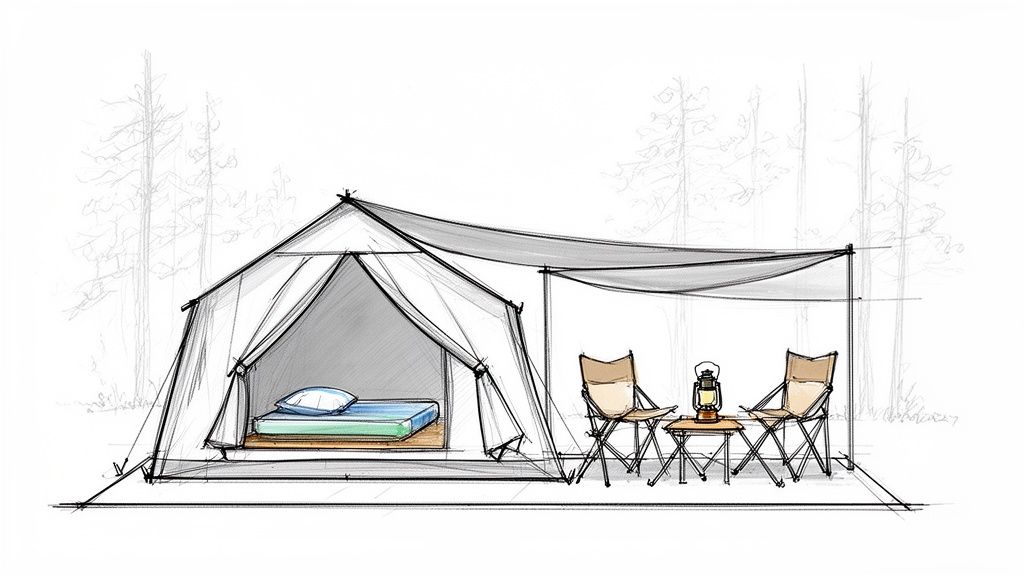
This whole process is about envisioning your ideal home away from home and then building a packing list to bring it to life. It's about making your time outdoors restorative from the moment you arrive.
Your Shelter: A Personal Sanctuary
The first and most fundamental piece of your basecamp is your shelter. This is your haven from the elements—wind, rain, or sun—and your private space to retreat at the end of the day.
For families, a spacious tent is often the centerpiece. Consider a size that allows for comfortable movement, not just sleeping shoulder-to-shoulder. A model with a vestibule can be a welcome feature, giving you a perfect transitional space to store muddy boots and gear, keeping your sleeping area clean and peaceful.
Vehicle awnings can also completely transform a simple campsite. They extend your living space, creating a shaded area for cooking, dining, or just sitting and watching the world go by. This simple addition can make your site feel a lot more like an open-air living room.
The Foundation of Restful Sleep
Waking up refreshed under the trees is one of camping’s quietest joys, but it depends entirely on a comfortable sleep system. This is where a little thoughtful packing goes a very long way.
Your sleep system has three main parts:
- The Pad or Mattress: With car camping, you have the freedom to prioritize comfort. An inflatable truck or SUV mattress can turn your vehicle into a cozy bedroom, while thick self-inflating pads or even a camping cot provide welcome insulation and support.
- The Sleeping Bag or Blankets: Choose insulation that’s right for the expected nighttime temperatures. A quality sleeping bag is a good idea, but don't underestimate the simple comfort of bringing your favorite quilt or pillows from home.
- The Small Comforts: A familiar pillow can make all the difference. Small additions like this are what truly personalize your space and invite a deep, restorative sleep.
A well-planned sleep system isn't about technical specs; it's about creating a nest. It’s the promise of waking up to the sound of birds, feeling genuinely rested and ready for the day.
This focus on intentional comfort is becoming more common as more people discover the outdoors. The global camping market is growing, and car camping is popular because it's so accessible for families. This growth underscores why a detailed packing list is so important—a forgotten air pump or the wrong sleeping bag can easily disrupt a trip. For those who enjoy short stays or multi-day journeys, having versatile gear like rooftop tents and adaptable sleep systems makes all the difference. You can find more insights on this trend in this market analysis.
Furnishing Your Outdoor Living Space
Finally, let's talk about the elements that invite gathering and make daily camp life flow with ease. These are the pieces of furniture that turn a patch of dirt into a welcoming common area.
A sturdy camp table is incredibly useful. It becomes the hub for everything from meal prep and dining to playing cards in the evening. While many developed campsites have picnic tables, bringing your own ensures you have a clean, stable surface right where you need it.
Comfortable camp chairs are just as crucial. They are an invitation to pause, sit by the fire, read a book, or simply enjoy a quiet conversation. Choosing chairs that are easy to set up and comfortable enough to sit in for a while will profoundly improve your overall experience. These pieces complete your basecamp, making it a place you’ll be happy to return to after a day of exploring.
Core Basecamp Essentials: A Quick View
To pull it all together, here’s a look at the core items for building a functional and comfortable basecamp. Think of these as the gentle non-negotiables.
| Category | Essential Items | Fort Robin's Focus |
|---|---|---|
| Shelter | Spacious tent, vehicle awning, or rooftop tent. | Durable, weather-resistant shelters that prioritize living space and ease of setup. |
| Sleep System | Sleeping pads/mattress, appropriately rated sleeping bags, camp blankets, pillows. | Modular sleep systems designed for real-world comfort, from insulated pads to versatile blankets. |
| Camp Furniture | Sturdy folding table, comfortable and durable camp chairs. | Practical, portable furniture built for stability and long-term use in outdoor environments. |
| Camp Kitchen | Cooler, stove, fuel, cookware, utensils, water storage. | Reliable and efficient kitchen gear to make cooking outdoors simple and enjoyable. |
| Lighting | Headlamps, lanterns, string lights. | A mix of personal and area lighting solutions to keep your camp safe and inviting after dark. |
Getting these core items right is the foundation of every car camping trip. They provide the structure for everything else—the adventures, the meals, and the memories.
Nourishing Connections: The Camp Kitchen List
The camp kitchen is often the true heart of a campsite. It’s where the day starts with the quiet ritual of making coffee and ends with stories swapped over a warm meal. This space is less about a collection of pots and pans and more about creating a place to gather, share, and nourish both body and spirit.
Thinking about what to pack for your kitchen is really an invitation to consider the kinds of moments you want to create. It’s a chance to plan for connection.
The Art of Preparing Food Outdoors
There's something incredibly grounding about the simple act of preparing a meal outside. The rhythmic chop of vegetables, the sizzle of food hitting a pan—these sounds become part of the outdoor soundscape. A well-organized prep kit makes this process feel effortless and enjoyable.
Your food prep list doesn’t need to be complicated. Just start with the basics you use at home and adapt them for camp life.
- A Reliable Knife: A good, sharp knife is a camp cook's best friend. One versatile chef's knife or santoku can handle just about every task.
- A Sturdy Cutting Board: Choose something non-porous and easy to clean. It gives you a stable, sanitary surface for everything from slicing bread to dicing onions.
- Mixing Bowls: Collapsible silicone bowls are a wonderful space-saver, perfect for tossing a salad or whipping up pancake batter.
These simple tools are the foundation of countless memorable meals. They let you move beyond pre-packaged foods and bring the joy of fresh cooking right to your campsite.
The Warmth of a Shared Meal
Cooking is where the magic often happens. Whether it's a simple one-pot stew or grilled burgers, the method you choose helps set the tone for your dining experience. Your cooking gear can match the meals you envision sharing.
A dependable two-burner camp stove offers wonderful versatility, letting you simmer a sauce on one side while boiling water on the other. It brings the convenience of a home stovetop to the outdoors, making more ambitious meals feel completely manageable. Always remember to pack enough fuel for your stove—and maybe a little extra, just in case.
For those who love the simple allure of cooking over flames, a cast-iron skillet is an indispensable companion. It’s perfect for campfire breakfasts, searing steaks, or baking cornbread right in the embers. The shared experience of tending a fire and cooking over it can create a unique and welcome sense of connection.
The camp kitchen is a tool for connection. Packing a French press for slow morning coffees or a Dutch oven for a communal campfire dinner transforms the act of eating into a shared ritual.
Gathering Around the Table
Once the food is ready, the final piece is how you serve and enjoy it. This is the moment of coming together. Having dedicated dining ware makes the experience feel more intentional and less like a scramble.
Durable enamel or stainless steel plates and bowls are practical, long-lasting choices for any camp kitchen. They hold up to bumps and drops while being a breeze to clean. Don't forget mugs for that morning coffee or evening tea—there’s something special about wrapping your hands around a warm cup as the air cools.
A complete dining kit might include:
- Plates, bowls, and mugs for everyone
- Forks, knives, and spoons (a set of sporks can work in a pinch)
- Serving utensils like a spatula and a large spoon
- A tablecloth to make any picnic table feel a bit more like home
Keeping your camp kitchen clean is also a vital part of the experience. It shows respect for the place and for the wildlife that calls it home. For some gentle reminders on this, our guide on how to wash dishes while camping offers simple, mindful practices. Thoughtful cleanup ensures the next person—and the local ecosystem—can also enjoy the space.
Packing For Overlanding and Backpacking Adventures
When your adventures are built on movement, your packing list follows a different set of principles. Overlanding and backpacking are two very different ways to travel, but both are rooted in freedom and self-reliance. One leverages the capabilities of a vehicle, while the other celebrates the quiet simplicity of what you can carry on your back.
Both approaches get us outside and on the move, swapping a fixed campsite for a journey with a constantly changing backdrop. That shift in style invites a shift in how we pack—we stop thinking "what do we need for our campsite?" and start asking, "what do we need for the journey?"
The Self-Reliant Spirit of Overlanding
Overlanding is a unique blend of off-road exploration and backcountry camping. Your vehicle isn't just getting you from A to B; it’s your mobile basecamp, kitchen, and shelter, all rolled into one. The focus here is on capability and preparedness, giving you the tools to handle remote trails and unexpected challenges with quiet confidence.
This doesn't mean you need to pack for every possible scenario. It’s about thoughtfully choosing gear that keeps you safe and comfortable when you're miles from the nearest town.
- Vehicle Preparedness: This is the foundation of any overlanding list. It covers essentials like recovery gear—think traction boards, a shovel, and a basic tool kit. Being prepared isn't about expecting trouble; it’s about feeling empowered to handle what the trail might offer.
- Onboard Power Solutions: With no outlets in sight, a portable power station can become a welcome companion. It’s what keeps your phone, GPS, and maybe even a portable fridge running. You get a quiet, reliable source of energy that keeps you connected and your food fresh.
- Efficient Storage Systems: An organized rig is a peaceful rig. Using cargo boxes and utility totes lets you create modular systems—one for your kitchen gear, one for recovery tools. It makes finding what you need feel natural and keeps your living space from feeling cluttered.
Overlanding is about smart preparation. If you're just starting to explore this style of travel, our beginner's guide to overlanding is a welcoming resource for building out your first capable setup.
The Art of Backpacking Light
Backpacking strips camping down to its essentials. Here, every ounce matters because you're the one carrying it all. A backpacking list is an exercise in thoughtful minimalism, where every item must justify its weight and earn its spot in your pack.
The goal isn't to suffer, but to travel with a light footprint—both literally and figuratively. It’s about finding that balance between comfort and weight, ensuring you have what you need to be safe without being weighed down by gear you don't.
This intentional approach is what guides the gear choices backpackers make. Lightweight shelters like minimalist tents or simple tarps offer crucial protection from the elements. Tiny, single-burner stoves let you cook a warm meal without the bulk of a full kitchen setup. And maybe most importantly, a well-fitted pack that distributes the load properly becomes a true extension of your body on the trail.
The growing interest in getting outdoors has led to some wonderful advancements in lightweight yet durable gear. You see it in everything from efficient backpacking stoves to comfortable sleeping pads that pack down to the size of a water bottle—all staples on a well-planned list.
This quick decision tree offers a simple way to think through your camp kitchen needs, whether you're loading up a rig or packing a backpack.
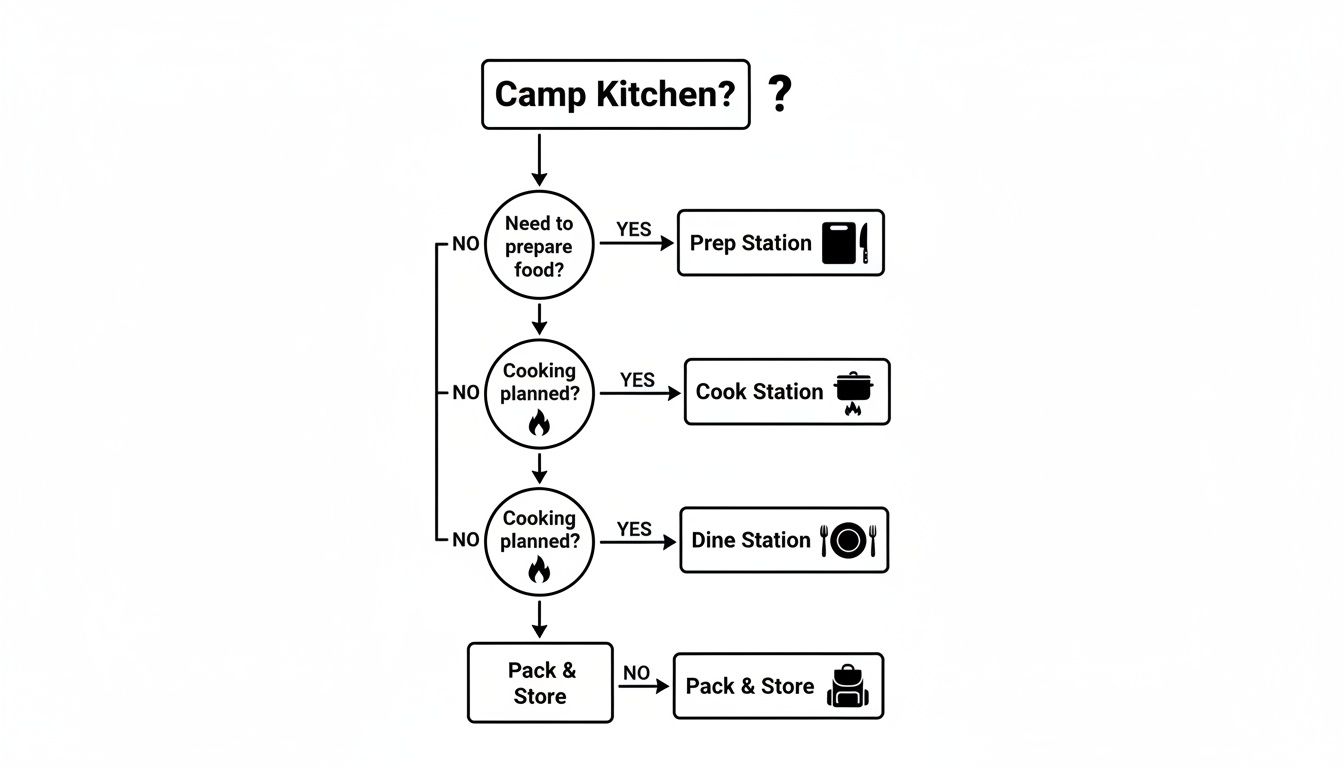
Breaking your kitchen down into its core functions—prep, cook, and dine—helps you pack only what you need for the meals you actually plan to make.
While both styles of travel invite careful planning, the priorities are worlds apart. The chart below breaks down the key differences in how you might approach packing for each.
Overlanding vs. Backpacking Key Packing Differences
| Consideration | Overlanding Priority | Backpacking Priority |
|---|---|---|
| Weight | Durability and capability are important; weight is a secondary concern. | Every ounce matters. Ultralight and minimalist is the goal. |
| Space | Space is managed with thoughtful organization (drawers, boxes). More gear is possible. | Space is extremely limited. Items should be compressible and multi-use. |
| Food & Water | Can carry larger coolers, more fresh food, and bulk water (often 5-10 gallons). | Dehydrated meals are common. Water is filtered on the go; carry capacity is limited. |
| Shelter | Rooftop tents, large ground tents, or in-vehicle sleeping systems. | Small, lightweight tents, tarps, or hammocks that fit in a pack. |
| Power | Portable power stations, solar panels, and dual-battery systems are common. | Small power banks for essential electronics like a phone or headlamp. |
| Tools/Repair | Extensive vehicle recovery gear, full tool kits, and spare parts. | A simple multi-tool and gear-specific repair kits (tape, patches). |
This comparison highlights how the core philosophy of each activity shapes every gear choice you make.
Ultimately, whether you choose the expansive freedom of overlanding or the quiet simplicity of backpacking, your packing list is what makes the journey possible. It’s a direct reflection of your chosen path, carefully curated to support the unique adventure you're setting out to create.
Beyond the Big Three: Dialing in Comfort and Safety
Once your shelter, sleep system, and kitchen are sorted, you can turn to the details that truly make a trip feel less like you're just surviving and more like you're thriving. It’s about the small, intentional choices that keep you warm, safe, and genuinely comfortable.
Think of this next layer as self-care for the outdoors. It's the quiet satisfaction of having a dry pair of socks after a muddy hike or the peace of mind that comes from knowing you have a first aid kit ready. This is what can turn a good trip into a great one.
Dress in a System, Not an Outfit
The weather has a mind of its own. A gentle way to stay comfortable is to think of your clothing as an adaptable system, not a collection of outfits. Layering lets you respond to whatever the day offers—a cool, misty morning that turns into a warm afternoon or a sudden downpour.
Your system might have three key parts:
- Base Layer: This is what’s next to your skin. Its job is to pull moisture away so you stay dry. Merino wool or synthetic fabrics are very good at this.
- Mid Layer: Your insulation. This layer traps your body heat to keep you warm. A simple fleece pullover or a light puffy jacket is perfect here.
- Outer Layer: Your shield. A waterproof jacket and pants are always a good idea. They block wind and rain, keeping your other layers dry and effective.
You don’t need a whole new wardrobe of technical gear, especially for car camping. The goal is simply to have options you can add or remove as conditions change.
The Quiet Confidence of Being Prepared
Safety gear isn't about planning for disaster; it's about having the tools to handle small, common hiccups with confidence. When you know you’re prepared, you can relax and be more present.
A solid first aid kit is the cornerstone here. You can buy a pre-made one and customize it or build your own from scratch. Just make sure it’s stocked for the basics: cleaning and dressing cuts, scrapes, and blisters. Don’t forget pain relievers, antiseptic wipes, and any personal medications you need.
It's also wise to have a backup for navigation. Phones are great, but batteries can run out. A physical map of the area and a simple compass are foolproof. Knowing how to use them is a timeless skill that provides a real sense of security.
Preparedness isn’t about expecting the worst. It’s about empowering yourself to handle the small stuff, so you can free your mind to enjoy the moment.
The Little Things That Feel Like Home
Finally, don't forget the gear that has little survival value but is essential for the soul. Camping is meant to be restorative, and small comforts are a huge part of that. This is where your personal style comes in.
What this looks like is different for everyone:
- A favorite camp blanket for wrapping up around the fire.
- A headlamp and a good book for winding down in your tent.
- A portable lantern or some solar string lights to give your site a warm, inviting glow.
- A journal and a pen to jot down thoughts or sketch the scenery.
These are the items that make your campsite feel like a temporary home. They’re a reminder that being outside isn't just about where you go—it’s about how you feel when you’re there. Packing these things is giving yourself permission to truly settle in and recharge.
A Guide to Thoughtful Packing and Organization
With your gear chosen, the final, quiet step is to bring it all together. This is where we shift from what to pack to how to pack. This isn't about rigid, perfect organization; it’s about creating a sense of ease that you can carry with you to the campsite.
Think of thoughtful organization as an act of kindness to your future self. It’s the difference between fumbling for a headlamp in the dark and knowing exactly where to find it.
Creating Systems for Calm
The simplest way to start is by grouping items by function. This creates intuitive systems that make both packing and finding things feel natural, like creating small, self-contained kits for each part of your camp life.
- The Kitchen Box: Dedicate one utility tote or cargo box to all your cooking gear. That means your stove, fuel, cookware, utensils, and cleaning supplies all live in one place. When it’s time to make dinner, you just grab one box.
- The Shelter & Sleep Tote: Keep your tent, stakes, sleeping pads, and air pump together. This makes setting up your primary shelter a smooth, one-stop process.
- Personal Bags: Each person can have their own duffel with clothing and personal items. It gives everyone their own space and makes finding a pair of dry socks straightforward.
This modular approach helps keep your vehicle and campsite tidy, which in turn can help your mind stay clear and focused on the experience, not the logistics.
Loading With Intention
How you load your vehicle can make a difference in the first few hours at your campsite. A little forethought here paves the way for a peaceful arrival. The key is simple: pack in reverse order of need.
The things you’ll want right away—like camp chairs, a water container, or a rain jacket if the sky looks uncertain—can be the last things you pack. That makes them the first things you can access, letting you get comfortable immediately.
Thoughtful organization is about creating more time for what matters. It’s the practical foundation that supports quiet mornings, shared meals, and a genuine connection with your surroundings.
Heavy items like coolers and water jugs should be placed low and centered to keep your vehicle stable. Then, you can tuck softer items like sleeping bags and pillows into the empty spaces around them.
The Gentle Act of Unpacking
When you return home, tired but fulfilled, unpacking offers one last mindful moment. It's a chance to care for the gear that took care of you.
Take the time to properly clean and dry your tent, wipe down your cookware, and restock your first aid kit. This gentle ritual not only preserves your equipment but also gives you a moment to reflect on the trip, cementing the memories you just made. It’s the final, quiet step in a journey that started with a simple list.
At Fort Robin, we believe the right gear helps create the space for those restorative moments outdoors. From durable utility totes that simplify your camp kitchen to comfortable sleep systems that promise a restful night, we’ve curated essentials to help you find your rhythm outside. Explore the collection at fortrobin.com.
Built with Outrank app

