

Finding Your Flame: A Guide to Portable Camping Stoves
A portable camping stove is more than just a piece of equipment. It’s the warm heart of an outdoor kitchen, a steady companion that matches your style of adventure with quiet, dependable performance. Whether it's a tiny stove for a quick morning coffee or a robust model for a family feast, the right choice helps create moments of connection.
A Warm Welcome to Camp Cooking
There is a simple magic in preparing a meal outdoors. It’s in the quiet hiss of a stove at dawn, brewing coffee as the world wakes up. It’s in the shared warmth of a hearty dinner simmering under a canopy of stars. These moments are about more than just food; they are about reconnecting—with nature, with loved ones, and with ourselves.
Choosing a stove is not a race to find the latest features. It is about finding a companion for your adventures, a tool that can fade into the background so you can focus on the experience itself. This guide is an invitation to explore which stove might best support the memories you want to create.
Finding Your Fit in the Outdoors
The right stove for a family weekend at a state park will be different from one tucked into a backpack for a solo journey. To help you find your way, we'll explore the different paths you can take.
- Family Car Camping: Adventures where comfort and connection are key.
- Overlanding and Basecamping: Journeys that call for durable, steady gear for groups.
- Ultralight Backpacking: Trips where every ounce is considered.
- Gourmet Camp Cooking: Pursuits that welcome precision and simmer control.
This growing desire for outdoor connection has inspired more people than ever to head outside. In the U.S. alone, over half the population got outdoors in 2023, fueling a quiet appreciation for thoughtful, reliable gear. This trend is a wonderful reminder that the simple act of cooking a meal outside remains a powerful way to reconnect. You can discover more about the growth of outdoor recreation and its impact on gear like camping stoves on SphericalInsights.com.
At its heart, a camp stove is more than just equipment. It’s the warm heart of your campsite—a gathering place for stories, laughter, and nourishment that helps turn a good trip into a memorable one.
Understanding Different Camp Stove Designs
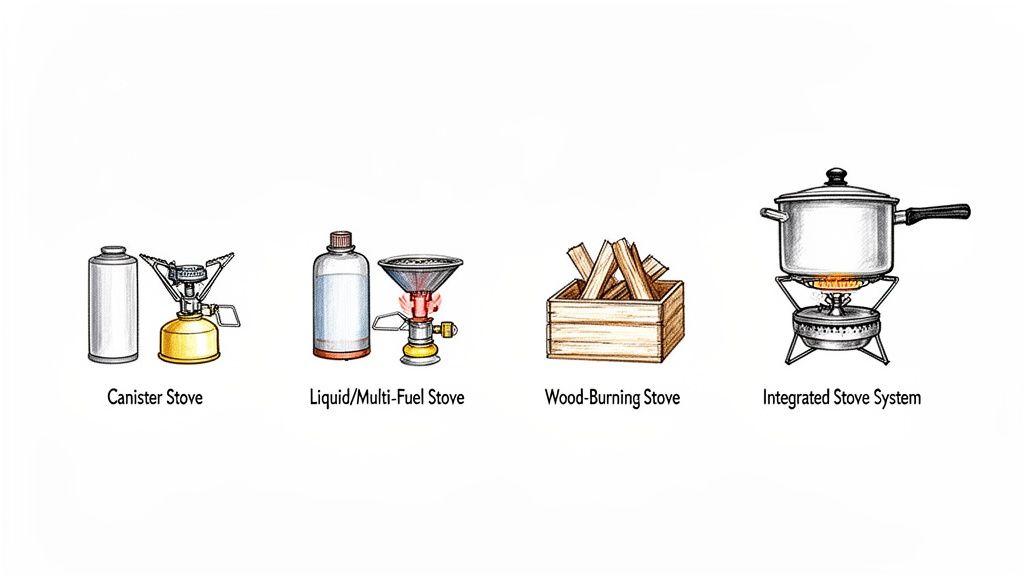
Choosing a portable camp stove is less about technical specifications and more about matching the gear to your style of adventure. Each design offers a different rhythm for your time outdoors. Let's explore the four main types to help you find the one that feels right for how you cook and where you camp.
The Simple and Steady Canister Stove
Canister stoves are the dependable companions of the camping world. They are often the first stove people own, and for good reason. Just twist on a pre-pressurized fuel canister, turn the valve, and light it.
Their greatest strength is simplicity. There is no priming or pumping, which lets you focus on the meal itself. They are well-suited for quick boils, morning coffee, and straightforward camp meals where ease is welcome.
The Adaptable Liquid and Multi-Fuel Stove
For adventurers heading into cold weather or remote locations, liquid and multi-fuel stoves offer reassurance. These systems use a refillable bottle that can run on various fuels, like white gas, kerosene, and even unleaded gasoline if needed.
They do require a little more hands-on attention, including priming the stove to get it started. But that small ritual rewards you with powerful, consistent heat that won’t falter in freezing temperatures or at high altitudes—conditions where canister stoves can sometimes struggle.
The choice between stove types is less about which is technically "best" and more about which one feels like the most natural extension of your camping style. It’s about matching the tool to the moment you want to create.
The Traditional Wood-Burning Stove
There’s something deeply satisfying about cooking over a fire you built yourself. Wood-burning stoves bring back that timeless experience, inviting a slower, more deliberate pace to your camp kitchen.
These stoves are often designed to be lightweight and packable, burning small twigs and pinecones you find around your campsite. They connect you directly with your surroundings and are a wonderful sustainable option, especially for longer trips where you prefer not to carry fuel. You can explore different stoves and cooking systems to see if this classic approach is right for you.
The Efficient Integrated Stove System
When speed and efficiency are the main goals, integrated stove systems are helpful. They combine the burner and a cooking pot into one interlocking unit.
These systems are designed to do one thing very well: boil water quickly. Their all-in-one design often includes a heat exchanger that captures more warmth, meaning they use less fuel to get the job done. This makes them a favorite for backpackers who rely on dehydrated meals and anyone who values getting that morning coffee ready in a hurry.
Comparing Stoves for Your Style of Adventure
Choosing a stove isn't about finding a single "best" option; it's about matching the gear to your own rhythm. A spec sheet can't tell you how a stove feels to use on a chilly morning or a windy ridgeline. Let's explore how these designs support you in the moments that matter.
The Art of Simmer Control
If your camp meals go beyond just boiling water, simmer control is a welcome feature. Trying to cook fluffy pancakes or a delicate sauce over a roaring flame can lead to a burnt, frustrating breakfast.
- Canister and Liquid-Fuel Stoves: These usually give you the most precision. Their adjustable valves let you dial the flame down to a gentle flicker, giving you the control needed for real cooking.
- Integrated Systems: While they are champions at boiling water fast, most are built for maximum output. They offer very little simmer control, making them a less suitable fit for anything more complex than heating liquids.
- Wood-Burning Stoves: Simmering is possible, but it takes patience and practice. You can manage the fire by feeding it small twigs or letting it burn down to coals for a gentler, more consistent heat.
This difference is a key reason why many camp cooks appreciate the flexibility of a canister or liquid-fuel stove.
While an integrated system boils water fastest, a multi-fuel stove offers quiet peace of mind when traveling where specific fuel canisters are unavailable. It’s a trade-off between pure speed and true adaptability.
Performance in Wind and Weather
A sudden gust of wind can be the difference between a hot meal and a cold dinner. A stove's ability to hold its own in breezy conditions is important, especially if you camp in exposed, mountainous, or coastal spots.
Integrated stove systems often perform well here. Their built-in windscreens and heat exchangers shield the flame and transfer warmth directly to the pot, making them reliable when the weather turns.
Canister and liquid-fuel stoves vary. Some models include built-in windscreens, while others may need you to use a separate one or get creative with a natural windbreak. A wood stove’s performance also depends on its design—some have solid walls that offer excellent protection from the elements.
Considering Weight and Packability
For the backpacker who considers every gram, the weight and packed size of a stove system are important. This is where the simple elegance of minimalist designs really shines.
Ultralight canister stoves and some wood-burning stoves are often the lightest options for the stove unit itself, with some weighing less than a single ounce. Of course, you still have to account for the weight of your fuel canister or the potential challenge of finding dry wood.
Liquid-fuel stoves are heavier, but their fuel becomes more weight-efficient on long trips with large groups. Integrated systems pack neatly into a single unit but are almost always the heaviest and bulkiest of the four.
Interestingly, it’s the classic wood-burning stove that continues to hold a significant place in the market. In 2023, these simple, fuel-free stoves accounted for 51.6% of the global market share. It's a testament to their appeal for campers who value self-sufficiency and a deeper connection to their environment. You can explore more about the trends shaping the camping stove industry to understand their lasting popularity.
To make the decision a bit clearer, think about the kind of trips you take most often. The right stove for a weekend car camping trip is rarely the best choice for a week-long backpacking trek.
This table breaks down how each stove type performs in common camping scenarios, helping you align your gear with your adventures.
Choosing Your Camp Stove: A Situational Comparison
| Consideration | Canister Stove | Liquid/Multi-Fuel Stove | Wood-Burning Stove | Integrated System |
|---|---|---|---|---|
| Weekend Backpacking | Excellent. Lightweight, fast, and easy to use for simple meals. | Good, but can be heavier than needed for short trips. | Great if you're confident in finding dry fuel. Can be the lightest option. | A solid choice, especially if you mostly boil water for freeze-dried meals. |
| Long-Distance Trekking | Good, but carrying multiple canisters adds weight and bulk over time. | A supportive choice. Fuel is more weight-efficient and easier to find internationally. | Ideal for minimizing fuel weight, but highly dependent on the environment. | Often too bulky and heavy for most thru-hikers. |
| Family Car Camping | Very convenient and simple for quick meals or boiling water for coffee. | Excellent. Powerful, stable, and great for cooking large meals for a group. | Fun and engaging, but less practical for primary cooking. | Great as a secondary stove for fast water boiling. |
| Overlanding/Basecamp | Good for a quick, simple setup, but less ideal for primary cooking. | A steady companion. Reliable, powerful, and adaptable to different fuel types. | A nice-to-have for ambiance and backup, but not a primary cooker. | Perfect for making coffee or tea quickly without firing up a larger stove. |
| Winter Camping | Can struggle in deep cold. Requires specific cold-weather fuel blends. | A top performer. Excels in cold and at altitude. | Challenging. Finding dry fuel can be difficult or impossible in snow. | Excellent. The integrated design makes it very efficient in cold, windy weather. |
Ultimately, the best stove is the one that reliably makes you a hot meal when and where you need it. Consider your priorities—speed, weight, cooking style, or fuel flexibility—and you will find the right fit for your adventures.
Matching Your Stove to Your Journey
A camp stove isn't just a piece of gear; it’s the warm heart of your camp kitchen. It shapes the meals you cook and the memories you make around them. The best stove isn’t the one with the most features—it’s the one that feels like a natural extension of how you travel.
Thinking about where you're going and who's coming with you brings a lot of clarity. This simple guide helps you match a stove type to your adventure, whether you're heading out for a solo weekend or loading up the car for a family trip.
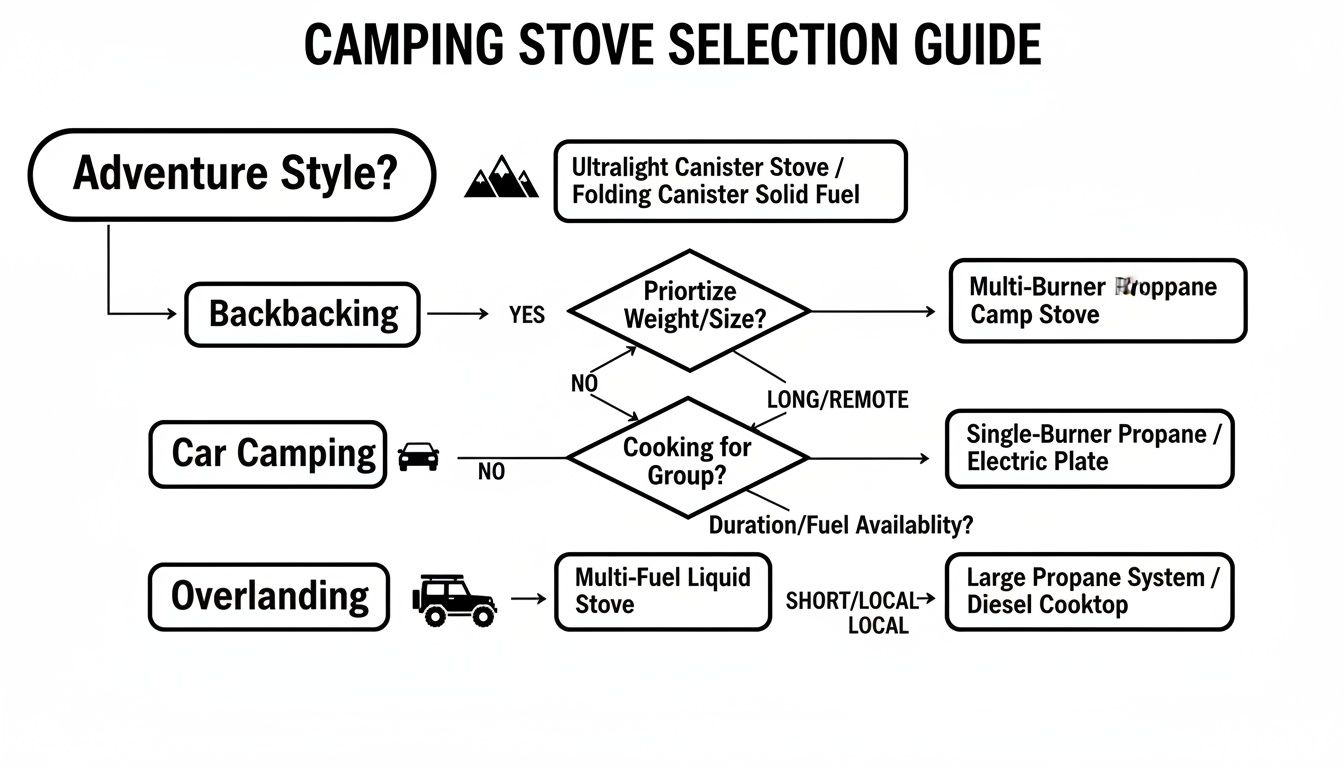
As the flowchart shows, the path to the right stove usually starts with one simple question: how do you like to travel? From there, your choices balance convenience, power, and packability.
For Family Car Camping
When you have the luxury of packing a car, cooking becomes less about survival and more about enjoyment. This is where a classic two-burner propane stove can really shine. It's stable, reliable, and big enough to handle large pots and skillets for group meals.
Imagine making pancakes for the whole crew on a crisp morning at a state park. That's the kind of experience a larger stove makes effortless. You are not worried about a wobbly pot, so you can focus on the food and the company.
For Overlanding and Basecamping
Extended trips into the backcountry, whether you're vehicle-supported or setting up a fixed basecamp, call for durability and power. A sturdy liquid-fuel stove or a heavy-duty two-burner becomes your most reliable partner in these situations. They are built to handle bumpy roads and cook substantial meals after a long day of exploring.
These stoves are the lifelines that keep the adventure fueled with hot coffee and hearty dinners. It’s no surprise the market for reliable gas camping stoves is growing—projections show this segment climbing to $850 million by 2033, driven by a new generation of outdoor enthusiasts.
A dependable stove at a remote basecamp offers more than a hot meal. It’s a source of comfort and normalcy, a warm gathering point that makes the wild feel a little more like home.
For Ultralight Backpacking
When every ounce in your pack is accounted for, your stove needs to be almost unnoticeable until you need it. This is the domain of tiny canister stoves and minimalist wood-burning models. Their job is simple: deliver a hot meal or a warm drink with the smallest possible weight penalty.
The satisfaction of a hot meal after a tough day on the trail is one of backpacking’s greatest rewards. A small, efficient stove makes that moment possible without weighing you down on the ascent. For a deeper look at your options, you may find our guide on the best lightweight backpacking stove helpful.
For the Gourmet Camp Cook
If you see camping as a culinary opportunity, then simmer control is everything. The ability to dial a flame down to a gentle whisper is what separates boiling water from sautéing garlic or simmering a delicate sauce.
Canister and liquid-fuel stoves with wide burner heads and precise controls are the tools of choice for the camp chef. They give you the finesse needed to turn a simple campsite into a genuine outdoor kitchen.
Caring for Your Stove with Mindful Practices
Your camp stove is the heart of your outdoor kitchen. It’s more than just a piece of gear; it’s the tool that provides warm meals and hot coffee on quiet mornings. Like any essential piece of equipment, it performs best with a little routine care.
This isn’t about complicated mechanical work. It is about simple, consistent habits that ensure your stove is reliable trip after trip. Taking a few minutes to maintain your gear is an investment in future adventures, making sure it’s ready to go when you are.
Simple Rituals for a Lasting Stove
A few practical habits, practiced after each trip, will extend the life and performance of your portable camping stove. These small steps prevent bigger problems down the road.
- A Gentle Cleaning: Before you pack it up, give the stove a quick wipe-down. A damp cloth is usually all you need to remove food spills, grease, and soot. For stubborn grime on liquid-fuel stoves, a soft brush helps clear away residue without scratching the finish.
- Fuel Line Check: On liquid-fuel models, give the fuel line a quick visual inspection. Look for any cracks or brittleness that could cause leaks. It’s a simple check that takes just a few seconds.
- Inspect the Seals: Both canister and liquid-fuel stoves rely on O-rings and seals to contain fuel safely. Before attaching a new canister or fuel bottle, take a look at the seals to make sure they are intact and pliable, not dry or cracked.
Protecting your stove during transport is just as important. A simple solution like a double-burner stove carry bag keeps it safe from dings and dust between campsites.
Treating your gear with care is an extension of treating the outdoors with respect. It’s a quiet practice that ensures both your equipment and your memories will last for years to come.
Mindful Safety Practices
Campsite safety is not about a long list of rules; it’s about awareness. It is about creating a calm, secure space for you and your family to gather and share a meal without worry.
Always set your stove up on a stable, level surface, clear of dry grass, leaves, or other flammable materials. This simple act of preparation creates a safe foundation for cooking. Pay attention to your surroundings—note the wind direction, the location of your tent, and where kids or pets are playing. By creating a conscious cooking zone, you ensure the heart of your camp remains a place of warmth, not a hazard.
A Few Final Questions Before You Decide
As you narrow down your choices, a few practical questions often come to mind. These are the details that build confidence, turning that last bit of uncertainty into the feeling that you have what you need to make a good choice. We’ve pulled together the most common ones to offer some extra clarity.
This is not about finding the perfect technical answer, but about finding what works for you and the adventures you have planned.
What Does BTU Really Mean for My Cooking?
You will see stoves rated by their BTU (British Thermal Unit) output, which is just a measure of heat. A higher BTU number means a more powerful stove that boils water faster. If speed is your priority, high BTUs can be helpful.
But more power isn't always better. For anyone who enjoys actual cooking at the campsite, a stove with a massive output can be hard to control. It can easily turn a gentle simmer into a burnt mess. The most versatile camp stoves balance power and finesse—enough heat to get water rolling quickly, but with the control to dial it way down for more delicate meals.
Think of BTU less as a measure of "goodness" and more as the stove's personality. A high-output stove is like a sprinter, built for speed. A stove with great simmer control is like a patient chef, ready for any recipe.
Can I Use My Canister Stove in the Winter?
This is an important question for cold-weather campers. Standard isobutane/propane fuel canisters can start to struggle as temperatures drop toward freezing (32°F or 0°C). The pressure inside the canister falls, which can lead to a weak, sputtering flame—or no flame at all.
For milder winter conditions, you can often make it work. A few tricks might help:
- Keep the fuel canister somewhere warm overnight, like inside your sleeping bag.
- Use a stove with a pressure regulator, which helps maintain a more consistent fuel output in the cold.
But for winter camping in deep cold, a liquid-fuel stove is almost always the more reliable choice. They are built to perform in freezing temperatures, ensuring you can have a hot meal when you need it most.
How Do I Figure Out How Much Fuel to Bring?
Estimating fuel is more art than science, and it is something you get a feel for over time. A good starting point for canister stoves is to plan on 10-15 grams of fuel per person, per meal that involves boiling water. This can change depending on wind, temperature, and what you're cooking.
Here’s a simple way to figure out your personal baseline:
- Start a weekend trip with a brand-new fuel canister.
- Keep a rough mental note of how many meals you cooked or pots of water you boiled.
- When you get home, weigh the canister to see how much fuel you actually used.
Doing this just once or twice will give you a real-world number for your specific stove and cooking style. Soon, you'll develop an intuition for it, knowing just how much to pack for a weekend trip or a week-long journey. The goal is to carry enough to feel secure without being weighed down.
At Fort Robin, we believe the right gear should feel like a trusted companion, quietly supporting your adventures for years to come. We hope this guide helps you find a stove to become the warm heart of your campsite.
Explore our collection of stoves and cooking systems at Fort Robin

