

Finding Calm with a Camp Kitchen Organizer
A well-planned camp kitchen organizer system can be the secret to a relaxed campsite. It’s what turns the potential busyness of cooking outdoors into the true heart of your camp—a place where meals and memories happen with a sense of ease.
Why an Organized Camp Kitchen Matters
The camp kitchen is so much more than a place to cook. It’s where the day starts with that first cup of coffee and where it ends with stories told by lantern light. Yet that same space can quickly become a frustrating part of camping.
We’ve all been there—digging through a large tote for one spatula, trying to find a clean spot to chop vegetables, or realizing the salt is still packed in the car.
That kind of clutter isn’t just an inconvenience. It pulls you away from why you went camping in the first place. Instead of watching the sunset, you're hunting for a can opener. Instead of enjoying a slow morning, you’re wrestling with a disorganized cooler. A thoughtful kitchen setup gives you that time back.
Fostering Calm and Connection
When everything has a home, a sense of calm can follow. This isn’t about being perfect; it’s about making your campsite intuitive and easy to use. A good camp kitchen organizer system helps create that simple structure.
The benefits go beyond just being efficient:
- More Time for Moments: A smooth workflow means less time spent on chores and more time to listen to the birds, talk with your family, or just be still.
- Reduced Stress: Knowing where your tools are helps eliminate those small frustrations that can slowly chip away at the peace of being outdoors.
- A Welcoming Space: An organized kitchen becomes an inviting hub where everyone feels comfortable pitching in. It can turn meal prep into a shared, gentle experience.
By setting up our camp kitchen with a little intention, we transform it from just a work area into a space that genuinely nurtures connection—with our food, our companions, and the wildness around us.
Ultimately, organizing your camp kitchen can be an act of self-care. It’s a way to honor the time you’ve set aside to unplug and recharge. It lets the simple joy of cooking and eating together take center stage, making each trip more memorable.
A Mindful Approach to Packing Your Kitchen
Before a single pot or pan leaves the shelf, the best camp kitchens start with a quiet moment of intention. This isn't about rigid checklists; it's about thinking through the natural flow of cooking outside. It's a chance to simplify, consider what you truly need, and set yourself up for a calm, easy time.
Instead of putting everything into one large tote, you might think about your camp kitchen in functional kits. This simple shift can turn packing from a chore into a more grounding ritual, helping you bring only what will serve you on your trip.
Grouping by Function: A Modular System
An easy way to get started is by creating small, dedicated kits for each part of making a meal. This modular approach makes finding what you need more intuitive. No more rummaging through a cluttered box while the stove is running. It's a system many campers are finding helpful as they look to create enjoyable cooking hubs.
You could consider these four core groups to start:
- The Prep Kit: This holds everything for getting ingredients ready. Think cutting board, a good knife, mixing bowls, and maybe a peeler or grater, depending on your menu.
- The Cook Kit: This is where you might gather your stove, fuel, pots, pans, and essential tools like a spatula, tongs, and a large spoon.
- The Serve Kit: This one is just for plates, bowls, cups, and forks or sporks. Keeping them separate from the cookware means they can stay clean right up until you're ready to eat.
- The Clean-Up Kit: A small basin, biodegradable soap, a sponge, and a towel can make up this final set. Having it ready makes cleaning feel like a natural end to the meal, not a dreaded chore.
Packing this way helps you walk through the entire cooking process before you even leave home. It’s a simple change that can bring a surprising amount of ease to your time outdoors.
This thoughtful approach is becoming more common, especially with families and new campers. The desire for smarter ways to get organized outside is reflected in the growing camp kitchen market. If you are interested, you can see more in a full camp kitchen market report.
By focusing on these functional kits, you'll naturally build a camp kitchen organizer system that’s tailored to how you cook. For a deeper dive into what to bring, you can look at our guide on comprehensive packing lists for camping. A little mindful prep can mean less time searching and more time savoring.
Creating Your Outdoor Kitchen Workstation
Once you've packed your gear with intention, the next step is bringing that same thoughtful approach to your campsite. A smooth-running outdoor kitchen isn’t about having the fanciest equipment; it’s about creating a space that feels logical and calm. A well-designed workstation lets you move with ease, turning the simple act of preparing a meal into a peaceful, enjoyable part of the day.
The idea is to think in zones, just like you might in a kitchen at home. By creating distinct areas for each task—prepping, cooking, cleaning, and storing—you can establish a natural rhythm. This simple method helps eliminate that classic campsite scramble of constantly searching for what you need next.
Defining Your Workflow with Zones
Setting up these zones isn't about following rigid rules. It's about adapting the layout to your space, whether that's a single picnic table or a more spread-out setup. You’ll want to arrange them in a way that makes sense for the flow of cooking, usually in a left-to-right or circular pattern.
This is where you can turn a patch of ground into a genuinely functional kitchen. The key is to separate your tasks into four essential zones to keep things flowing and prevent things from feeling chaotic, especially when cooking for a group.
Thinking in zones creates a calm, predictable workflow. You're not just organizing gear; you're designing a space that makes cooking outdoors feel less like a chore and more like a core part of the experience.
Essential Zones for a Calm Camp Kitchen
| Zone | Primary Purpose | Key Items to Keep Here | Benefit |
|---|---|---|---|
| Pantry Zone | Storage for all food and drinks. | Cooler, dry food bin, water jug, snacks. | Keeps ingredients contained and easy to find, minimizing trips back to the car. |
| Prep Zone | Chopping, mixing, and assembling ingredients. | Cutting board, knives, mixing bowls, spices, paper towels. | A dedicated, clean surface for food prep that keeps raw ingredients separate from cooked food. |
| Cooking Zone | The "hot zone" for grilling, boiling, and frying. | Camp stove, fuel, pots, pans, lighter, cooking utensils. | Concentrates heat and mess in one spot, creating a safer cooking environment. |
| Cleaning Zone | Washing dishes and hands. | Two wash basins (wash/rinse), biodegradable soap, sponge, drying rack/towel. | Separates dirty dishes and soapy water from your cooking and prep areas. |
This four-zone system can be the foundation of a camp kitchen that works for you. It's simple, adaptable, and makes it easy for everyone—even children—to know where things go.
This simple, three-step process of planning, grouping, and packing is what can set you up for an organized campsite.
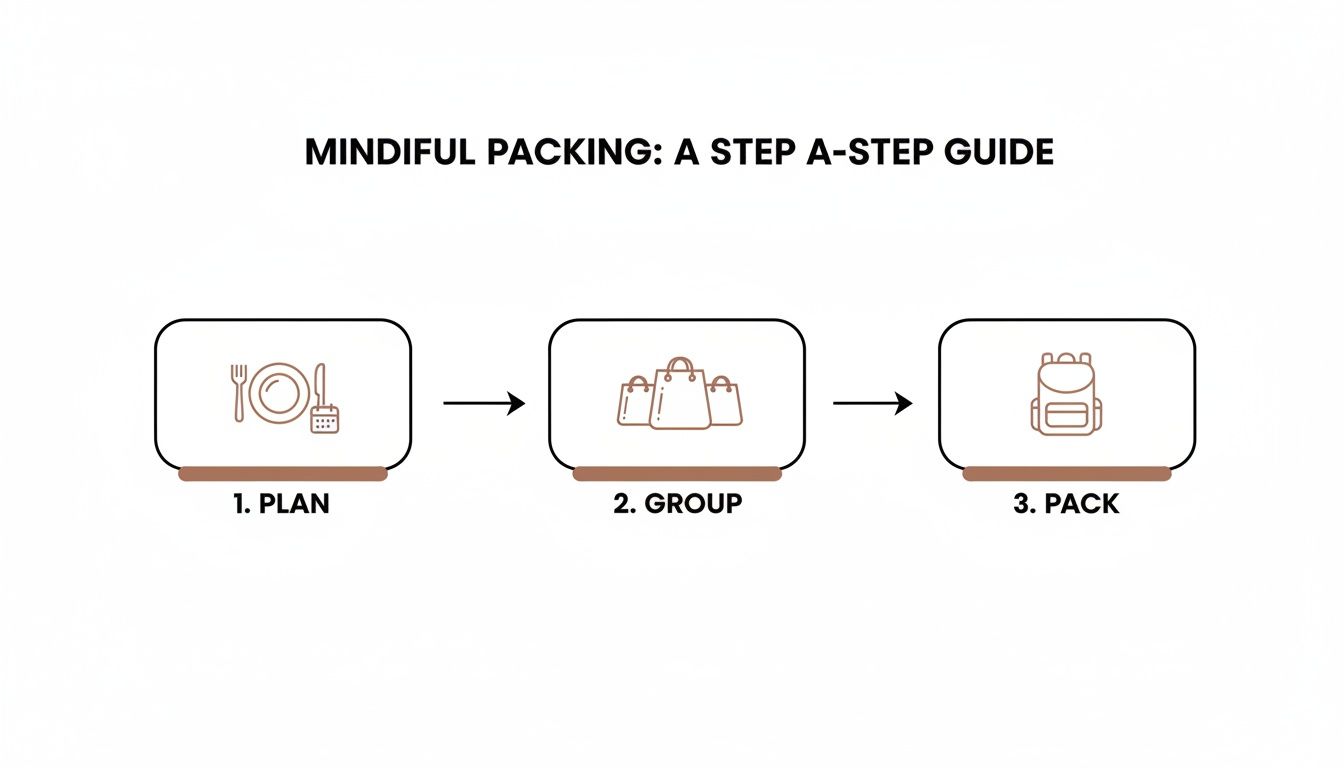
As the visual shows, a calm camp kitchen can begin long before you arrive. It starts with a thoughtful approach to what you bring.
Bringing the Zones to Life
Let's put this into practice. Imagine you've arrived at a campsite with a standard picnic table. You could designate the left end for your Pantry Zone—cooler on the ground, dry goods box on the bench. The middle of the table then becomes your Prep Zone, giving you plenty of room to work.
Your stove, the Cooking Zone, can sit at the right end of the table, leaving a safe buffer from where you're chopping. Finally, your Cleaning Zone can be set up on a small portable table or even the corner of the picnic table after the meal is done.
This creates a logical flow: ingredients come from the pantry, move to prep, then to the stove, and finally to the cleaning station. This can mean less frantic searching.
This approach can transform any spot into a functional and welcoming camp kitchen organizer. It's a simple practice that fosters a sense of harmony, allowing you to focus less on the mechanics of cooking and more on the joy of sharing a meal together under an open sky.
Choosing the Right Camp Kitchen Organizer
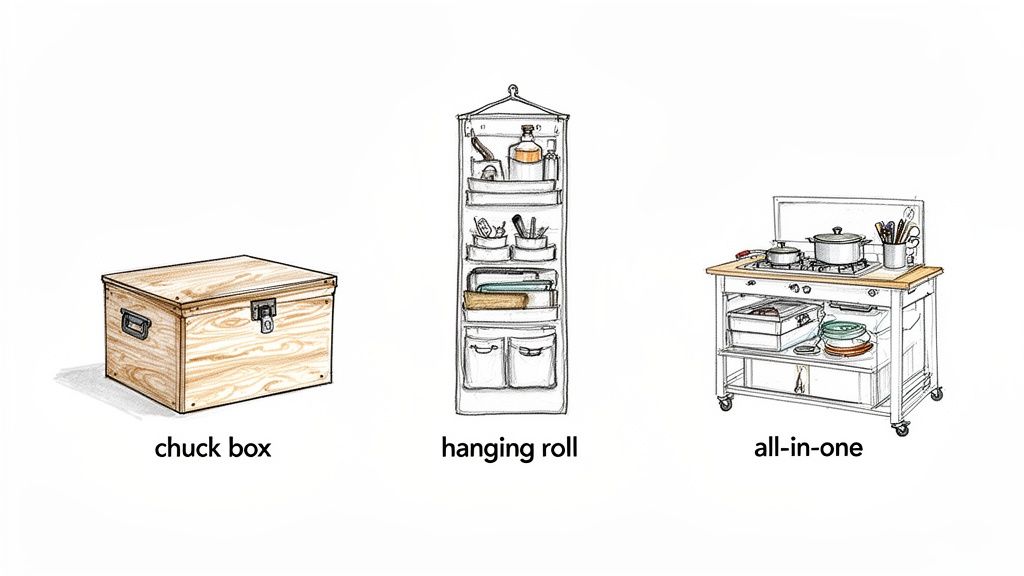
Choosing a camp kitchen organizer isn’t just about getting another piece of gear. It’s about finding a system that makes cooking outside simpler and more enjoyable. The right organizer can become a trusted companion that fits the rhythm of your adventures, acting as a natural extension of your outdoor home.
This choice is personal and often depends on your camping style. The setup for a solo backpacker will be different from what a family of five might need for a weeklong trip. By thinking about how you camp, you can find something that will serve you well for years to come.
First, Think About Your Camping Style
Before you begin looking, you might take a minute to consider how you travel. There’s no right or wrong answer—just what works for you. This simple reflection can point you toward a solution that genuinely makes your time outdoors better.
Here are a few common approaches to adventure:
- The Weekend Car Camper: You're usually out for a few nights at a time, and your vehicle is never far away. Comfort may be a priority, and you might want a welcoming basecamp. A sturdy all-in-one station or a classic chuck box could provide stability and counter space.
- The Long-Haul Overlander: Your trips might be measured in weeks, not days, often over rugged terrain. Durability, efficiency, and a compact footprint could be important. A heavy-duty portable unit or a built-in galley system might be a good fit.
- The Minimalist Adventurer: You value simplicity and may live by the "pack only what's necessary" idea. A lightweight, packable solution like a hanging utensil roll or a soft-sided cube organizer can keep essentials tidy without adding bulk.
What to Look for in Materials and Design
These days, there’s a movement toward sustainability and durable design in camp gear. Many people are embracing a "buy it once, buy it right" philosophy, which can feel more in sync with the places we go to explore. This has led to an interest in weather-resistant, repairable, and often recyclable materials.
The most sustainable piece of gear is often the one you already own and continue to use. Choosing durable, well-made equipment can be an investment in future adventures and a gentler way of interacting with the outdoors.
This thoughtful approach is becoming more widespread, especially as many younger campers look for eco-conscious and customizable gear. Some manufacturers are listening, using materials like recycled plastics and stainless steel to reduce their environmental footprint.
Ultimately, picking a camp kitchen organizer is about finding a piece that brings a sense of calm and preparedness to your campsite. Whether it’s a simple canvas roll or a complete portable station, the right choice quietly supports the meals and memories you make outside. As you look around, you'll find plenty of thoughtfully designed camp kitchen essentials that can help create that perfect outdoor gathering place.
Maintaining Harmony in Your Camp Kitchen
The sense of peace you find outdoors doesn't have to end when dinner is over. Keeping your camp kitchen calm and orderly throughout your trip—and packing it away with care—can complete the cycle of a good adventure. It’s about leaving your site a little better than you found it and making sure your gear is ready to go for next time.
This rhythm of tidying up doesn't have to be a chore. You can think of it as a way to respect the place you've called home, even if just for a night. A clean camp is also a safer camp, deterring curious wildlife and preserving the natural beauty for everyone who follows.
A Gentle Approach to Cleanup
The secret to a painless camp cleanup can be simple: clean as you go.
Wiping down your prep surface after chopping vegetables or washing a pot while the main course simmers can keep a large chore from piling up at the end of the night. It keeps your workspace clear and your mind uncluttered.
When it's finally time to wash dishes, a simple system can bring a surprising amount of ease. For a deeper look at low-impact methods, you can check out our full guide to washing dishes while camping, which is full of practical tips.
A well-maintained camp kitchen reflects a quiet respect—for your gear, for the wild spaces you visit, and for your future self who will open a clean, ready-to-go kit for the next trip.
Managing food waste is another important part of the process. Scrape every scrap into a designated, sealable waste bag before you start washing. This makes dishwashing much easier and, more importantly, helps prevent attracting animals to your site. It is always best to pack out everything you pack in.
The Restorative Act of Packing Away
Breaking down your camp kitchen doesn't have to be a mad dash. Approaching it as the final, quiet ritual of your trip can feel restorative.
Start by making sure every pot, pan, and utensil is completely clean and dry before it goes back into your camp kitchen organizer. This simple step is a good way to prevent mildew and ensure your gear will last for years.
As you pack, return each item to its designated "kit"—the prep tools go together, the cookware gets nested, and all the cleaning supplies are contained. This mindful process can make unpacking at home a breeze and set you up for a quick start on your next journey.
This kind of thoughtful design is becoming more common. Portability and compact storage are valued features in the camp kitchen organizer market. An interest in all-in-one, easy-to-deploy units has led to market growth. If you are curious, you can discover more insights about these portable kitchen trends and see how they reflect our collective desire for simplicity.
By caring for your gear and your campsite, you can close out your adventure with intention. You leave nothing behind but footprints and take nothing with you but memories.
Common Camp Kitchen Questions
Setting up a smooth-running outdoor kitchen usually brings up a few questions. That’s perfectly normal—finding your own rhythm can take a few trips. Think of these answers as friendly advice to help you feel confident and reconnect with the simple joy of cooking outdoors.
What Is the Best Way to Keep Food Safe from Animals?
A clean camp is your best defense, and it's also a respectful way to share the outdoors. A good rule of thumb is to always store food, coolers, and even scented items like toothpaste inside your hard-sided vehicle or a certified bear-resistant container, especially overnight.
This simple habit protects the wildlife whose home you're visiting. Clean up spills and crumbs right away, and dispose of food scraps and dishwater far from your cooking and sleeping areas. It’s a quiet way to help keep animals wild and preserve the peace of the campsite for everyone who comes after you.
How Can I Stay Organized with Minimalist Gear?
Good organization is a mindset, not a pile of gear. You can create a beautifully ordered camp kitchen with just a few simple items. The key is to create a consistent flow, always returning things to their designated "home" right after you use them.
For example, a single tote bag can be your pantry. One corner of the picnic table can be your dedicated prep station. A collapsible bucket works perfectly as a wash basin. By creating simple zones and sticking to them, you can build a sense of calm and order, no matter how minimalist your setup is.
A peaceful campsite isn't about having more things; it's about having a thoughtful place for the things you have. It's in this simplicity that we often find the most freedom.
Any Tips for Making Camp Cleanup Less of a Chore?
The secret is to clean as you go. Weave it right into the rhythm of cooking instead of saving it all for the end. Wash prep tools while your meal simmers, and you’ll avoid that big, daunting pile-up later. It keeps your workspace clear and your mind uncluttered.
Before you even sit down to eat, you can get a simple three-bin wash system ready: one for hot, soapy water, one for rinsing, and a third for air-drying. Another helpful tip is to scrape plates completely clean before they hit the water. It saves a surprising amount of effort and precious camp water.
When you treat cleanup as a quiet, shared activity, it can stop feeling like a chore. It can become a peaceful moment of closure—the perfect, gentle end to a great meal outdoors.
At Fort Robin, we believe the best adventures are built on a foundation of comfort and confidence. Our thoughtfully curated gear, from the perfect camp kitchen organizer to a reliable sleep system, is chosen to help you find your way back to quiet mornings and shared stories under open skies. Explore our collection and start planning your next journey at https://fortrobin.com.

