

Camp Kitchen Setup Ideas for Enjoyable Outdoor Cooking
A good camp kitchen isn’t just about the gear you bring—it’s about creating a natural workflow, a gentle rhythm for preparing meals outdoors. Thinking in terms of simple zones for prepping, cooking, and cleaning can bring a peaceful, intuitive order to your campsite, leaving you more time to savor the experience.
The Heart of Your Campsite
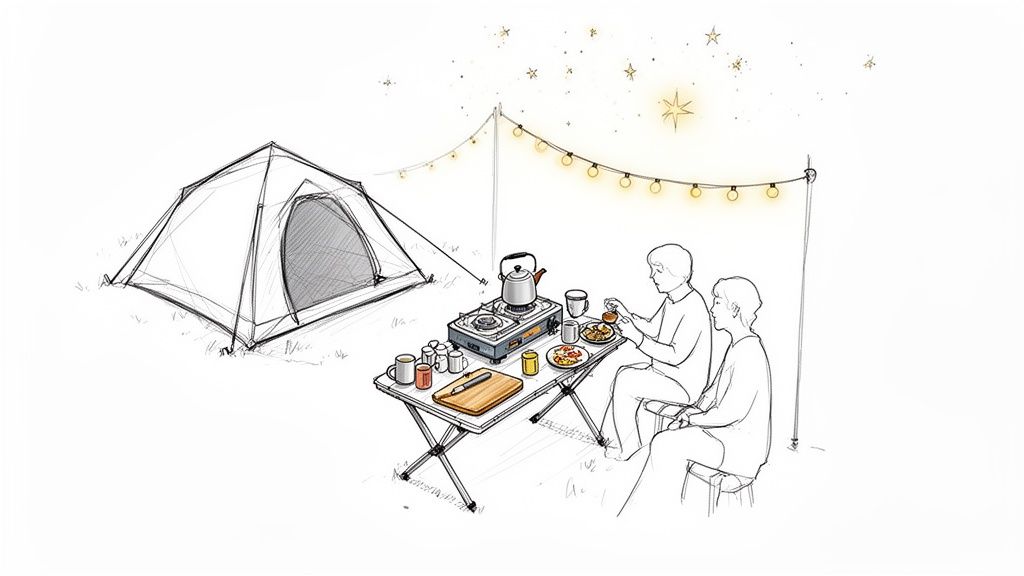
More than just a place to cook, the camp kitchen often becomes the warm, beating heart of a campsite. It’s where the first quiet moments of the day unfold over a steaming mug of coffee and where stories are shared in the soft glow of a lantern as dinner simmers.
This is a space that invites connection—with the food you prepare, the people you share it with, and the simple beauty of the outdoors. The act of cooking under an open sky can easily become a cherished ritual.
Why a Thoughtful Setup Matters
A well-planned kitchen setup isn’t about perfection; it’s about creating a sense of ease. When everything has a home, your movements become more fluid, and the entire process feels less like a chore and more like a joy. This simple shift can help you:
- Feel more present: Spend less time feeling disorganized and more time enjoying the small moments.
- Encourage participation: An intuitive layout makes it easy for family and friends—especially children—to feel welcome to help.
- Create a welcoming space: It becomes the natural gathering spot, drawing everyone together.
The desire for this blend of comfort and connection is a big part of why many of us camp. It's no surprise the global camp kitchen market reached $2.1 billion recently, reflecting a deep-seated love for creating memorable meals outside. For a closer look at these trends, you can explore more insights from MarketIntelo.com.
At its best, a camp kitchen is a temporary home. It’s a place of nourishment and warmth that anchors your experience, allowing you to settle in and truly be where you are.
Our goal here is to offer some gentle guidance, helping you feel that a functional, even beautiful, outdoor kitchen is well within reach. It’s all about finding a personal rhythm that makes your time outside more restorative and meaningful.
Designing Your Kitchen With Purposeful Zones
A great camp kitchen isn't just about the gear you bring—it's about creating a natural flow. When you stop thinking in checklists and start thinking in zones, the whole outdoor cooking experience changes. It’s a simple shift that can turn campsite chaos into calm, intuitive cooking.
This is all about creating a rhythm. Imagine a dedicated spot for slicing vegetables, a separate area for your stove, and another for washing up. Each zone has its own purpose, which means you spend less time digging through bins and more time enjoying the sizzle of food in the pan.
The Prep Zone
This is your creative space, where ingredients get chopped, mixed, and ready for the heat. It’s the heart of the culinary action.
A small, dedicated side table or even the flat top of a sturdy cooler can make a perfect prep station. This keeps your main cooking surface—where the stove sits—clear and uncluttered. Having your cutting board, knives, and mixing bowls all in one spot makes the whole process feel smooth and unhurried. For more ideas on keeping this area tidy, you can explore our guide on finding the perfect camp kitchen organizer.
The Cooking Zone
Centered around your stove or campfire grill, the cooking zone is where the magic happens. This spot needs to be stable, level, and ideally, sheltered from the wind. It’s where you’ll want your spatulas, tongs, spices, and cooking oils all within arm's reach.
Think about a logical layout. If your prep zone is on the left, placing the cooking zone to its right creates a natural hand-off for ingredients. It’s a small detail that creates an effortless workflow, making cooking feel more like a dance and less like a scramble.
By dedicating a specific area for each part of the cooking process—from prep to cleanup—you're not just organizing gear. You're creating a more peaceful and efficient environment that invites connection and calm.
The Cleaning and Storage Zones
Finally, having distinct zones for cleaning and storage brings a sense of order to your camp meal. A cleaning station, perhaps with a collapsible sink or a couple of wash bins, contains the mess and makes doing dishes surprisingly straightforward.
Your storage zone is what keeps food and supplies protected and easy to find. This could be a designated tote for dry goods or a well-managed cooler for perishables. It turns out that getting this right really matters.
Good camp kitchen structure isn't just a nicety; it can reduce food waste by up to 30% on multi-day trips. This focus on efficient, enjoyable outdoor living is a big reason why North America now holds a commanding 42% of the global camp kitchen market. You can discover more about these camping trends on PR Newswire.
Thinking in zones makes setting up your kitchen intuitive and functional. The table below breaks down the four key areas, their purpose, and what gear you might want to have handy in each.
Camp Kitchen Zone Planning Guide
| Zone | Purpose | Key Gear Examples |
|---|---|---|
| Prep Zone | Where ingredients are chopped, mixed, and prepared. | Cutting board, knives, mixing bowls, spices, paper towels. |
| Cooking Zone | The "hot zone" centered around your stove or grill. | Camp stove, fuel, grill grate, pots, pans, utensils (tongs, spatula). |
| Cleaning Zone | Where dishes are washed and waste is managed. | Collapsible sink/wash bins, biodegradable soap, sponge, trash bags. |
| Storage Zone | Keeps food safe from critters and the elements. | Coolers, dry boxes/bins, food containers, water jug. |
Organizing your camp kitchen into these four zones can streamline everything from making coffee in the morning to cleaning up after dinner, letting you focus on what really matters: enjoying your time outside.
Camp Kitchen Setups for Every Style of Adventure
The way you cook outdoors is as unique as your reasons for being there. A camp kitchen should feel like a natural extension of your trip, whether it’s a weekend getaway with the family or a solo journey far from the familiar.
Think of these setups as starting points, not rigid rules. The goal is to create a space that feels right for you and supports the kind of outdoor experience you’re after. The core principles of an organized kitchen—like distinct zones for prep, cooking, and cleaning—can be adapted to fit any style.
This simple diagram shows the three core zones that create a natural workflow in any camp kitchen.
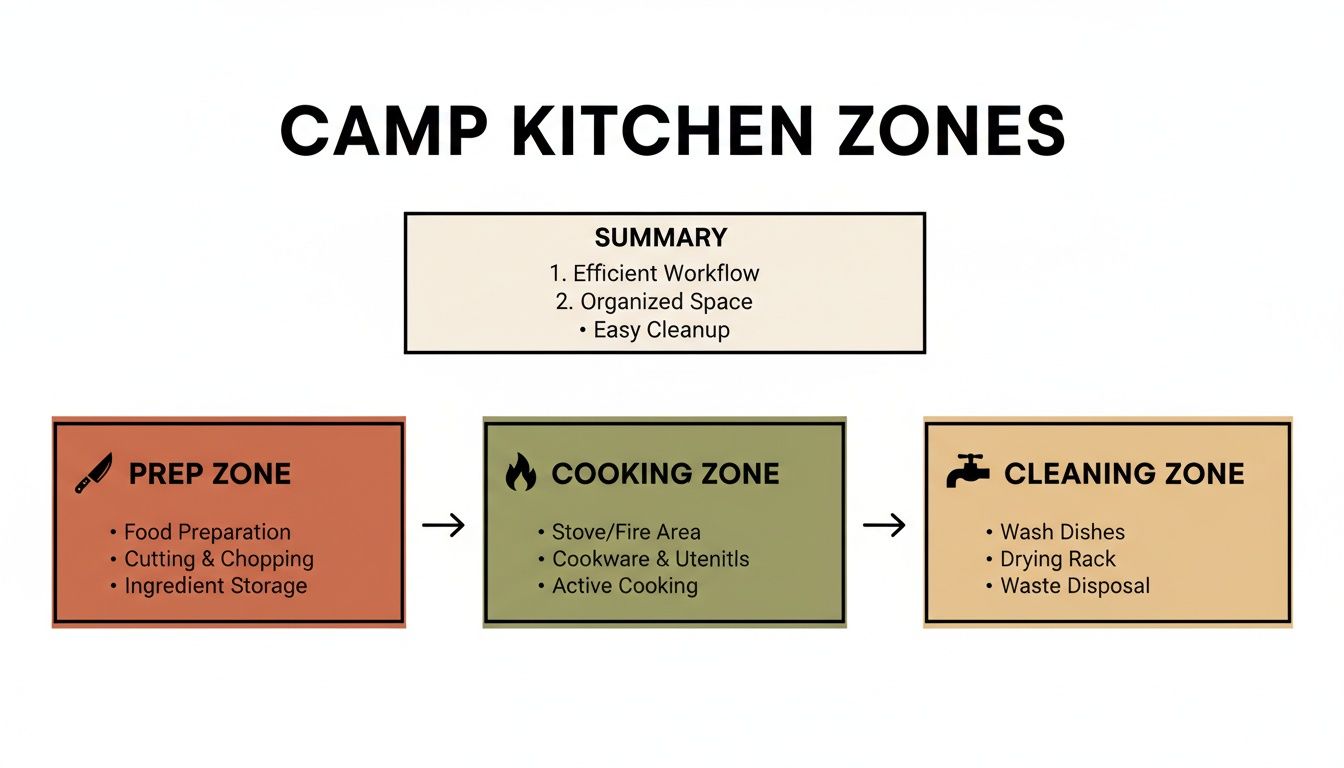
Visualizing your kitchen this way helps you place your gear with intention, creating a calm and intuitive workspace no matter where you set up camp.
The Family Car Camper
For family trips, the camp kitchen is often the heart of the campsite. It's a place of comfort and connection. Picture a familiar state park site with a sturdy picnic table waiting under the pines. That table is your foundation.
You can claim one end for your cooking zone, setting up a two-burner stove with plenty of room for pots and utensils. A separate, portable camp kitchen table can be placed nearby to serve as a dedicated prep and cleaning station. This arrangement gives everyone space to help out without feeling crowded.
The Overlanding Adventurer
When the journey itself is the destination, your kitchen needs to be efficient, integrated, and ready to go at a moment's notice. An overlanding setup is all about quick access and stability on the move.
Many overlanders build their kitchen directly into their vehicle. A common approach is a tailgate kitchen, where the lowered tailgate becomes the main counter space. This works well with a drawer system in the cargo area to keep everything secure and organized—one drawer for cookware, another for dry goods. A portable fridge, easily accessible from the side or back, completes a setup that’s ready for a roadside meal anytime.
Your camp kitchen is more than just a place to make food. It’s a way of bringing a little piece of home with you, a familiar ritual that grounds you in the wild and beautiful uncertainty of the outdoors.
The Lightweight Backpacker
For the backpacker, every ounce matters. The kitchen here is a testament to minimalism and ingenuity. It’s a carefully curated set of essentials that deliver nourishment without the weight.
The entire setup often fits inside a single pot.
- A tiny canister stove
- A small fuel container
- A spork
- A lighter
There are no distinct zones here, just a simple, effective system for boiling water to rehydrate a meal or brew a morning coffee. It’s a setup that prioritizes freedom, allowing you to focus on the trail ahead. You can find some helpful options in our guide to the best camp stoves for car camping, many of which have smaller cousins perfect for the backcountry.
Gathering Your Essential Tools and Cookware
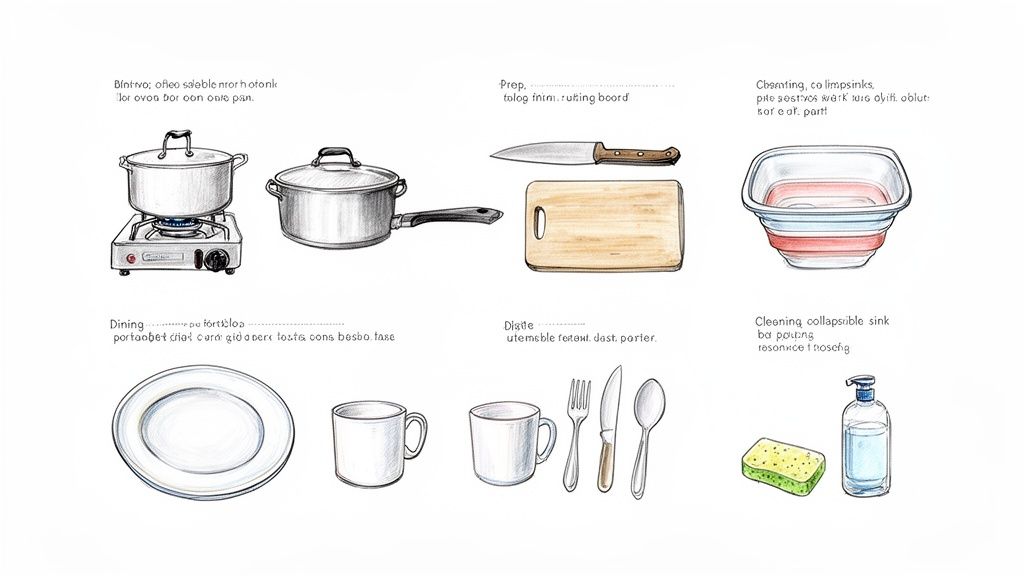
A good camp kitchen isn't built overnight. It's often curated over time, with each piece earning its place in your kit. Instead of feeling you need a massive pre-packaged set, think of it as a collection of reliable tools you’ll actually use and enjoy.
The most useful camp kitchens are built around a core of durable, multi-purpose gear. It's not about having everything; it's about having the right things for you.
The Core Checklist: Gear That Really Matters
To help you get started, we've broken down the essentials into functional categories. This isn’t a rigid list, but rather a foundation you can adapt to your own cooking style. You might begin with the "Core Essentials" and add "Comfort Additions" as you discover what you truly need.
Essential Camp Kitchen Checklist By Category
| Category | Core Essentials | Comfort Additions |
|---|---|---|
| Cooking | 2-burner camp stove, fuel, lighter, 1 pot, 1 pan | French press or percolator, griddle, Dutch oven, kettle |
| Preparation | Chef's knife, cutting board, mixing bowl | Can opener, veggie peeler, whisk, measuring cups/spoons |
| Dining | Plates, bowls, mugs, forks, spoons | Tablecloth, napkins, serving spoons, bottle opener |
| Storage | Cooler, 1-2 dry food storage bins | Small spice containers, paper towels, reusable food wraps |
| Cleaning | 2 wash bins/collapsible sinks, biodegradable soap, sponge | Camp sink with faucet, drying rack, scraper tool, clothesline |
| General | Trash bags, water jug | Camp table, lantern for cooking, small dustpan/brush |
This checklist can help you pack with intention and ensures nothing critical gets left behind. As you gain more experience, you'll discover which "comfort" items become essential for your setup.
A Closer Look at Key Gear
At the heart of any camp kitchen is your stove. A reliable 2-burner stove is the workhorse for most campers, giving you the flexibility to boil water for coffee while scrambling eggs. Pair it with a decent pot and a non-stick pan, and you can cook almost anything.
For prep, you don’t need a whole knife block. One sharp chef's knife and a sturdy, easy-to-clean cutting board will handle 90% of your needs, from dicing onions to slicing cheese.
When it comes to cleanup, a two-bin wash system is a simple and effective approach. One bin for soapy water, one for rinsing. It’s straightforward and makes washing up less of a chore. For a full breakdown on keeping things clean, check out our guide on how to wash dishes while camping.
“Consider investing in a few quality pieces that will last for years, rather than a collection of items you rarely use. Your future self might thank you for the simplicity and reliability of a well-curated kit.”
Don't feel pressured to get everything at once. You can start by borrowing from your home kitchen, see what works, and slowly add dedicated camp gear over time. The best kitchens are built from experience, with every piece telling a story of a great meal shared under the stars.
A Simple Rhythm for Packing and Setup
Setting up your camp kitchen doesn't have to be a scramble. With a little forethought at home, the whole process can become a smooth, intentional ritual—the first real step in settling into your home outdoors.
A helpful tip is to pack your gear in the reverse order you'll need it. The first things you need to set up, like your camp table and stove, could be the last things you load into your vehicle. That way, they’re right on top and easy to grab, giving you an instant foundation for your kitchen.
This simple method lets you establish the heart of your campsite right away. You get a workspace and a sense of order before you even think about unpacking the rest of your gear.
Choosing Your Spot
Once you arrive, take a moment to walk around the site. Where will the sun hit in the morning? Which way is the wind blowing? Picking the right spot for your kitchen is a small decision that makes a huge difference.
Keep these practical points in mind when you're deciding where to set up:
- Wind Direction: Position your stove so your vehicle or a natural feature blocks the wind. It will make cooking faster and save fuel.
- Proximity to Tent: Keep the kitchen a reasonable distance from where you sleep. This helps cooking smells from lingering in your tent and keeps a clear separation between your living and cooking spaces.
- Wildlife Smarts: It's good practice to set up your kitchen away from the immediate perimeter of your tent to coexist peacefully with any animals that might be nearby.
The Kitchen Setup Flow
With your spot picked out, the setup can begin. Get your camp table and stove out first—this immediately defines your cooking zone. From there, you can start unpacking your other bins and arranging each zone (prep, cleaning, and storage) around that central point.
It’s a process of building a temporary home. As you lay out your cutting board, line up your spices, and fill your water jug, you're doing more than just unpacking. You're creating a functional space for making food and connecting with friends and family.
The rhythm is simple: pack in reverse, choose your spot with intention, and set up methodically. This turns what could be a chore into a grounding part of the camping experience itself.
This is also a good time to get your food safety habits in order. Using separate cutting boards for raw meat and produce and double-checking that your cooler is holding a safe temperature are key to a kitchen that’s not just functional, but mindful, too.
Your Camp Kitchen Questions Answered
When you start planning to cook outdoors, the same few questions often seem to pop up. It’s a natural part of figuring things out, and getting straightforward answers can make all the difference in feeling prepared. Here are a few common ones we hear, with some thoughts that might help.
How Do I Keep Animals Away From My Camp Kitchen?
Sharing the outdoors with wildlife is one of the best parts of camping, but it comes with a quiet responsibility to keep them—and us—safe. The single most important thing you can do is run a clean camp. Animals are drawn in by smells, so cleaning up spills and food scraps right away makes your kitchen a lot less interesting.
Never leave food, coolers, or even scented items like toothpaste out and unattended, especially overnight. Your car is usually the easiest and safest food locker you have. If that’s not an option, use a dedicated bear-proof container or a proper bear hang system, depending on where you’re camping. This simple habit keeps wildlife from getting used to human food, which is critical for their well-being.
Coexisting with wildlife starts with being mindful. A clean campsite and secure food storage are simple acts of respect for the animals whose home we're visiting.
What Is the Best Way to Wash Dishes While Camping?
Cleaning up after a meal can be a peaceful part of the day. A very effective and eco-friendly way to handle dishes is the three-bin system. It might sound a little technical, but it's incredibly simple in practice.
- Wash Bin: This first bin is for hot water and just a few drops of biodegradable soap for scrubbing.
- Rinse Bin: The second one holds clean, cool water to get all the soap off.
- Sanitize Bin: The last bin has cool water with a capful of bleach or another sanitizer for a quick dip before letting everything air-dry.
The real key, though, is what you do with that used "greywater." Always carry it at least 200 feet away from any stream, lake, or river—that's about 70 adult steps. Scatter the water broadly, letting the soil act as a natural filter. It’s a small step that protects fragile water sources.
How Can I Adapt My Kitchen for Bad Weather?
A little rain or wind doesn’t have to shut down your cooking plans; it just calls for a bit of creativity. When the weather turns, your vehicle can be your best friend. The open rear hatch of an SUV or a deployed awning can create a great sheltered nook, protecting your stove from the elements.
A good tarp or a dining canopy also works wonders, giving you a dry, comfortable space to prep and cook. And if it's windy, a simple windscreen for your stove is one of the most valuable pieces of gear you can own. It makes your stove more efficient, saving fuel and helping your meals cook evenly. It's also a good idea to secure loose items like paper towels and lightweight containers ahead of time to avoid chasing them across the campsite.
At Fort Robin, we believe a well-thought-out camp kitchen is where connection and good food happen outdoors. We’ve curated a collection of durable, practical, and functional gear to help you build a setup that feels like home, no matter where you are. Explore our camp kitchen collection and find the perfect pieces for your next adventure.

