

A Guide to Choosing the Right Camp Stove and Grill
A good camp stove and grill is more than just a piece of equipment. It can be the heart of a campsite, a place to gather for stories, warmth, and a shared meal. It turns the simple act of cooking into a chance to slow down, reconnect, and create memories that last long after the trip is over.
Gathering Around the Modern Campfire
There’s something deeply satisfying about making a meal under an open sky. The gentle hiss of a stove at sunrise, the smell of coffee mixing with the crisp morning air, or the sizzle of dinner as evening settles in—these are the small moments that can anchor our outdoor experiences.
Cooking outside invites a different pace. It’s an invitation to step away from the daily rush and embrace a simpler rhythm. The process can become just as meaningful as the meal itself, whether you're simmering a one-pot stew for your family or grilling some vegetables after a long day on the trail.
Finding Your Outdoor Kitchen's Heartbeat
Choosing the right cooking gear is about finding a reliable companion that fits how you like to spend time outdoors. A solid camp stove or grill brings comfort and warmth to your site, making it feel a little more like home, wherever you set up.
This isn't just a niche interest; it's a growing movement. The global market for camping stoves was valued at USD 604.2 million in 2023 and is expected to continue growing. This quiet testament to how many of us are looking for these moments of connection is detailed in reports from outlets like Research and Markets.
This shift isn't just about buying gear; it’s about investing in experiences. It’s a return to the simple, profound joy of sharing food with people you care about, in a place that inspires wonder.
Ultimately, the best camp stove is one that works quietly in the background, allowing you to focus on what really matters: the landscape, the food, and the company. It’s a tool that helps create the space for those quiet mornings, shared meals, and stories told under the stars.
Stove or Grill: What Your Outdoor Kitchen Needs
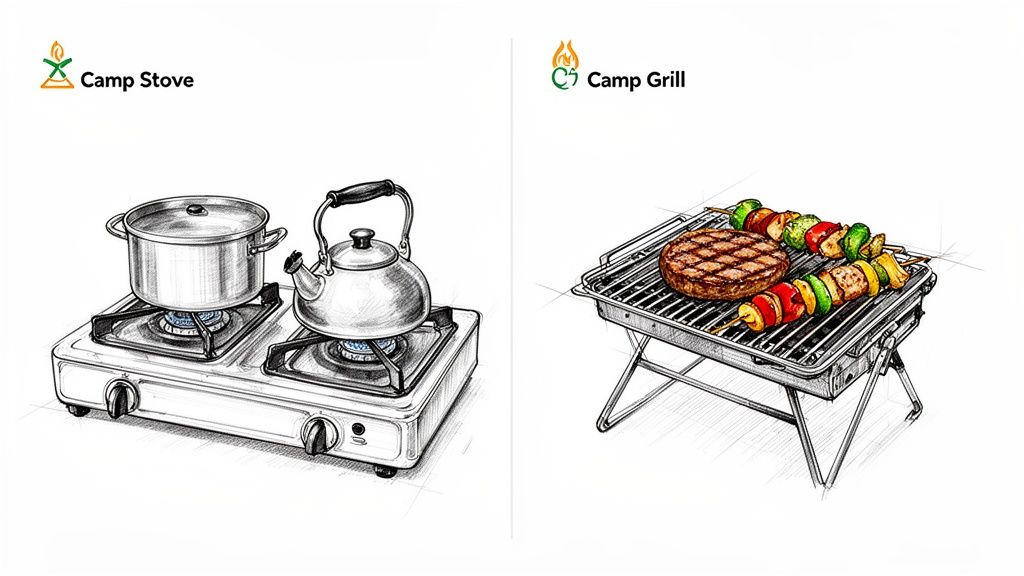
Choosing between a camp stove and a grill isn’t about right or wrong. It’s about the kind of meals you want to share and the moments you hope to create. Think of it as deciding the personality of your camp kitchen. Let's explore what each brings to the table, so you can find the right fit for your adventures.
A camp stove is the reliable heart of a mobile kitchen, much like the cooktop you use at home. It's the go-to for essentials, comfort foods, and those creative recipes that make a campsite feel like your own.
With a stove, you can boil water for that first quiet cup of coffee at sunrise or simmer a big pot of chili after a long day on the trail. It's well-suited for frying eggs and bacon or sautéing vegetables for a side dish. The contained flame and adjustable heat give you control, making it a dependable partner for almost anything you'd cook in a pot or pan.
A camp grill, on the other hand, brings a different feeling. It can be the centerpiece for a more laid-back, social meal—like a backyard barbecue, but with a better view. A grill is where food gets its flavor from the open flame, creating that smoky char that just tastes like good times outdoors.
This is your tool for searing burgers, hot dogs, and brats until they’re juicy. It’s wonderful for grilling vegetable skewers, corn on the cob, or a fresh-caught fish. A grill encourages a more relaxed, hands-on style of cooking where everyone can gather around while dinner sizzles away.
Envisioning Your Camp Meals
So, how do you choose? Just picture the food you’re dreaming of.
Is it a one-pot pasta, delicate pancakes for breakfast, or a simmering sauce? A camp stove gives you the precision for that. Or do you see the perfect sear marks on a steak and taste that smoky grilled asparagus? That's a job for a camp grill.
Of course, many seasoned campers know the best setup isn't always an either/or choice. Some of the most memorable outdoor meals come from kitchens built with both.
A two-burner stove running alongside a small grill creates a wonderfully complete outdoor kitchen. This setup allows you to boil pasta on one burner, warm sauce on the other, and grill chicken at the same time, turning a simple meal into a satisfying feast.
This combination offers the best of both worlds, opening up a wide range of culinary possibilities without much extra hassle. It lets you be flexible and cook based on the mood of the moment.
Camp Stove vs Camp Grill At a Glance
To make the distinction a little clearer, here’s a simple comparison to help you choose the right companion for your outdoor meals, focusing on cooking style and typical use.
| Feature | Camp Stove | Camp Grill |
|---|---|---|
| Primary Use | Boiling, simmering, and frying in pots/pans. | Searing, charring, and cooking directly over a flame. |
| Cooking Style | Offers precise heat control for a wide range of recipes. | Focuses on direct-heat cooking for that classic grilled flavor. |
| Best For | Coffee, stews, pastas, pancakes, and sautéed dishes. | Burgers, steaks, hot dogs, vegetable skewers, and fish. |
| The Feeling | Like a reliable kitchen cooktop, bringing indoor comfort outside. | Like a backyard barbecue, creating a festive, communal atmosphere. |
Ultimately, whether you pack a stove or a grill is a personal call. It’s about matching your gear to the simple joys you’re after—the quiet morning rituals, the hearty evening meals, and the connection you build while sharing good food under an open sky.
Finding the Right Fuel for Your Fire
Choosing a fuel for your camp stove isn't just a technical decision—it can set the tone for your outdoor cooking. It’s about what feels right for the trip you’re on. Are you looking for the simple convenience of a quick setup, the classic satisfaction of a wood fire, or the steady reliability you need for a remote adventure?
Let's walk through the options, not as a technical list, but as different paths to creating the kind of outdoor kitchen that feels right for you.
The Steady Convenience of Propane
For many of us, propane is the go-to. Think of a standard propane camp stove as a dependable kitchen helper, always ready to go without any fuss. It's the fuel behind countless easy family breakfasts and relaxed campground dinners.
Propane is as straightforward as it gets. You just screw a canister or tank onto your stove, turn the knob, and light it. There's no priming or pumping, which means less time managing gear and more time enjoying your morning coffee. That reliability is a huge comfort, especially when you have a hungry group or children waiting.
The growing interest in outdoor recreation has meant more people are looking for these simple cooking solutions. The portable stove market is expected to reach USD 4.12 billion by 2035, which isn't just a business statistic—it's a story about millions of people looking for easy, dependable ways to enjoy a meal outside. You can see more on this trend in a report from Business Research Insights.
The Lightweight Ease of Canister Fuel
If your adventures take you a little further off the beaten path, canister fuel may be a good companion. These small, self-sealing canisters are a mix of isobutane and propane, built for backpackers and anyone counting ounces.
Their biggest advantage is a wonderful blend of efficiency and a small footprint. One small canister can easily last a solo hiker for several days of cooking. The stoves that use them are often minimalist marvels, capable of boiling water in just a few minutes for a quick dehydrated meal or a hot drink on a cold evening.
Canister fuel strikes a beautiful balance between convenience and portability. It offers the simple joy of a hot meal with almost no weight penalty, letting you focus on the journey, not the logistics of cooking.
This is an ideal fuel for those quiet, self-reliant trips where simplicity is a welcome luxury.
The Rustic Connection of a Wood Fire
There's something elemental about cooking over wood. It’s a return to the basics, a way to connect directly with the landscape. A good wood-burning camp stove, or a simple grill grate over a fire pit, can turn making dinner into a mindful, grounding ritual.
This method does ask for more patience. You have to gather your twigs and small branches, tend the flames, and learn to read the heat of the coals. The reward, though, can be so much more than just a meal. It's the smoky flavor in your food and the deep satisfaction of cooking with a fire you built yourself. It’s a whole sensory experience—the sound of crackling wood, the warm glow, and that unmistakable aroma.
Of course, cooking with fire demands respect and responsibility. It's always important to follow local fire regulations and practice safety.
Multi-Fuel Stoves for Dependable Versatility
For the serious traveler heading into the world's remote corners, a multi-fuel stove can be an invaluable piece of gear. These workhorse stoves are built to run on almost anything: white gas, kerosene, and even unleaded gasoline in a pinch.
Their greatest strength is their adaptability. When you have no idea what kind of fuel will be available where you're going, a multi-fuel stove can provide peace of mind. They also perform well in extreme cold and at high altitudes, where canister fuels can sometimes struggle. They require a bit more maintenance, but their rugged reliability makes them a trusted tool for serious expeditions.
Matching Your Gear to Your Adventure
The best camp stove isn’t the one with the most features. It's the one that fits so seamlessly into your trip that you barely notice it’s there. The right gear feels like a natural part of the experience, helping you create the moments you came for without ever getting in the way.
Think about the quiet rhythm of a backpacking trip. After a long day on the trail, the gentle hiss of a tiny canister stove boiling water can be one of the most welcome sounds. Its purpose is simple and perfectly matched to the journey: provide warmth and a hot meal with as little weight as possible.
For Family Outings and Car Camping
Car camping with family or friends is a completely different story. Here, the camp kitchen can become a social hub, a bustling center of activity where everyone gathers. A sturdy, two-burner propane stove is a workhorse, making it easy to brew a big pot of coffee for the group while simultaneously frying up pancakes for a slow, happy breakfast.
These bigger stoves give you the stability and power to use full-sized pots and pans, much like you would at home. The goal is comfort and community, and the gear can reflect that. It’s built to handle bigger meals for more people, turning cooking into a shared activity instead of a chore.
For Overlanding and Remote Basecamps
Overlanding adventures call for gear that’s both tough and capable. When you're miles from anywhere, your kitchen needs to be utterly reliable. This is where a high-performance, portable camp grill or a powerful single-burner stove can prove its worth.
It’s all about making satisfying meals in wild, beautiful places. Picture searing steaks over a hot flame after a long day on a dusty trail or grilling fresh vegetables under a huge desert sky. Your equipment should be rugged enough for the journey but efficient enough to make cooking a genuine pleasure.
This decision tree can help you visualize which path feels right for your style, whether you prioritize convenience, portability, or simplicity.
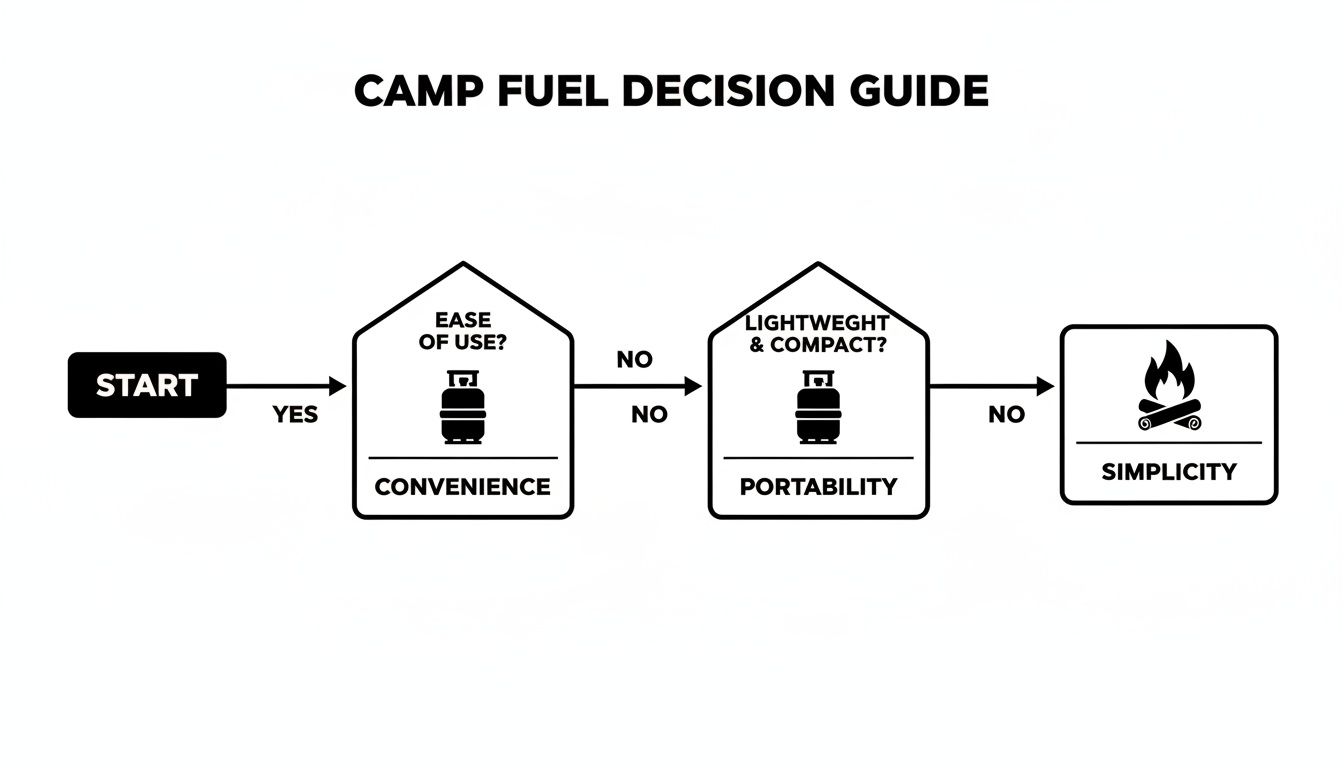
This guide shows how different priorities—like ease of use or a lightweight pack—lead to different fuel choices, helping shape your ideal outdoor kitchen.
Matching the Tool to the Moment
The growing interest in getting outside has naturally led to more specialized gear. People are bringing their love for good food with them, and the market is responding to this wonderful trend.
The best gear choice is one that feels invisible. It works so well for your specific needs that it fades into the background, allowing you to focus on the experience itself—the food, the scenery, and the company.
The demand for camping-specific grills is a perfect example. The camping grills market grew from USD 1,101.67 million in 2021 and was projected to hit USD 1,299.4 million by 2025, as more people look to bring the joy of a backyard barbecue into wilder places. You can find more details on this trend in a report from Cognitive Market Research.
For those who travel light, the decision-making is even more personal. Every single ounce matters. If you're planning a trip where weight is a primary consideration, you might be interested in our guide on finding the best lightweight backpacking stove.
Ultimately, choosing a camp stove is a personal choice that reflects how you want to connect with the outdoors. It’s about finding the right tool to help you create the simple, soulful meals that will become a cherished part of your adventure.
Simple and Soulful Camp Cooking Ideas
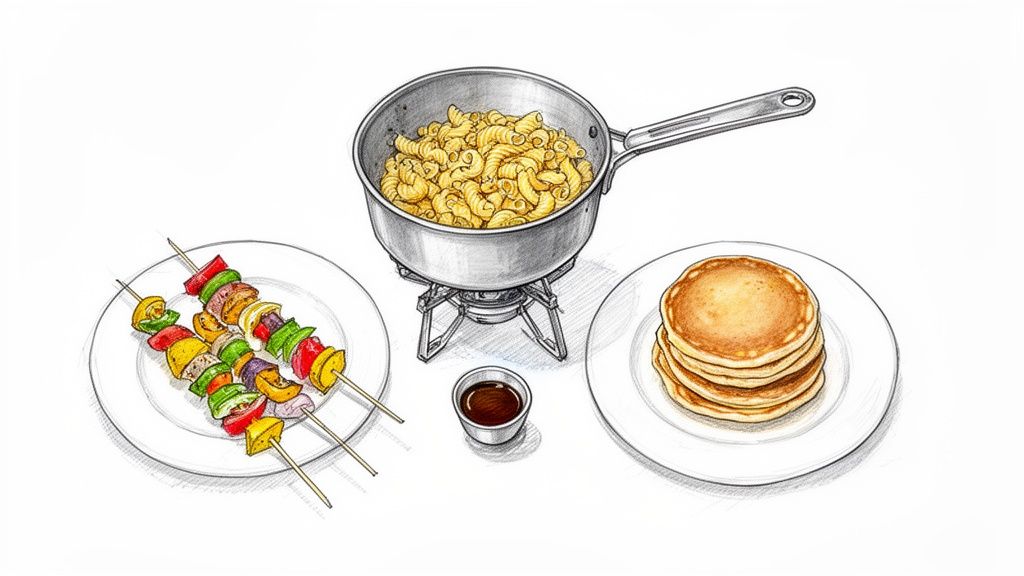
The gear we choose is just a path to the experience we’re after. Beyond the burn times and BTUs, the real heart of outdoor cooking is the food itself and the quiet connection it brings. It’s about creating simple, nourishing meals that give you more time to just be present.
Cooking outdoors doesn’t have to be complicated to be satisfying. In fact, the most memorable meals are often the simplest ones, made with a few good ingredients on a reliable camp stove and grill. The goal is to nourish your body and soul, not to put on a show.
Simple Meals for Slow Mornings and Starry Nights
A warm meal can feel like a gift after a long day of exploring or a huge comfort on a cool morning. It can be helpful to embrace recipes that come together easily, so the cooking itself feels like a relaxing part of the adventure.
Here are a few ideas that work beautifully on just about any camp stove or grill:
- One-Pot Camp Pasta: Cook your favorite pasta right in the sauce with a little extra water or broth. Toss in some pre-cooked sausage or hearty veggies like zucchini and bell peppers for a full, comforting meal with very little cleanup.
- Grilled Veggie and Sausage Skewers: This is what a camp grill was made for. Just thread chunks of colorful bell peppers, red onion, cherry tomatoes, and pre-cooked sausage onto skewers. Brush them with a little olive oil and grill until everything is tender and lightly charred.
- Classic Campsite Pancakes: There’s nothing quite like pancakes cooked in the open air. You can use a just-add-water mix to keep it simple, and bring a small bottle of real maple syrup and some fresh berries for a truly special morning.
A Thoughtful Camp Kitchen Checklist
Being prepared doesn’t mean packing your entire kitchen. It means bringing the small, thoughtful items that make cooking outside feel easy and natural. Think of this less as a strict list and more as a gentle guide to help you remember the essentials.
Cooking and Prep Essentials:
- A sturdy pot and a non-stick skillet
- Cutting board and a reliable knife
- Long-handled spatula and tongs
- Can opener and bottle opener
- Reusable plates, bowls, and utensils
Cleaning and Utility Items:
- A collapsible sink or wash basin
- Biodegradable soap and a sponge
- A quick-drying towel
- Trash bags to pack everything out
- A small container for food scraps
The best camp kitchen is the one that works for you. It’s not about having the fanciest gear, but about having reliable tools that make sharing a meal feel natural and unhurried.
Even the most basic setup can create incredible food. One restaurant, Bethany's Table, famously got its start cooking on a $38, three-burner camp stove on their back porch. It’s a great reminder that good food comes from the heart, not just the hardware.
Thinking through these small details beforehand frees you up to be present. With a well-organized kit, you spend less time digging for a spatula and more time watching the sunset, listening to the evening sounds, and enjoying the simple pleasure of a meal shared outdoors.
Caring for Your Gear and Cooking Safely
Your camp stove can be the heart of your outdoor kitchen. A little bit of care goes a long way in making sure it’s reliable trip after trip. This isn't about complicated maintenance—it's about simple habits that keep your gear ready for the next adventure.
A clean stove is a dependable stove. Before you pack it up and after you get home, a quick wipe-down can make a huge difference. Clearing food debris from the burners and giving the fuel lines a quick check for wear are small steps that build confidence for your next meal.
Proper storage is just as important. Keeping your stove and grill in a dry, protected spot prevents rust and damage, ensuring it’s ready to fire up the moment you need it. A quick inspection before each trip—making sure all connections are tight and there are no leaks—is a simple, reassuring routine.
A Mindful Approach to Campfire Safety
Staying safe while cooking outdoors is mostly about awareness. It’s a calm practice, not a rigid set of rules. When you cook with intention, you can protect yourself, your gear, and the beautiful places you came to enjoy.
It all starts with a solid foundation. Always set your camp stove and grill on a flat, stable surface, well away from anything flammable like dry grass, leaves, or your tent. This simple act prevents tipping and creates a secure space to cook.
Taking a moment to find the right spot for your stove is an act of mindfulness. It’s about creating a calm, controlled environment where you can relax and enjoy the process of making a meal.
Handling fuel requires the same deliberate attention.
- Connect with Care: Always attach and detach fuel canisters or propane tanks in a well-ventilated area, far from open flames or sparks.
- Mind the Wind: Pay attention to the wind’s direction. Set up your cooking area so any flames or fumes blow away from you and your campsite.
- Never Leave a Flame Unattended: A lit stove or grill should always have someone nearby. It’s a simple commitment to staying present and aware.
These aren’t rules meant to cause stress, but practices that build preparedness. They help ensure your time spent cooking outdoors is always a source of connection and enjoyment, leaving both you and the landscape in better shape than you found them.
Frequently Asked Questions About Camp Cooking
Getting into outdoor cooking often brings up a few questions. We’ve gathered some of the most common ones we hear to help you feel more confident and prepared for your next meal under the open sky.
Can I Use My Regular Pots and Pans on a Camp Stove?
For the most part, yes. Your everyday pots and pans will usually work just fine on a standard propane camp stove and grill, especially if you're car camping where weight isn't a concern. Stainless steel and cast iron are always solid choices since they can handle the heat.
Just keep in mind that the direct, high heat from a camp stove can sometimes discolor or even warp thinner cookware. If you're backpacking, you'll likely want to stick with lightweight aluminum or titanium cookware designed specifically for the trail.
How Do I Know How Much Fuel to Bring?
That’s a great question, and the answer really depends on a few things: how many people you're cooking for, what you're making, and what the weather is doing.
A good rule of thumb is to plan for about 4 ounces of canister fuel per person, per day if you’re mainly just boiling water for drinks and dehydrated meals. If you’re cooking more involved meals for a group on a propane stove, one 16-ounce green propane canister will typically get you through a weekend. It's always a good idea to pack a little extra, though—you never know when a hot drink on a chilly evening will sound perfect.
Is It Safe to Cook Inside My Tent?
No, it is never safe to use any kind of fuel-burning stove or grill inside a tent, camper, or any other enclosed space. Stoves produce carbon monoxide, a colorless, odorless gas that is extremely dangerous without proper ventilation.
Always set up your cooking station outdoors in a well-ventilated area, a safe distance from your tent and anything flammable. This simple habit helps keep your mealtime safe and enjoyable.
Finding a spot with a natural windbreak can help, but your kitchen should always be under the open sky. It’s a simple step that protects both you and the beautiful wild places we all love.
At Fort Robin, we believe the best adventures are built on a foundation of comfort and confidence. Explore our curated collection of camp cookware and reliable stoves to find the perfect companions for your next outdoor meal. Find your gear at Fort Robin.

