

Your Camping Kitchen Essentials List for Shared Meals Outdoors
A thoughtful camping kitchen essentials list often begins with a few key items: a portable stove, fuel, a way to keep food cool, cookware, utensils, cleaning supplies, and some food storage containers. This simple setup is what makes it possible to prepare warm, nourishing meals while you’re spending time in nature.
The Camp Kitchen: More Than Just Gear
There’s a unique kind of contentment that comes from cooking and sharing a meal outside. The sound of a skillet sizzling as the morning sun filters through the trees, or the quiet comfort of a warm bowl passed around a crackling fire—these are the moments that stay with us. It’s a gentle reminder that a camp kitchen is more than a collection of equipment.
It’s often the heart of the campsite. It's where we gather, where stories are shared over mugs of steaming coffee, and where the day’s adventures are recounted while chopping vegetables for dinner. You might think of this guide less as a strict checklist and more as an invitation to create a space where those moments can unfold naturally.
Building Your Outdoor Kitchen With a Purpose
Before you begin gathering your gear, it can be helpful to take a moment to think about your personal camping style. The best setup isn't one-size-fits-all; it’s the one that feels right for you and the kind of memories you hope to make.
A thoughtfully assembled camp kitchen becomes more than a convenience; it becomes a familiar, comforting space that allows you to feel truly at home in the wild. It’s the anchor for your daily rhythm, from the first cup of coffee to the last s'more.
What do you enjoy when you're outdoors? Are you a solo camper who loves the quiet ritual of a simple pour-over at dawn? Or do you find joy in preparing a big breakfast for a hungry group?
Your answers can guide your gear choices, helping you build a kitchen that makes your trip easier, not more complicated. The goal isn’t to have every possible gadget, but to choose items that are useful, reliable, and well-suited to your needs.
A well-planned camping kitchen essentials list helps you:
- Focus on Connection: Spend less time searching for a spatula and more time enjoying the company around you.
- Embrace Simplicity: Find the fun in making wonderful meals with just the basics. It’s lovely to see what can be created with a little creativity.
- Feel Prepared and at Ease: An organized kit brings a sense of calm, allowing you to relax and soak in the experience without feeling stressed about mealtime.
This guide will walk you through the core components of a functional camp kitchen. We'll explore how to put together a setup that feels intuitive and makes cooking outdoors a rewarding part of every trip.
The Four Pillars of a Well-Stocked Camp Kitchen
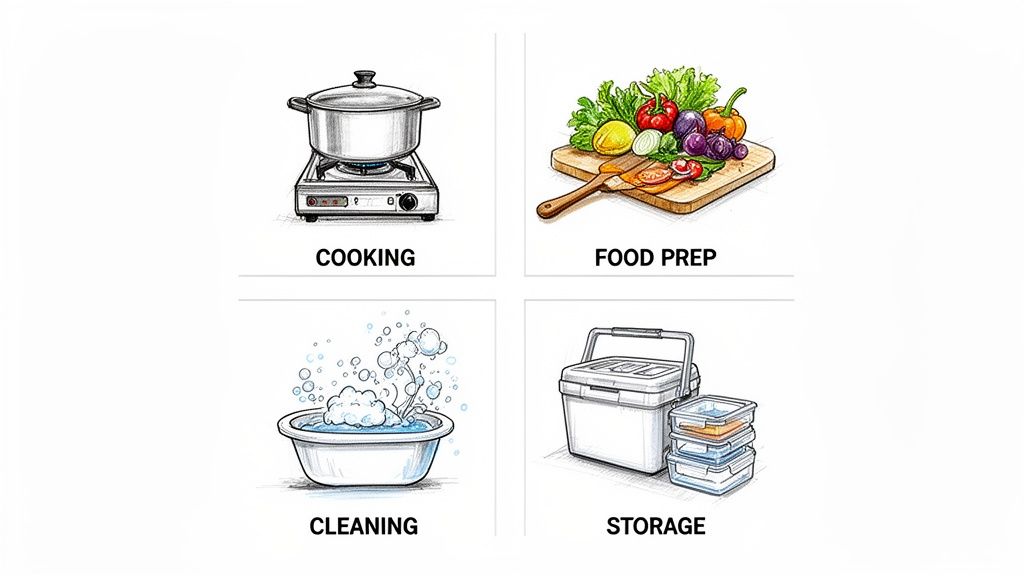
A great camp kitchen isn't about having the most gear. It’s about creating a simple, intuitive system that follows the natural flow of preparing a meal outdoors. When you think about your kitchen in terms of its core functions, everything can feel a little more harmonious.
We see this system as resting on four simple pillars: Cooking, Food Prep, Cleaning, and Food Storage. Each one supports the others, creating a solid foundation for relaxed, enjoyable meals under an open sky.
It’s an approach that seems to be resonating with more and more people. The camp kitchen market has seen steady growth, projected to expand by USD 297.4 million between 2022 and 2027. With its incredible national parks and a deep-rooted camping culture, North America is a significant part of this, holding 42% of the market share. It seems many are discovering the simple joy of a shared meal in the wild. You can learn more about the growing interest in outdoor camping activities and its market impact.
Before we explore each pillar, here’s a gentle overview of how they fit together.
Core Camping Kitchen Pillars at a Glance
| Pillar | Core Purpose | Essential Item Examples |
|---|---|---|
| Cooking | Transforming raw ingredients into a finished meal. | Camp stove, fuel, pots, pans, grill grate, lighter. |
| Food Prep | Creating a clean, organized space for chopping and mixing. | Cutting board, knives, mixing bowls, folding table. |
| Cleaning | Managing dishes and waste responsibly after the meal. | Collapsible sinks, biodegradable soap, sponge, trash bags. |
| Food Storage | Keeping food fresh, safe, and secure from wildlife. | Cooler, bear canister, airtight containers, dry bags. |
Thinking in these four categories can make packing feel less like a chore and more like creating a thoughtful system.
The First Pillar: Cooking
This is the warm center of your camp kitchen—the gear that turns simple ingredients into a nourishing meal. It’s where the magic happens, whether it’s the steady blue flame of a propane stove or the soft glow of campfire coals.
Your preferred cooking method will shape your gear list. A reliable camp stove offers precision and control, perfect for that first pot of coffee in the morning or simmering a sauce. It's a dependable companion, especially when fire restrictions are in effect.
Cooking over an open fire, on the other hand, is a more elemental experience. It invites different tools, like a heavy-duty cast-iron skillet that can handle direct heat or a grill grate set right over the embers. Both methods are wonderful; the key is to pack the right gear for the experience you’re seeking.
The Second Pillar: Food Prep
Long before you can cook, you need a space to get everything ready. This second pillar is all about creating a clean, dedicated area for chopping vegetables, mixing ingredients, and assembling your meal. A well-organized prep station means you’re not looking for a knife or cutting board when you need it most.
It doesn’t have to be complicated. A small folding table, a clean cutting board, and a couple of good knives can create a functional and pleasant workspace.
By setting up a specific spot for food prep, you create a sense of order and calm. This simple act transforms a patch of ground into a true kitchen, allowing you to focus on the joy of creating a meal rather than the chaos of finding your tools.
This dedicated space is also helpful for food safety, keeping ingredients off the ground and away from dirt. It’s a small step that can make the whole process feel more intentional and much less stressful.
The Third Pillar: Cleaning
The meal isn't truly over until the last dish is clean. This pillar is about managing cleanup in a way that respects the environment and leaves your campsite better than you found it.
A simple, effective cleaning kit is a cornerstone of any good camping kitchen essentials list. This usually involves just a few key items:
- Collapsible Sinks: Using one basin for washing and a second for rinsing can be very helpful. It conserves water and keeps soapy runoff contained.
- Biodegradable Soap: A small amount of gentle, eco-friendly soap is all that's needed to get your gear clean without harming the environment.
- A Scraper and Sponge: These help you remove food scraps from plates before washing, which makes the whole process faster and uses less water.
The goal here is simple: practice gentle, leave-no-trace habits. Washing dishes at least 200 feet from any water source and straining your gray water before scattering it helps ensure you’re being a good guest in the outdoors.
The Fourth Pillar: Food Storage
Finally, proper food storage protects your supplies from both the elements and curious wildlife. This pillar ensures your food stays fresh and safe throughout your trip, giving you peace of mind.
How you store your food depends on where you’re camping. In areas with active wildlife, especially bears, using a certified bear canister or a campground's designated food locker isn't just a good idea—it's essential for safety.
For car camping in less remote spots, a good-quality cooler is your best friend for keeping perishables cold and contained. Storing dry goods in sealed, airtight containers not only maintains freshness but also prevents pests from being drawn to your site. This careful planning protects both your food and the animals whose home you’re visiting.
Tailoring Your Kitchen to Your Adventure
A good camping kitchen isn’t about how much you have—it’s about having the right things for the trip you’re on. The best setup feels like a natural part of your campsite, a familiar space that makes cooking and connecting easier, not more complicated.
To get there, it can be useful to shift from thinking about what to bring to how you want to camp. It just takes a moment to think about the kind of experience you're after. Your camping kitchen essentials list will look different depending on who’s coming, where you’re headed, and what you enjoy doing.
Reflecting on Your Camping Style
There's no single right way to build an outdoor kitchen. The best setup is the one that feels like it was made for you. A solo backpacker has different needs than a family setting up a basecamp for a long weekend.
Before you start gathering your gear, you might ask yourself a few simple questions:
- Who are you cooking for? A meal for one is different from a meal for a family of five. This number impacts the size of your pots, how big your cooler needs to be, and how many plates and forks to pack.
- What kind of meals do you want to make? Do you love crafting campfire dinners, or are you all about quick, one-pot meals? This helps you decide between a versatile two-burner stove and a simple, ultralight single-burner.
- What does the trip itself look like? If you’re car camping, you can afford the luxury of heavier, more durable gear. A backpacker, on the other hand, considers every ounce and chooses items that are both lightweight and multifunctional.
These aren’t technical questions. They’re about figuring out what really matters to you when you’re outside. The goal is to build a kit that makes your time in nature better, freeing you up to enjoy the sunrise or one more story around the fire.
The Solo Backpacker’s Approach
For anyone who travels light and covers miles on foot, the camp kitchen is about minimalism and efficiency. Every item has to earn its spot in the pack, and ideally, it serves more than one purpose.
The backpacker's guiding principle is lightweight and multifunctional. A tiny canister stove, a single titanium pot for boiling water and cooking, a spork, and a mug might be the entire kitchen. Food is often dehydrated to reduce weight and bulk, and the focus is on high-energy, simple meals that refuel you after a long day on the trail.
The beauty of a minimalist kitchen is its simplicity. It asks for very little but gives you a hot meal, a warm drink, and the quiet satisfaction of being self-sufficient deep in the backcountry. It’s a setup that supports solitude and a real connection with the landscape.
The Family Car Camping Kitchen
When you camp with family, the kitchen often becomes the heart of the campsite. Here, the priorities shift from saving ounces to capacity and durability. With a vehicle to carry the load, you can bring along gear that creates a genuine sense of comfort and home.
A family’s kitchen might include:
- A sturdy two-burner stove to get multiple dishes going at once. You can learn more about choosing from the best camp stoves for car camping in our detailed guide.
- A large cooler to keep fresh food and drinks cold all weekend long.
- A full set of cookware, including a big pot for pasta, a non-stick pan for pancakes, and a kettle for morning coffee.
- Durable plates, bowls, and utensils for everyone.
This style of camping makes room for more communal meals. It’s about creating a welcoming space where everyone can gather, help out, and enjoy eating together. The focus is less on pure efficiency and more on the shared experience—and the memories you make along the way.
Sample Packing Lists for Different Campers
Sometimes, the easiest way to figure out what you need is to see how it all comes together. Theory is one thing, but a real-world packing list can make it all feel more tangible. To help you visualize your own setup, we’ve put together a few sample lists for different kinds of trips.
Please don't think of these as strict rules. They're starting points—a foundation to build on or a simple check to confirm you're on the right path. The goal is to create a kitchen that feels like a natural extension of how you like to travel.
This diagram shows how your kitchen gear might expand or contract depending on whether you're backpacking, family camping, or overlanding.
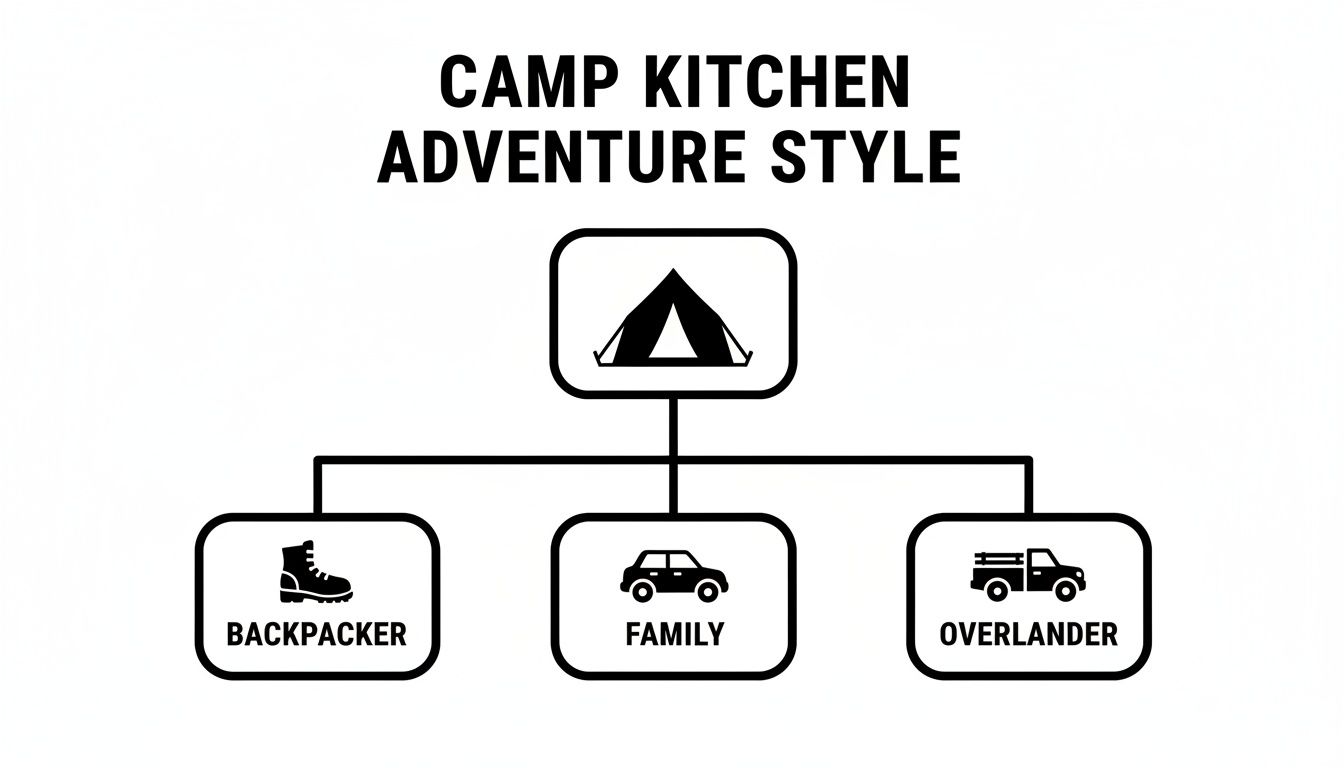
As you move from a backpacker’s minimalist kit to an overlander’s mobile pantry, your capacity grows. The focus shifts from ultralight necessity to long-term comfort and capability.
The table below breaks down these differences, showing how the priorities for essential gear change with each camping style.
Comparing Kitchen Kits: Backpacker vs. Family Camper vs. Overlander
| Essential Item | Backpacker Focus | Family Camper Focus | Overlander Focus |
|---|---|---|---|
| Stove | Ultralight, compact canister stove | Two-burner propane for multiple pots | Integrated or heavy-duty freestanding |
| Cooler/Food Storage | Dry bag or bear canister | Large, insulated hard-sided cooler | 12V electric refrigerator/freezer |
| Cookware | Single 650-900ml titanium pot | Nesting pot set, cast-iron skillet | Durable stainless steel or cast iron |
| Water System | Squeeze filter & water bottle | 5-7 gallon water jug with spigot | Onboard water tank with pump/faucet |
| Prep Space | A flat rock or log | Folding camp table | Slide-out galley or built-in counter |
Each setup is beautifully tuned for its environment. A backpacker's kit is about freedom from weight, while an overlander's kitchen is about self-sufficient freedom on the road.
The Minimalist Backpacker’s Galley
When you're carrying everything on your back, every ounce earns its place. A backpacker’s kitchen is a practice in efficiency, distilled to the absolute essentials for preparing simple, calorie-dense meals.
Here’s what that ultralight camping kitchen essentials list might look like:
- Stove & Fuel: A tiny canister stove that disappears in your pack. One small fuel canister is usually enough for a weekend.
- Cookware: A single 650-900ml titanium pot. It’s just big enough to boil water for a dehydrated meal and a hot drink.
- Utensils: One long-handled titanium spork. It’s all you need to reach the bottom of a meal pouch.
- Mug: An insulated mug is lovely for morning coffee and can double for soup.
- Cleaning: A tiny dropper bottle of biodegradable soap and a small piece of sponge.
- Food Storage: A simple dry bag, which goes into a bear canister or gets hung from a tree, depending on the area's regulations.
This whole setup is about freedom. It’s light enough to carry for miles but still delivers the quiet comfort of a hot meal when you need it most.
The Family Basecamp Kitchen
With a car nearby, the approach can change completely. The kitchen can become the heart of the campsite—a place to gather for big breakfasts and unhurried dinners. Weight is no longer the primary concern, so you can bring gear that makes cooking for a group genuinely enjoyable.
A family kitchen might include:
- Stove: A freestanding two-burner propane stove is a wonderful choice. You can cook bacon and pancakes at the same time.
- Cooler: A large, high-performance cooler is helpful for keeping food fresh all weekend.
- Cookware: A nesting pot and pan set is a brilliant space-saver. You might also bring a cast-iron skillet for everything from searing steaks to baking cornbread.
- Tableware: A set of durable, reusable plates, bowls, and cutlery feels much nicer than disposable paper products.
- Prep Station: A folding camp table gives you a dedicated, clean space to chop vegetables and stage ingredients.
- Cleaning: A two-basin collapsible sink can make dish duty feel much less like a chore.
This kind of setup is all about connection. It allows you to cook real meals that bring everyone together, making dinnertime one of the best parts of the trip.
The Overlander’s Culinary Setup
Overlanding is about self-reliant travel, often for long stretches in remote places. The kitchen needs to be durable, efficient, and capable of supporting you far from the nearest grocery store. It's a blend of rugged utility and surprising convenience.
An overlander’s kitchen might feature:
- Refrigerator: A 12V portable fridge/freezer is a significant upgrade. No more soggy food or daily ice runs.
- Stove: A classic two-burner stove is still common, but many rigs feature integrated slide-out kitchens for maximum convenience.
- Water Storage: Onboard water tanks with a pump and faucet provide running water for cooking and cleaning.
- Durable Cookware: Cast-iron and stainless steel are favorites because they can handle the vibrations of rough roads.
- Organized Storage: A dedicated drawer system or a classic chuck box keeps everything secure and quiet on the trail.
This style of camping is becoming more popular. Today, 70% of campers say they appreciate "glamping"-style comforts, merging the freedom of the wild with the conveniences of home. An overlanding kitchen is a perfect example of this, creating a reliable culinary command center no matter how far the trail takes you. You can discover more insights about the camp kitchen market on Technavio.
Packing and Organizing Your Camp Kitchen with Intention
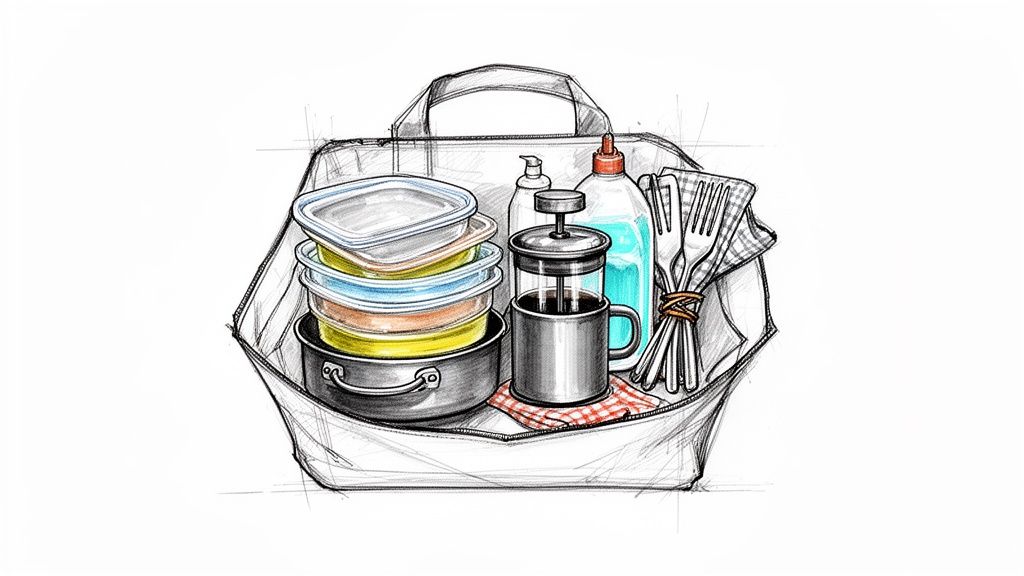
A well-packed kitchen brings a sense of calm to a campsite. It's the difference between fumbling for a lighter in the dark and smoothly firing up the stove for that first cup of morning coffee. The goal isn't perfection—it's having a simple, intuitive system that lets you focus on the meal, not on finding your gear.
This kind of campground ease doesn't happen by accident. It starts at home with a bit of thoughtful planning that pays off around the campfire. With a few simple strategies, you can build a setup that feels less like a pile of stuff and more like a real outdoor kitchen.
The Kitchen-in-a-Box Concept
One of the most effective ways to stay organized is the "kitchen-in-a-box" method. This is more of a philosophy than a literal box: keep all your core cooking gear together in one dedicated place. A sturdy plastic tote or a classic camp chuck box works perfectly.
Imagine pulling into your site and grabbing a single container that holds everything you need to cook. Stove, fuel, pots, utensils, spices, and cleaning supplies are all right there. This simple act eliminates a frantic search for gear and sets a calm, prepared tone for your trip.
A dedicated kitchen box becomes a familiar friend on every trip. It holds the muscle memory of past meals and the promise of future ones, allowing you to settle into the rhythm of camp life with grace and ease.
This approach also makes it less likely you’ll forget a critical item like a can opener or your favorite mug. It’s a small bit of prep that can make every trip smoother from the moment you arrive.
Grouping Items by Function
Within your main kitchen box, you can create even more order by grouping items by how you use them. Think of it as creating smaller, task-oriented kits. This simple habit turns a random collection of gear into a logical system that anticipates your needs.
A few examples of these functional kits might include:
- A Brew Kit: Keep your coffee or tea supplies in one spot. A small bag holding your French press, ground coffee, and mugs means you just have to grab one thing when you wake up.
- A Spice Kit: Use small, labeled containers for salt, pepper, olive oil, and a favorite seasoning blend. This saves you from carrying full-sized bottles from your home kitchen.
- A Utensil Roll: A simple canvas roll keeps your spatula, tongs, knives, and forks organized, clean, and easy to find. No more digging to the bottom of a tote for a single spoon.
Organizing this way creates a natural workflow. Each step of meal prep has its own kit, making the whole process feel more effortless. You can find more inspiration for building a seamless workflow in our guide to camp kitchen setup ideas.
Smart Food Packing to Reduce Waste
How you pack your food is just as important as how you pack your gear. Prepping ingredients at home not only saves time at the campsite but also dramatically cuts down on waste, helping you leave your site better than you found it.
Start by planning your meals, then do the prep work at home. Chop vegetables, marinate meats, and pre-measure dry ingredients for things like pancakes or oatmeal. Move everything out of its bulky store packaging and into reusable containers or bags. This significantly minimizes the amount of trash you have to pack out.
This approach lightens your load and makes cooking much simpler. Instead of wrestling with packaging and food scraps at camp, you can focus on the simple joy of preparing a great meal in the fresh air. A little foresight at home leads to a more relaxed and respectful time in nature.
Common Camp Kitchen Questions Answered
Heading outdoors always brings up a few questions, whether you're a seasoned camper or just packing for your first trip. That’s a good thing—it means you’re thinking about how to camp comfortably and responsibly. Here are a few answers to the questions we hear the most.
How Do I Wash Dishes Without Harming the Environment?
Taking care of the wild places we love is at the heart of camping. The key to washing dishes responsibly starts before you even add soap: scrape every last bit of food from your plates into a trash bag to pack out. It makes the next steps much easier.
Find a spot at least 200 feet away from any river, lake, or stream to set up your wash station. A couple of collapsible sinks work well—one for washing with a drop of biodegradable soap, and one for rinsing. When you’re done, strain the wash water to catch any stray food bits (pack those out, too), and then scatter the gray water over a wide area. For a complete rundown, our guide on how to wash dishes while camping has you covered.
What Is the Best Way to Store Food to Keep Animals Away?
Keeping wildlife wild is one of our biggest responsibilities as campers. The best storage method depends on where you are. If you're in bear country, a certified bear-resistant canister or a campsite's designated bear box isn't just a good idea—it's often required.
For most car camping trips, the answer is simple: store all your food, coolers, and anything with a scent (like toothpaste) inside your locked vehicle overnight. And a good rule of thumb is to never keep food in your tent. It's a simple habit that protects your gear and keeps local critters from getting a taste for human food, which keeps both them and future campers safe.
Should I Use a Camp Stove or Cook Over the Fire?
Cooking over a crackling campfire can be magical, but a camp stove is your reliable workhorse. Fire bans are common in dry seasons, and in those situations, a stove is the only way you’ll have a hot meal or morning coffee.
Stoves also offer precision. You can adjust the heat to gently simmer a sauce or bring water to a boil in minutes—something a fire just can't do with the same control.
Think of your camp stove as the dependable foundation of your kitchen—always there when you need it. A campfire is a special bonus, perfect when conditions are right and you want that classic outdoor experience. Having both gives you the best of both worlds.
What Are Simple Meal Ideas for a First Family Trip?
On a first family camping trip, the best meals are often the ones that feel comforting and familiar without adding any stress. It can be helpful to stick to easy favorites so you can spend less time cooking and more time making memories. One-pot meals are a wonderful friend here.
- Chili: You could make a big pot at home. All you have to do at the campsite is heat it up for a fast, filling dinner.
- Tacos: Brown the meat at home. At camp, just warm it up and lay out easy toppings like cheese, salsa, and shredded lettuce for a fun, build-your-own dinner.
- Pancakes: Bring a pre-made mix or combine your dry ingredients at home. It’s an incredibly easy way to make breakfast feel special.
The goal is to choose food that lets you relax and enjoy being together, not worry about complicated recipes.
At Fort Robin, we believe the right gear can help you reconnect with the quiet rhythms of nature. Our curated collection is here to support your adventures, from the first morning coffee to the last story told under the stars. Explore our thoughtful selection of camp kitchen essentials and find what you need for your next shared meal outdoors at https://fortrobin.com.

