

10 Camping Meal Prep Ideas for a More Peaceful Trip
The quiet anticipation of a camping trip often begins in the kitchen. It’s not about frantic packing or optimizing every ounce, but about the thoughtful preparation of meals that will nourish us under an open sky. This is where we can reconnect with the purpose of our food, choosing ingredients, chopping vegetables, and imagining shared stories around a campfire. These camping meal prep ideas are invitations to slow down, to prepare with intention so your time outside can be spent less on kitchen logistics and more on the moments that matter.
This guide moves beyond just recipes, offering a more settled approach to planning your food. We'll explore gentle strategies for breakfasts, lunches, dinners, and snacks that cater to various cooking styles, from a simple campfire to a portable stove. You will find ways to create one-pot freeze-ahead meals, no-cook snack boards, and pre-marinated proteins that simplify your process without sacrificing flavor or comfort.
Think of this collection not as a strict checklist, but as a gentle guide to making your next trip feel more personal and more like coming home. By shifting some of the work to the days before you leave, you create space for a slower rhythm and deeper connection once you’ve arrived.
1. One-Pot Freeze-Ahead Meals
Imagine arriving at your campsite after a day of travel or exploration, and a hearty, familiar meal is ready in minutes. This is the simple beauty of one-pot freeze-ahead meals. This approach involves fully cooking satisfying dishes like stews, chilis, or curries at home, then freezing them in durable containers or bags. At the campsite, all that’s left is reheating, transforming a potentially complex cooking process into a moment of ease.
This method is one of the kindest camping meal prep ideas for families and those who cherish a relaxed camp atmosphere. By front-loading the effort, you trade kitchen time at home for more connection time outdoors. Cleanup is minimal, often requiring just a single pot to wash.
How to Prepare Freeze-Ahead Meals
- Hearty Chili or Beef Stew: Prepare your favorite recipe and let it cool completely. Freeze it in a vacuum-sealed bag, laid flat to create a thin, stackable brick that saves precious cooler space.
- Pulled Pork or Chicken: Slow-cook the meat until tender, shred it, and freeze it with some of its cooking liquid to keep it moist. Reheat it at camp for effortless tacos or sandwiches.
- Flavorful Curry or Pasta Sauce: These are perfect for freezing. Once thawed and warmed, simply cook some pasta or rice to serve alongside for a complete, comforting meal.
Practical Tips for Success
To ensure your meals travel well and taste great, a little planning goes a long way. Consider using vacuum-seal bags to prevent freezer burn and maximize cooler real estate. Clearly label each package with its contents and the date it was prepared. When using rigid containers, remember to leave about a half-inch of headspace to allow for expansion as the food freezes. A reliable camp stove and a well-insulated cooler are your best companions for this method, ensuring your food stays frozen until you need it.
2. Dehydrated Meal Kits with Fresh Additions
Envision a meal that is both incredibly lightweight and packed with personalized flavor, ready to be brought to life with just a bit of hot water. This is the heart of creating your own dehydrated meal kits. By combining a dehydrated base like rice or quinoa with freeze-dried vegetables, proteins, and your own custom seasoning blends at home, you create shelf-stable meals that are perfectly tailored to your taste. At the campsite, you simply rehydrate everything for a satisfying and nourishing dish.
This approach is one of the most flexible camping meal prep ideas, especially for backpackers or anyone looking to minimize weight and maximize space. It blends the convenience of store-bought dehydrated meals with the wholesome, personal touch of a home-prepared dish. Cleanup is exceptionally simple, often requiring nothing more than a single pot and a utensil.
How to Prepare Dehydrated Meal Kits
- Curried Rice and Veggies: Combine instant brown rice, dehydrated broccoli florets, and chopped beef jerky in a bag. Add a separate, smaller bag with curry powder, turmeric, and garlic powder.
- Italian-Inspired Pasta: Mix dehydrated pasta with sun-dried tomatoes and freeze-dried peas. Include a seasoning packet of Italian herbs, onion powder, and a pinch of red pepper flakes.
- Hearty Quinoa and Mushroom Bowl: Portion out pre-cooked quinoa with dehydrated mushrooms and chicken bouillon powder. A small packet of a savory garlic and herb blend completes the kit.
Practical Tips for Success
To get the most from your custom kits, preparation is key. Use zip-top bags to portion individual meals, clearly labeling each with the contents and required water amount. Consider adding a small, handwritten instruction card to each bag. Including a tablespoon of instant mashed potato flakes or lentil flour is a thoughtful way to thicken the meal and add substance without significant weight. A lightweight backpacking stove is a wonderful tool for boiling water quickly and efficiently for rehydration.
3. Breakfast Kits: Build-Your-Own Baggies & Jar Puddings
A slow, peaceful morning at camp is a gift. Breakfast kits allow you to embrace that quiet rhythm without a complicated cooking process. This approach involves pre-assembling individual portions of no-cook puddings in jars or just-add-water mixes in baggies, letting you start your day with ease and nourishment.
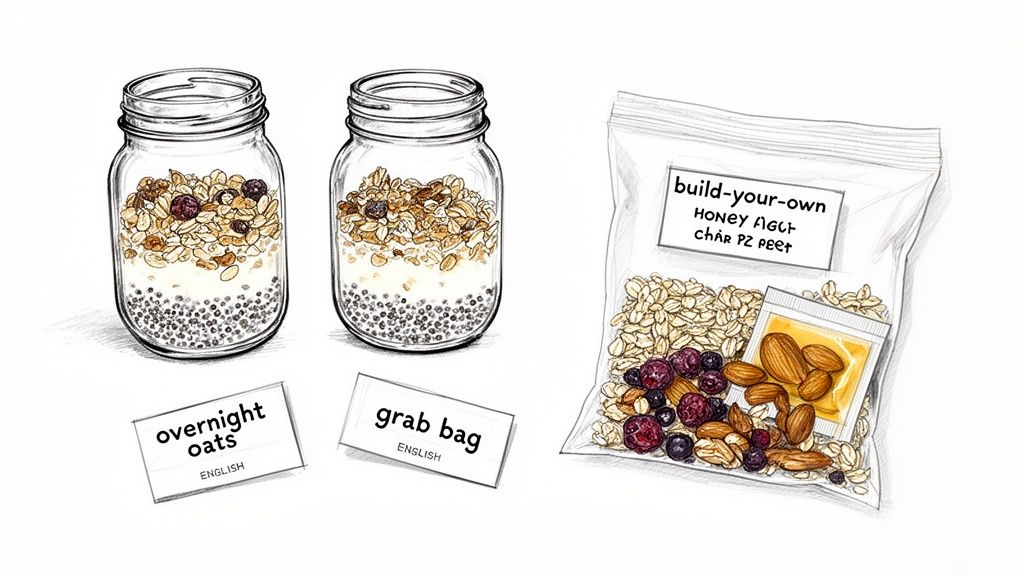
This method is one of the most adaptable camping meal prep ideas, suiting both campers with coolers and those traveling light. By preparing these kits at home, you ensure everyone has a delicious, personalized breakfast ready to go, freeing up precious morning moments for sipping coffee and watching the sunrise.
How to Prepare Breakfast Kits
- Overnight Oats or Chia Puddings: In a mason jar, combine oats or chia seeds with your choice of milk (or water and powdered milk), and add-ins like fruit or nuts. These are grab-and-go delights straight from the cooler.
- Just-Add-Water Oatmeal Baggies: Fill individual zip-top bags with instant oats, powdered milk, dried fruit, nuts, and a pinch of cinnamon. At camp, simply add hot water for a warm, comforting start to the day.
- Pancake or Waffle Mix: Pre-measure your favorite dry pancake mix into a bag. At the campsite, you only need to add wet ingredients like water or eggs for a classic breakfast treat.
Practical Tips for Success
To keep your breakfast kits organized and fresh, a little preparation helps. For jarred puddings, prepare them no more than three to four days in advance and store them upright at the bottom of your cooler to prevent spills. Clearly label each baggie with its contents and the amount of water needed. Including an index card with simple instructions can be a thoughtful touch. For a complete morning ritual, pack along some instant coffee or tea bags.
4. Vacuum-Sealed Pre-Marinated Proteins
Bringing the flavor of a thoughtfully prepared meal to the campsite becomes incredibly simple with pre-marinated proteins. This technique involves marinating raw chicken, beef, or fish at home and sealing it in vacuum bags. As the protein travels in your cooler, it continues to absorb the marinade, deepening its flavor. At the campsite, you simply open the bag and cook, delivering a delicious, tender meal with minimal handling and mess.
This method stands out as one of the most inviting camping meal prep ideas for elevating your campfire cuisine. By preparing the proteins beforehand, you reduce on-site prep time and minimize the need for extra bowls, cutting boards, and spices. It also keeps your cooler organized and odor-free, allowing you to focus on the joy of cooking outdoors.
How to Prepare Pre-Marinated Proteins
- Teriyaki Chicken Breasts: Marinate chicken in a teriyaki sauce and vacuum seal. They are perfect for grilling over a campfire or on a portable grill.
- Lemon-Herb Salmon Fillets: Place salmon fillets in a bag with olive oil, fresh lemon slices, dill, and parsley. This cooks beautifully wrapped in foil and placed on hot coals.
- Garlic and Red Wine Steaks: A robust marinade of garlic, red wine, and rosemary enhances beef for an unforgettable fireside steak dinner.
Practical Tips for Success
To ensure food safety and fantastic flavor, a bit of care at home makes all the difference. Using a vacuum-sealing machine provides the best results, preventing leaks and freezer burn if you freeze them first. Always write the contents and a "use by" date on the bag with a waterproof marker. When packing, place these sealed proteins at the bottom of your cooler, surrounded by ice packs. Keeping your cooler properly chilled is crucial; you can explore gentle advice on how to keep food cold while camping to ensure everything stays safe. For extra flavor, bring a small, sealed container of the marinade for basting.
5. No-Cook Charcuterie and Snack Boards
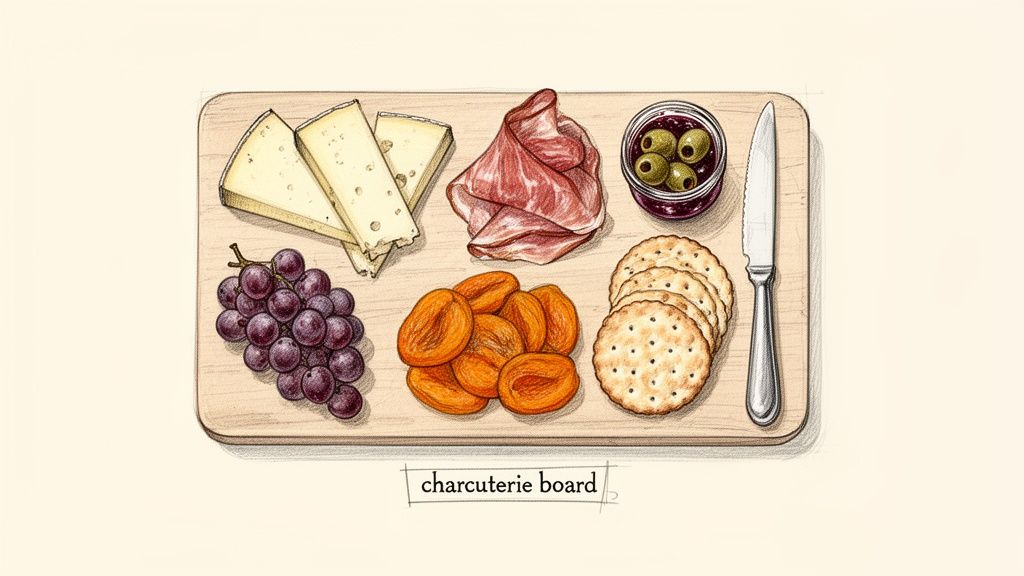
There's a special kind of ease that comes with a meal that requires no cooking at all. A charcuterie or snack board offers just that, a communal, grazing-style experience that feels both simple and abundant. This approach relies on assembling a variety of cured meats, cheeses, fruits, nuts, and crackers that need nothing more than to be artfully arranged, inviting everyone to build their own perfect bite.
This method is one of the most welcoming camping meal prep ideas, ideal for a relaxed lunch after a hike or a shared appetizer as the sun sets. It encourages a slow, appreciative way of eating, trading the effort of cooking for the simple pleasure of good company and flavorful, ready-to-eat ingredients. Cleanup is almost nonexistent, leaving more time to enjoy the evening.
How to Prepare Snack Boards
- Classic Charcuterie: Pair salami and prosciutto with aged cheddar and manchego. Add complementary flavors like marcona almonds, dried apricots, olives, and sturdy water crackers.
- Smoked Salmon Spread: Combine smoked salmon with herbed cream cheese, capers, and thinly sliced cucumbers. Serve with pumpernickel bread squares and a wedge of lemon.
- Sweet and Savory Mix: Offer candied pecans, fresh apple slices, and grapes alongside brie. A small jar of fig jam or honey ties everything together beautifully with seed crackers.
Practical Tips for Success
Thoughtful prep at home makes assembly at the campsite effortless. Pre-slice cheeses and cured meats, storing them in separate containers to maintain their freshness. Pack durable crackers that won’t get crushed in transit, and use small, sealed jars for condiments like mustard or jam. Organizing everything in divided containers or bento boxes within your cooler makes transport simple. For easy and durable outdoor dining, consider serving on reliable camp tableware.
6. Slow-Cooker and Dutch Oven Meal Bases
There is a unique comfort in returning to camp after a day of adventure to the rich aroma of a slow-simmering dinner. This experience is made effortlessly simple with meal bases designed for a Dutch oven or slow cooker. The concept involves pre-assembling all the ingredients for a complete meal into a single kit at home. At the campsite, you simply combine them in your cooking vessel and let them cook passively for hours, allowing you to relax, hike, or connect with nature while dinner takes care of itself.
This set-it-and-forget-it approach is one of the most rewarding camping meal prep ideas for basecampers and overlanders. It transforms cooking from a chore into a simple, background process. By preparing the ingredients beforehand, you minimize active cooking and cleanup time at camp, creating more space for the quiet moments that make camping special.
How to Prepare Meal Bases
- Hearty Beef Stew: Combine pre-chopped root vegetables (carrots, potatoes), cubed beef, herbs, and a container of beef broth. This classic is perfect for a Dutch oven nestled in hot coals.
- Salsa Verde Chicken Chili: Pack pre-cooked shredded chicken, a can of white beans, a jar of salsa verde, and a packet of spices. This comes together beautifully in a camp-safe slow cooker.
- Pulled Pork with Apples: Assemble a pork shoulder, sliced apples, onions, and a bottle of hard cider. This slow-roasts wonderfully over a fire, creating tender, flavorful meat for sandwiches.
Practical Tips for Success
Thoughtful preparation at home is the key to a tranquil camp kitchen. Pre-chop all vegetables and store them in labeled bags. It helps to layer your main kit bag with the heaviest items, like meat, at the bottom. Attach a small note with simple cooking instructions: temperature, time, and any stirring needed. When packing your vehicle, place the heavy Dutch oven or cooker at the bottom to ensure stability. Starting these meals in the morning ensures a warm, ready-to-eat dinner is waiting for you by evening.
7. Nut Butter and Energy Bite Snack Packs
Sometimes, the best fuel for an outdoor adventure is the simplest. Homemade energy bites and nut butter packs are small but mighty sources of nourishment, perfect for staving off hunger during a long hike, a scenic drive, or that quiet moment between meals. These no-bake, shelf-stable snacks are packed with protein, healthy fats, and natural sugars to provide sustained energy.
This is one of the most gentle camping meal prep ideas, giving you complete control over ingredients and nutrition. By preparing these calorie-dense snacks at home, you create grab-and-go options that don't require refrigeration or cooking, making them ideal for any kind of outdoor excursion. They are a simple way to keep everyone energized and content.
How to Prepare Energy Snack Packs
- No-Bake Peanut Butter Oat Bites: Combine rolled oats, peanut butter, honey, and a sprinkle of dark chocolate chips. Roll into small balls and coat with shredded coconut or cocoa powder for an easy, satisfying treat.
- Almond Butter and Date Bars: Blend dates, almond butter, and a handful of nuts in a food processor. Press the mixture into a pan, chill, and cut into individual bars for a wholesome snack.
- Cashew and Quinoa Pops: Mix cooked quinoa with cashew butter and a touch of maple syrup. Form into small, compact bites that are both nutritious and delicious.
Practical Tips for Success
To ensure your snacks are ready when you need them, consider preparing a large batch and freezing them on a parchment-lined tray before packing. Wrap each bite or bar individually in wax paper or foil, labeling them if you make multiple varieties. Store them in a sturdy, airtight container to prevent crushing and maintain freshness. For longer trips, you might add a food-safe silica gel packet to absorb any moisture. Remember to pair these dense snacks with plenty of water to aid digestion and hydration.
8. Pre-Cut Vegetable and Protein Prep Kits
Enjoying fresh, vibrant meals at the campsite doesn't have to mean spending your time chopping and dicing. Pre-cut vegetable and protein kits bring the ease of a well-stocked kitchen to your picnic table. This method involves preparing all the components for meals like stir-fries, salads, or wraps at home, so that assembly at camp takes only minutes. It’s a wonderful way to ensure you’re eating nourishing, colorful food without the usual campsite mess.
This approach is one of the most helpful camping meal prep ideas for those who crave fresh ingredients but want to minimize on-site effort. By washing, chopping, and portioning everything in advance, you can create delicious, healthy meals almost instantly. This frees up more of your day for hiking, relaxing, or simply being present in nature with minimal cleanup required.
How to Prepare Prep Kits
- Quick Stir-Fry Mix: Combine sliced bell peppers, broccoli florets, snap peas, and carrots in one container. Pack pre-cooked, cubed chicken or tofu separately. At camp, simply stir-fry the veggies and add the protein to heat through.
- Mediterranean Salad Kit: In separate containers, pack chopped cucumber, tomatoes, red onion, and crumbled feta. Bring along a can of chickpeas and some pita bread for an effortless, refreshing lunch.
- Hearty Kale and Apple Salad: Prepare a bag of washed and chopped kale. In another container, combine apple slices, nuts, and dried cranberries. Add pieces of rotisserie chicken for a simple, no-cook meal.
Practical Tips for Success
To keep your ingredients crisp and fresh, prep vegetables no more than two days before your trip. Store components in clear, airtight containers so you can easily see what you have. It’s wise to keep wetter ingredients, like tomatoes, separate from greens until you’re ready to serve. For any last-minute prep, having a few simple tools as part of your camp kitchen setup can be incredibly helpful. Packing pre-cooked proteins like hard-boiled eggs or rotisserie chicken offers a fantastic zero-cook option for the ultimate convenience.
9. Foil Packet Meals for Fire Cooking
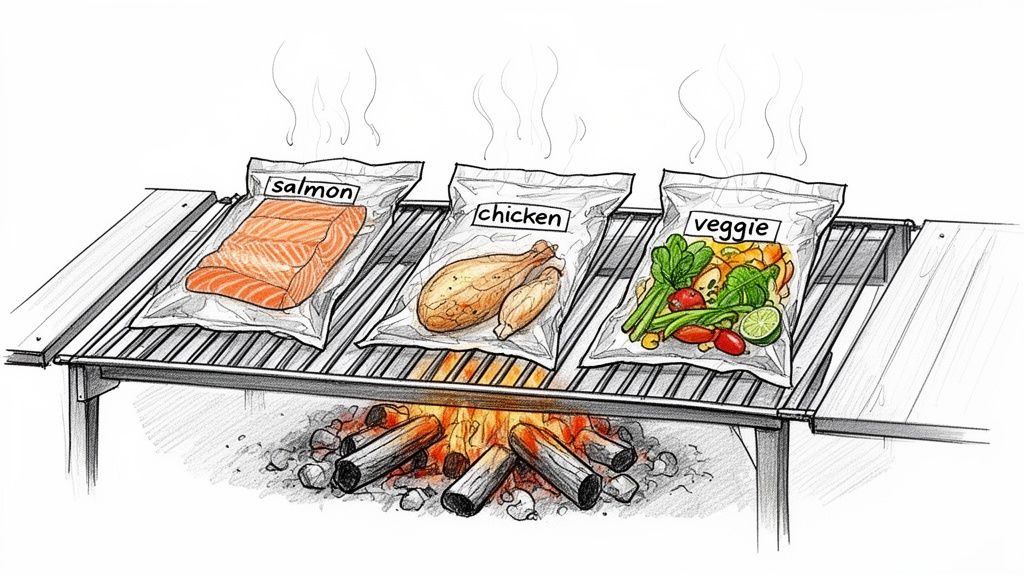
There’s a unique satisfaction in cooking a meal directly over the embers of a campfire. Foil packet meals offer this rustic experience with the convenience of modern prep. This method involves sealing your protein, vegetables, and seasonings in a heavy-duty foil pouch at home, creating a self-contained, single-serving meal ready for the fire. Once at the campsite, you simply place the packets on hot coals or a grill grate, letting the fire do the work.
This approach is one of the most beloved camping meal prep ideas because it combines minimal cleanup with the engaging process of cooking over a fire. It allows everyone to have a personalized meal while keeping dirty dishes to an absolute minimum, freeing up more time for enjoying the evening and the company around you.
How to Prepare Foil Packet Meals
- Lemon Herb Salmon: Place a salmon fillet on foil with asparagus spears, lemon slices, a pat of butter, and a sprinkle of dill. Seal it tightly for a fresh, flaky result.
- Hearty Sausage and Veggies: Combine sliced sausage with diced potatoes, carrots, and onions. Add a drizzle of olive oil and your favorite seasonings before wrapping.
- Chicken Fajita Packets: Slice chicken breast and bell peppers, add some onions and fajita seasoning, and seal. Serve with tortillas warmed by the fire.
Practical Tips for Success
Assembling your packets at home is key. Use heavy-duty foil to prevent tears and leaks. For even cooking, place harder vegetables like potatoes at the bottom of the packet, closest to the heat. It’s helpful to cook over medium-hot coals, not an open flame, to avoid burning the contents. Learning how to create the perfect campfire for roasting food can be a welcome companion for this method. Be sure to rotate the packets halfway through and let them rest for a few minutes before carefully opening them to avoid steam burns.
10. Trail Mix and Bulk Snack Blends
Creating your own trail mix is an invitation to craft the perfect, nutrient-dense snack for moments on the trail, long drives, or quiet afternoons at camp. This approach involves blending your favorite nuts, seeds, dried fruits, and other additions at home and portioning them out. It’s a simple act of preparation that pays off by providing customized energy exactly when you need it, without the added sugars or costs of pre-packaged alternatives.
This is one of the most personal camping meal prep ideas, allowing you to tailor nutrition to your trip’s demands. By mixing your own blends, you can control the balance of protein, healthy fats, and carbohydrates, ensuring you have a satisfying snack that supports your energy levels throughout the day. It’s a small, thoughtful step that connects you more deeply to the fuel you bring outdoors.
How to Prepare Custom Snack Blends
- Energy-Balanced Mix: Combine almonds, cashews, dried cranberries, and dark chocolate chips with a pinch of sea salt for a classic blend that provides sustained energy and satisfies sweet and salty cravings.
- Omega-Rich Blend: Mix walnuts, pumpkin seeds, dried mango, and unsweetened coconut flakes with a dash of cinnamon. This combination is rich in healthy fats and offers a unique, tropical flavor.
- Family-Friendly Sweet & Savory: A crowd-pleasing mix of peanuts, raisins, M&Ms, and pretzels offers a familiar and comforting snack that appeals to all ages around the campfire.
Practical Tips for Success
To keep your custom blends fresh and delicious, mix your ingredients in batches a week or two before your trip. Buying nuts, seeds, and dried fruit from bulk bins can often reduce costs. Portion the mix into individual reusable bags for easy grab-and-go access during hikes. For longer trips, store the main batch in a large, airtight container with a food-safe silica pack to absorb moisture and maintain crispness, ensuring your thoughtful creation stays perfect until the last handful.
10 Camping Meal-Prep Options Compared
| Item | Implementation complexity | Resource requirements | Expected outcomes | Ideal use cases | Key advantages |
|---|---|---|---|---|---|
| One-Pot Freeze-Ahead Meals | Medium — full cook at home, simple reheating at camp | Freezer space pre-trip, insulated cooler, camp stove or fire | Hot, fully developed-flavor meals ready in 15–20 min | Family car camping, basecamp trips with reliable heat | Minimal camp work, portions act as cooler ice, low cleanup |
| Dehydrated Meal Kits with Fresh Additions | Medium–High — home dehydration or sourcing freeze-dried goods | Dehydrator or freeze-dried supplies, lightweight stove for boiling water | Lightweight, shelf-stable meals made in 10–15 min with hot water | Backpacking, overlanding, extended trips with limited resupply | Extreme weight savings, long shelf life, portable |
| Breakfast Kits: Build-Your-Own Baggies & Jar Puddings | Low — assemble portions and jars at home | Zip bags, mason jars, small cooler for jar puddings, hot water option | Quick grab-and-eat or 5-min hot breakfasts, customizable per person | Morning routines at camp, families, limited-cook setups | Reduces morning decisions, customizable, protein options |
| Vacuum-Sealed Pre-Marinated Proteins | Medium — marinate and vacuum-seal at home | Vacuum sealer, pre-chilled cooler, grill or camp stove | Ready-to-cook proteins with deep marinated flavor | Car camping, grilling at basecamp, special-occasion meals | Elevated flavor, minimal camp prep, efficient cooler use |
| No-Cook Charcuterie and Snack Boards | Low — simple assembly and packing | Cooler space for perishables, durable platters/containers | Ready-to-eat grazing meals that require no cooking | Social dinners, fire bans, flexible meal timing | Zero-cook convenience, broad appeal, minimal cleanup |
| Slow-Cooker and Dutch Oven Meal Bases | Medium — prep ingredient kits, long passive cook time | Dutch oven or slow cooker, reliable heat source, cooler | Large-batch, tender meals after 6–8 hours of passive cooking | Family basecamp, overlanders with power, group meals | Hands-off cooking, feeds many, rich slow-cooked flavors |
| Nut Butter and Energy Bite Snack Packs | Low — mix, portion, and wrap at home | Pantry ingredients, wrapping or small bags, optional freezer | High-calorie, portable snacks stable at room temperature | Day hikes, long drives, between-meal fuel | High energy density, customizable, no refrigeration |
| Pre-Cut Vegetable and Protein Prep Kits | Medium — wash, cut, and pack fresh components | Sealed containers, high-quality cooler, minimal cooking gear | Fresh, quick-assembly meals in 10–15 minutes | Families wanting fresh meals, short multi-day trips with cooler | Fresh nutrition, fast assembly, variety and customization |
| Foil Packet Meals for Fire Cooking | Low–Medium — assemble packets at home or camp | Heavy-duty foil, camp grill or hot coals, basic prep space | Individual steamed meals cooked in 15–20 minutes over coals | Campfire dinners, interactive family cooking | Individual portions, minimal dishes, engaging camp activity |
| Trail Mix and Bulk Snack Blends | Low — mix bulk ingredients and portion bags | Bulk purchases, resealable bags or containers | Shelf-stable, portioned snacks for immediate energy | Day hikes, trail snacking, long drives | Cost-effective, fully customizable, no refrigeration |
Your Camp Kitchen, Your Story
As we’ve explored these diverse camping meal prep ideas, from the simple efficiency of freeze-ahead one-pot meals to the rustic charm of foil packets sizzling over an open fire, a central theme emerges. The best approach to feeding yourself and your companions in the wild is not about finding a single, perfect system. Instead, it is about creating a flexible, personal method that aligns with the rhythm of your adventure, the needs of your group, and the time you wish to spend cooking.
The true value of thoughtful preparation is not merely about saving time or reducing stress, though it certainly accomplishes both. It is about creating space. When your ingredients are pre-chopped, your proteins are marinated, and your breakfasts are ready to go, you are gifting yourself moments. These are the moments that might otherwise be spent searching for a spice jar or chopping an onion in the fading light. Instead, they become moments for watching the sunset, for sharing a story around the campfire, or for simply sitting in quiet appreciation of your surroundings.
Key Takeaways for Your Next Adventure
Let’s distill the journey down to its most essential insights. Considering these concepts can transform your camp kitchen from a place of chores to a hub of connection and nourishment.
- Front-load the Effort: The most impactful camping meal prep ideas involve doing the work at home. Chopping, mixing, marinating, and portioning in your home kitchen, with all its conveniences, is always easier than doing so at a campsite. This simple shift in timing fundamentally changes your experience outdoors.
- Embrace Modularity: Think in terms of components rather than just complete meals. Pre-cooked grains, chopped vegetable kits, and pre-portioned sauces can be mixed and matched. This allows for creativity and flexibility, accommodating changing appetites or unexpected opportunities, like cooking freshly caught fish.
- Match the Method to the Trip: The needs of a lightweight backpacker are vastly different from those of a family in a fully equipped overland vehicle. Be honest about your trip’s style. Is it about covering miles on foot, where dehydrated kits are king? Or is it a stationary basecamp experience, where a Dutch oven can become the heart of your kitchen?
Ultimately, the goal is to make your time outdoors more fulfilling. Whether you are a solo backpacker savoring a warm, rehydrated meal on a remote ridge or a family laughing together as you build your own foil-packet dinners, food is the element that brings us together. It punctuates the day's adventures and provides the fuel for tomorrow's. By embracing these camping meal prep ideas, you are not just planning meals; you are intentionally designing an experience rich with good food, great company, and lasting memories. The sizzle of the pan and the aroma from the fire become part of the story you will tell later.
As you gather inspiration for your next menu, remember that the right gear can make all the difference in bringing your culinary plans to life. At Fort Robin, we believe in durable, thoughtful camp kitchen essentials built to support your adventures, from reliable stoves to versatile cookware. We invite you to explore our collection at Fort Robin and find the steady companions for your camp kitchen story.

