

Calm in the Clutter: A Guide to Camping Storage Solutions
Good camping storage isn’t just about having the right bins. It’s about building a simple system that helps you get out the door with a sense of ease and makes your time outside more relaxed. When your gear is organized, you spend less time digging for a headlamp and more time enjoying the sunset. It transforms packing from a chore into a calm, intentional part of the adventure.
An Invitation to Organized Adventures
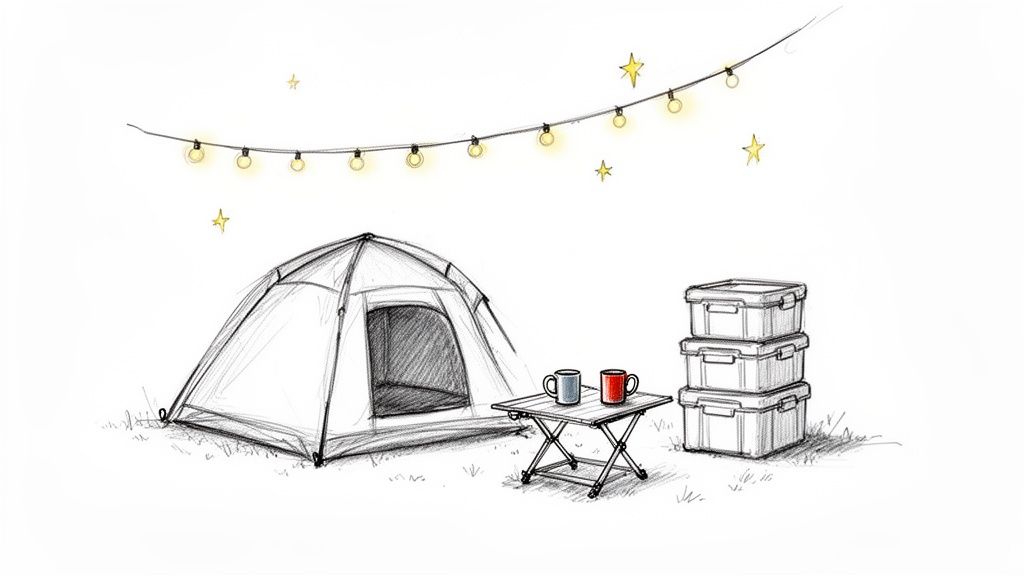
There’s a quiet satisfaction that settles over a campsite when everything has its place. It’s being able to grab your favorite mug for that first cup of coffee at sunrise. It’s cooking dinner without a frantic search for the spatula. It’s the calm that comes from knowing exactly where things are.
That feeling doesn't happen by accident. It comes from a little bit of thoughtful preparation.
Thinking about your camping storage isn't about creating rigid, complicated rules. It’s an invitation to make things easier on your future self. It’s about creating the mental space to enjoy the moments that matter. A simple, intuitive system can completely change your experience, turning a hectic setup into a smooth rhythm.
More Than Just Bins and Bags
At its core, getting organized is an act of care. It honors the gear that keeps you safe and comfortable, and it respects the time you’ve set aside to unplug. When you build a system that works for you, you’re setting yourself up for a more restorative trip.
This approach can lead to:
- Smoother Departures: Spend less time hunting for misplaced gear and more time on the road.
- A Peaceful Campsite: When things are tucked away, your outdoor space feels open, clean, and welcoming.
- More Time for Connection: A functional setup frees you to focus on what you came for—whether that's brewing coffee, stargazing, or just being still.
The goal isn’t a perfectly staged campsite. It's a perfectly present state of mind. Good organization just clears the clutter so you can actually enjoy the view.
Ultimately, finding the right storage is about matching your gear to your intentions. If you're looking for a starting point, a guide on how to organize camping gear can help turn campsite chaos into calm. It’s the first step toward making your home in the wild a true sanctuary.
Matching Storage to Your Camping Style
Your relationship with the outdoors is personal, and your storage should feel just as intuitive. There’s no single "perfect" system for everyone. The best storage solutions are the ones that quietly work with how you travel, turning your gear into a seamless part of the experience rather than something you have to constantly manage.
Think of it as a conversation with your own camping habits. Are you packing for a family of four, where quick access to snacks and rain jackets is everything? Or are you a solo traveler whose vehicle is a carefully organized puzzle of self-reliance? Each style has its own rhythm.
By understanding your approach, you can choose gear that feels like a natural extension of your trip, making setup and breakdown smoother every time.
The Weekend Family Camper
For most families, camping is about setting up a temporary home base for a few days of connection. The goal is comfort and ease, making sure everyone has what they need without a lot of fuss. Here, organization is all about predictability.
Your storage might revolve around:
- Grouped Items: Think in categories. One large bin for all the kitchen gear, another for dry foods, and a soft duffel for each person’s clothes. It keeps things from becoming a free-for-all.
- Accessibility: You’ll want easy access to first-aid, layers, and snacks. A designated "quick grab" tote near the car door can be a wonderful help.
- Durability: Family gear often takes a beating. Sturdy, stackable hard-sided cases can withstand being moved around and can even double as extra seats or small tables around the campsite.
The best family system is one a child can understand. When everyone knows the camp kitchen bin holds the plates, it creates a sense of shared responsibility and makes mealtime smoother.
The Solo Car Camper
The solo adventurer is often focused on efficiency and making the most of a smaller space. For you, every item has a purpose, and your vehicle is a self-contained sanctuary. Your storage needs are about precision and using every inch wisely. To explore this approach further, our ultimate guide to vehicle-based camping offers more insights.
This style might call for:
- Compact Solutions: Collapsible containers, nesting cookware, and soft-sided bags that can be squeezed into odd corners are your best friends.
- A Modular Approach: Using smaller packing cubes and pouches inside larger bags lets you pull out just what you need—toiletries, cooking spices, electronics—without taking everything apart.
- Peace of Mind: With your vehicle often left behind during day hikes, lockable storage boxes for valuables can offer some welcome reassurance.
The Dedicated Overlander
Overlanding is a journey of self-reliance, often into remote areas where you need to be prepared. Storage here isn't just about convenience—it's about capability and resilience. Your system has to be robust, weatherproof, and meticulously organized for long-term travel.
An overlander’s system prioritizes:
- Weatherproof Protection: Dust, water, and vibrations are constant companions. Sealed, gasketed hard cases are a good choice for protecting sensitive electronics, recovery gear, and food.
- Secure Mounting: Gear has to be locked down, whether it’s on a roof rack or in a drawer system. Rooftop cargo boxes and exterior-mounted cases are staples of many builds.
- Logical Layout: Critical items like recovery equipment and first-aid kits have to be instantly accessible. A good system means you can get to vital gear in an emergency without unloading half your vehicle to find it.
Exploring Your Camping Storage Options
Picking the right camping storage is a lot like setting up the pantry in your house. Each container has its job, and when you get the combination right, everything just clicks. Instead of a chaotic pile of gear, you get an organized system where every item has a home, ready the moment you need it.
Let's walk through the main options out there. The idea isn't just to find a box that fits your stuff, but to find solutions that feel right for your style of camping. Some give you the locked-down security of a vault, while others offer the flexible, forgiving nature of a favorite tote bag. Understanding the pros and cons of each helps you build a system that works for you, not against you.
To make it easier to see how these options compare, here's a quick look.
A Quick Look at Common Camping Storage Types
This table breaks down the most common storage solutions, highlighting what they're best for and what to keep in mind. Think of it as a guide for matching the right container to the right gear.
| Storage Type | Best For | Primary Benefit | Consideration |
|---|---|---|---|
| Hard-Sided Cases | Sensitive electronics, camp kitchen, recovery gear | Maximum protection, stackability | Bulky, inflexible shape |
| Soft-Sided Bins | Clothing, dry goods, kids' toys | Flexible, fits odd spaces | Less protection, not stackable |
| Rooftop Cargo Box | Bulky, lightweight items (chairs, tents) | Frees up interior vehicle space | Can affect fuel economy |
| Vehicle Organizers | Small, frequently used items (cables, snacks) | Immediate accessibility | Limited capacity |
| Dry Bags | Electronics, clothing, sleeping bags | Waterproof protection | Not ideal for sharp objects |
| Packing Cubes | Organizing clothing and small gear within larger bags | Compartmentalization, compression | Adds an extra organizational step |
Choosing a mix of these based on your needs is usually the best approach. A hard case for the kitchen gear, soft totes for clothes, and a rooftop box for the bulky stuff is a classic combination for a reason—it works.
Hard-Sided Cases: The Guardians of Your Gear
Think of a hard-sided case as a personal vault for your most important equipment. These are the protectors, built to take the bumps, dust, and downpours that come with life on the road. Their rigid shell gives you a level of security that soft bags just can't touch.
These cases are perfect for:
- Sensitive Electronics: Your camera, GPS, and power stations stay safe from moisture and impacts.
- The Camp Kitchen: A dedicated "chuck box" keeps fragile things like spice jars and cast-iron cookware from rattling around.
- Essential Safety Gear: Recovery kits and first-aid supplies are kept protected and ready for when you might need them.
Because they’re stackable, you can create a solid, organized block in your vehicle. It's like playing Tetris, but with your gear. That predictability is incredibly calming; you know exactly how they’ll fit, every single time.
Soft-Sided Bins: The Flexible Organizers
If hard cases are the skeleton of your storage system, then soft-sided bins and bags are the muscle. They are wonderfully adaptable, able to squeeze into those awkward, leftover spaces in a packed car. Their flexibility is their greatest strength.
You might use them for:
- Clothing and Linens: Duffel bags and soft totes can be compressed to save space, which is perfect for bulky sleeping bags and jackets.
- Dry Goods: A soft bin makes a great pantry for bags of pasta, coffee, and snacks, conforming to whatever you stuff inside.
- Kids’ Gear: Toys and books can be tossed into their own soft tote that’s easy for little hands to get into.
This kind of flexible packing is why backpacks and utility totes are so central to camping. It's part of a broader appreciation for the outdoors that continues to grow.
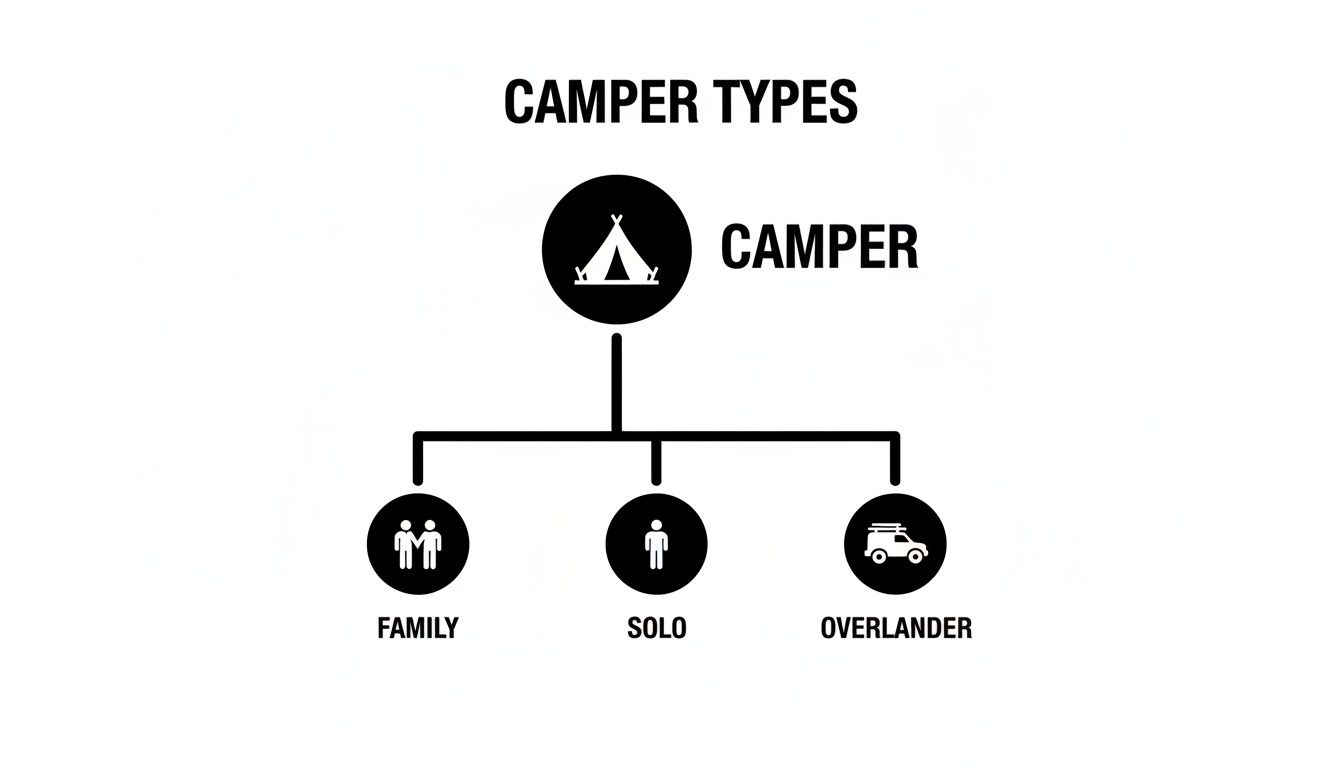
Whether you're out with family, heading out solo, or overlanding, your core needs branch off into specialized approaches to storage.
Rooftop Cargo Boxes: Expanding Your Horizons
A rooftop cargo box is like adding a secure attic to your vehicle. It can be a welcome addition for families or anyone on a longer trip, freeing up precious interior space for people and pets. Moving bulky but lightweight gear overhead just makes the cabin feel less cluttered and more comfortable.
A rooftop box isn’t just about carrying more stuff; it’s about creating breathing room. It separates what you need on the road from what you’ll only need at camp.
These are wonderful for things like camp chairs, tents, sleeping pads, and extra duffels. For an extra layer of defense against rain, tossing your gear into dry bags before putting them in the cargo box is a great idea.
Vehicle Organizers: The Art of Interior Calm
Finally, specialized vehicle organizers bring order to the small spaces inside your car. Seat-back pockets, console trays, and cargo dividers are the unsung heroes of a peaceful road trip. They give a home to all the little things—maps, snacks, charging cables, and headlamps.
These organizers are all about immediate access. They make sure the stuff you need while driving is always within reach, so you’re not scrambling to find something buried in the back. By mixing these solutions—from small totes inside to big boxes on top—you build a system that feels completely dialed in. You can browse our collection of interior vehicle storage, totes, and bags for ideas.
The Gentle Art of Packing Your Camp Ecosystem
Picking out your storage bins is just the start. The real magic happens when you decide what goes inside them. This isn’t about just checking items off a list; it’s about creating a system that makes your campsite feel calm and organized from the moment you arrive.
When you pack with intention before you even leave the driveway, you’re doing more than just loading the car. You’re setting the tone for the entire trip. A little bit of thoughtful organization at home leads to less stress at camp and more time spent actually relaxing.
Embrace a Modular Approach
Think about your campsite like a temporary home. It has a kitchen, a bedroom, and a place for tools. Your packing can reflect that. The easiest way to do this is by creating modular kits—basically, grouping all related gear into its own dedicated container.
Instead of digging through one massive, chaotic bin, you end up with a collection of smaller, well-defined systems that work together.
-
The Kitchen Kit: This is your camp pantry and utensil drawer all in one. Pack your stove, cookware, dishes, spices, and cleaning supplies together in a hard-sided case. When it's time to make dinner, you just grab this one box.
-
The Sleep System Kit: Keep all your bedding together. Sleeping bags, pads, and pillows can go into a large duffel bag. This keeps everything clean, dry, and ready to go when it’s time to set up the tent.
-
The First-Aid and Tools Kit: A small, clearly marked box should hold your first-aid supplies, a multi-tool, duct tape, and headlamps. This is your go-to for small fixes and unexpected needs.
This modular way of thinking is popular because it brings a sense of peace to camping. The market insights on camping storage solutions show a trend toward smaller, specialized containers that are perfect for these kinds of kits, reflecting how many campers are choosing to get organized.
The First Night Out Box
There's nothing quite like that moment you finally pull into your campsite. You can finally turn off the engine, step out, and just breathe. A "first-night-out" box is all about protecting that moment.
It’s a small, easy-to-reach container packed with only the essentials you need right away.
Think of it as a welcome kit for your campsite. It holds everything you need to get settled in quickly and comfortably, allowing you to relax and enjoy your first evening without stress.
Here’s what you might put in yours:
- Headlamps or a lantern for when the sun starts to dip.
- A fire-starting kit with matches, a lighter, and tinder.
- Camp chairs so you can immediately sit down and take a load off.
- A few of your favorite snacks and drinks.
Having these items handy means you’re not tearing through your neatly packed bins just to find a headlamp. It’s a simple favor to your future self, making sure your trip starts with ease, not a frantic search.
Creating a Calm and Functional Campsite
Rolling into a campsite is a quiet moment full of potential. This is where all the thoughtful packing you did back home pays off, transforming an empty patch of ground into your own peaceful outdoor retreat. It starts with an organized vehicle, but the real magic happens when you create a camp layout that feels welcoming, intuitive, and calm.
This isn't just a chore to get through. Setting up camp is about designing a space that encourages easy movement, shared moments, and a deep sense of belonging in the wild. Good camping storage solutions aren’t just for getting your gear from point A to point B—they're the building blocks of a comfortable and restorative outdoor home.
Designing Your Outdoor Home with Intention
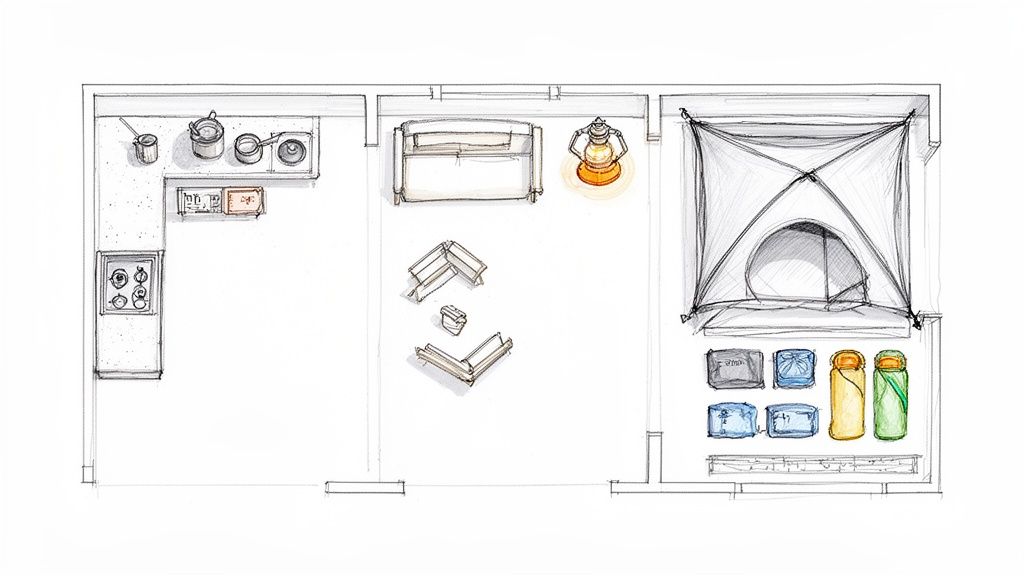
Think of your campsite like a house with distinct rooms. By creating intentional zones for cooking, relaxing, and sleeping, you keep clutter from creeping in and make every activity feel more natural. This simple approach creates a sense of flow, where everything you need is right where you expect it to be.
An easy way to start is by creating a “work triangle” for your camp kitchen.
-
Zone 1: The Kitchen: Place your camp stove on a stable table, with your food bin on one side and your cookware on the other. This keeps your prep, cooking, and serving areas distinct and efficient. Our guide on building a great camp kitchen organizer has even more ideas for this.
-
Zone 2: The Living Area: Arrange camp chairs around the fire pit or in a spot with a great view. This creates an inviting space for conversation and downtime. A small side table or even a flat-topped storage case is perfect for holding drinks, books, or a lantern.
-
Zone 3: The Sleeping Shelter: Position your tent with the door facing away from the prevailing wind and the main social area. This gives you a quiet, private retreat for rest. Try to keep only sleeping gear and personal items inside to maintain a calm, uncluttered space.
Bringing Comfort and Function Together
The best campsites blend pure function with a feeling of welcome, and your storage gear can play a huge role in that. Hard-sided cases can pull double duty as end tables or extra seats, while a well-placed lantern can turn a simple cooking area into a warm, inviting kitchen.
This idea of multi-functional gear is becoming more common. You're now seeing integrated organizers as key features in modern camping furniture, reflecting a shared desire for both comfort and order.
A functional campsite is more than just an efficient setup; it's a space that holds you. When your camp feels like a sanctuary, it invites you to slow down, be present, and truly connect with the world around you.
By thoughtfully arranging these elements, you're doing more than just unpacking your car. You’re building a temporary home—a calm, supportive basecamp for all your adventures.
Caring for Your Gear Until Your Next Journey
The trip isn't really over until the gear is put away. Those quiet moments after you get home, with the scent of campfire still clinging to your clothes, are the final part of the adventure. Unpacking isn't just a chore to rush through; it's how you thank your gear for keeping you safe and comfortable.
More importantly, it’s a kindness to your future self. Taking the time to properly clean and store everything now means you’ll be ready to go the moment the next trip calls.
A Post-Trip Care Ritual
Think of this as closing the book on one trip while getting the next one ready. Breaking it down into a few simple steps makes it feel less like a chore and more like a routine.
-
Air Everything Out: This is the first and most important job. Unpack your tent, sleeping bags, and any damp gear immediately. Even just laying them over chairs in the garage is enough to get air moving and prevent mildew, which is the fastest way to ruin equipment.
-
Clean and Inspect: Wipe down your storage bins to get rid of dust and trail grime. Clean your cookware and give your tent a quick once-over, looking for small tears that need patching. Finding a tiny hole now saves you from a leaky surprise on a future rainy night.
-
Store with Intention: Once everything is bone dry, repack your kits. Store your gear in a cool, dry place away from direct sunlight, which can break down fabrics and plastics over time. For most of us, a designated corner of the garage or a shelf in the closet becomes a library of past and future adventures.
Taking care of your equipment is a promise to yourself that there will be more journeys. It's a quiet commitment to future sunrises, shared meals, and moments of stillness under the stars.
This simple routine for your camping storage solutions ensures that when the outdoors beckons again, you can answer with confidence, knowing everything is clean, organized, and ready to go.
Common Questions About Camping Storage
Getting your gear dialed in is a process, and a few questions often pop up when you start thinking about storage. This isn't about rigid rules—it's about finding a system that makes sense for you and your adventures.
Think of this as a conversation to clear up those common sticking points. The goal is to feel capable and ready to build a setup that just works.
How Much Storage Do I Actually Need?
This is one of the most common questions, and the answer is always personal. There's no magic number of bins to own. It’s about what makes you feel organized and at ease when you’re packing and unpacking.
A great starting point is to pull out all the gear you normally take on a trip and lay it on the floor. Just seeing it all in one place can bring a lot of clarity. You'll start to see natural groups form—kitchen stuff, sleeping gear, clothes, tools. This visual map shows you what kind of camping storage solutions you actually need. The aim isn't to fill a specific amount of space; it's to give everything a logical home. It's always better to have a little extra room in a bin than to have gear crammed in so tight that packing feels like a frustrating puzzle.
Should I Invest in Expensive Gear Right Away?
There's no need to rush out and buy a whole system at once. The best, most effective setups evolve over time, trip by trip.
You might start with a few duffel bags and some storage totes you already have in the garage. After a few trips, you’ll start to notice where things could be smoother.
True organization comes from understanding your own rhythms in the wild, not from a specific brand or product. Let your experiences guide your choices.
Maybe you’ll realize that having your kitchen gear in a hard-sided case would make setting up for dinner feel less chaotic. Or you might decide a rooftop box is the answer to freeing up precious legroom inside the car. Let your needs reveal themselves naturally. A thoughtful, gradual approach builds a system that truly lasts and supports your trips for years to come.
At Fort Robin, we believe in durable, thoughtful gear that helps you reconnect with the outdoors on your own terms. We invite you to explore our collection to find the pieces that will support your next adventure.

