

Your Gentle First Time Camping Checklist
Heading into your first camping trip is an incredible opportunity to unplug and reconnect with something a little more real. A first time camping checklist isn’t about following a strict set of rules—it’s about thoughtfully gathering the things that will help you feel comfortable, confident, and ready for a night under the stars.
Easing Into Your First Night Under The Stars
The thought of sleeping outside for the first time can be a mix of excitement and, perhaps, a little bit of apprehension. Will you have the right gear? What if you forget something important? That’s perfectly normal.
The whole point of a checklist is to quiet those "what if" worries. It frees up your mind to focus on the good stuff—the crackle of a campfire, the quiet of the woods—instead of getting bogged down in logistics.
Think of it as the first step of the adventure itself. Each item you pack is part of the temporary home you're building in the wild. It’s a grounding ritual that starts long before you pull out of the driveway.
Choosing Your First Destination
Where you camp for the first time makes a huge difference. You want a place that feels welcoming, not overwhelming.
A nearby state park with established campsites is almost always a wonderful choice. These spots usually have amenities like a picnic table, a fire pit, and access to restrooms, which makes the transition to sleeping outdoors a whole lot smoother. You can learn more about how to find the perfect spot in our complete guide to planning a camping trip.
The goal here is to set yourself up for a positive experience. Save that epic, remote wilderness trek for another time.
A successful first trip isn’t measured in miles hiked or challenges overcome. It’s measured in the moments of peace you find. Let go of the pressure to do everything perfectly and just allow yourself to be there.
A Gentle Approach to Preparation
As you start gathering your gear, remember this: you don't need the most technical, top-of-the-line equipment to have a wonderful time.
Borrowing from friends or renting key items is a great way to get started. It lets you discover what you actually like and need without a big upfront investment.
Your initial focus can land on three core areas that help ensure a comfortable, safe experience:
- A comfortable place to sleep: This is the foundation. Good sleep changes everything.
- A simple way to prepare food: Sharing meals outdoors is one of the best parts of camping.
- Staying warm, dry, and safe: This gives you the peace of mind to truly relax and enjoy it.
We’ll walk through each of these pieces together, offering practical thoughts to help you build a kit that feels just right for you.
Creating A Comfortable Place To Rest Your Head
A good night's sleep is the foundation of any great camping trip. It can turn a simple outing into a genuinely restorative experience. When you wake up rested and ready, the whole world just looks better. Your goal here is to create a cozy, secure sanctuary where you can drift off to the quiet sounds of nature.
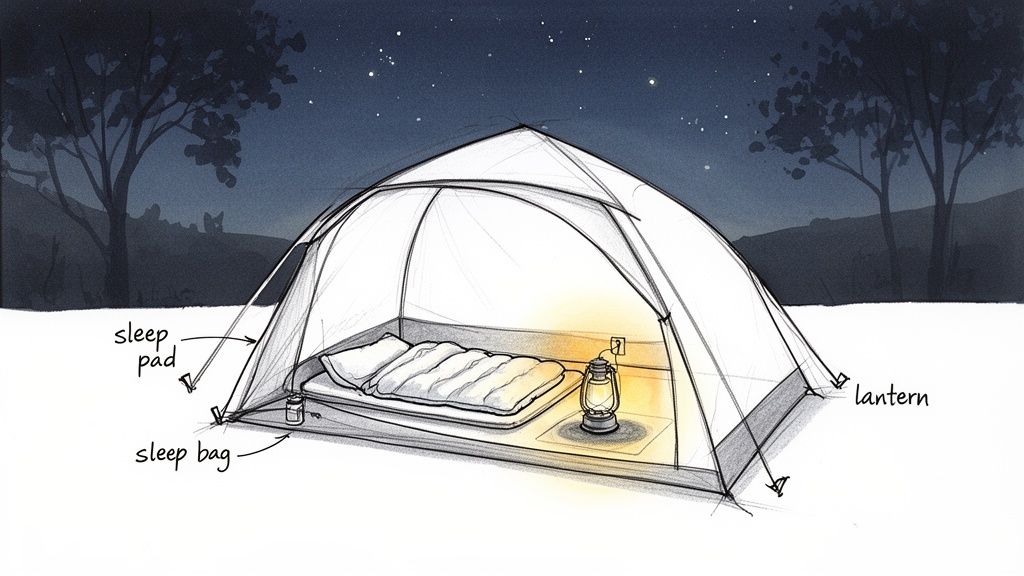
This all starts with what experienced campers call a sleep system. It’s just a simple term for the three key pieces that work together to keep you comfortable: your tent, sleeping pad, and sleeping bag. Thinking of them as a single, integrated unit—not just separate items—is the real secret to a peaceful night under the stars.
Your Tent Is Your Temporary Home
First up is your shelter. For a first-time camper, the best tent isn't the lightest or the most technical; it's the one that feels spacious and is simple to set up.
A helpful tip is to look for a tent rated for one more person than will actually be sleeping in it. For example, choose a "3-person tent" for two people. That extra room for gear and just moving around makes a world of difference.
Modern tents are wonderfully intuitive, but it’s always a good idea to do a practice run in your backyard. Setting it up once without the pressure of approaching darkness or a surprise rainstorm builds confidence and makes the real thing feel effortless.
The Unsung Hero: Your Sleeping Pad
While the sleeping bag gets all the attention for warmth, your sleeping pad is arguably more important for both comfort and insulation. It creates an essential barrier between you and the cold ground, which can draw warmth away from your body surprisingly fast. It also provides the cushion you need to actually sleep soundly.
Sleeping pads come in a few main types:
- Foam Pads: Durable and affordable, though a bit bulky.
- Self-Inflating Pads: A hybrid of foam and air that offers a wonderful balance of comfort and insulation.
- Air Pads: Often the most comfortable and pack down the smallest, but you'll have to inflate them yourself.
For your first few trips, a self-inflating pad is a fantastic and reliable choice.
The ground is always colder than you think. A good sleeping pad isn't a luxury; it's the most critical piece of gear for preventing heat loss and ensuring you wake up refreshed, not chilled.
Choosing The Right Sleeping Bag
Finally, your sleeping bag provides that enveloping warmth that makes a cool night feel incredibly cozy. The most important factor here is its temperature rating. This number tells you the lowest temperature at which the bag is designed to keep an average sleeper warm.
A good rule of thumb is to choose a bag rated for temperatures at least 10-15 degrees colder than the lowest forecast temperature you expect to encounter.
It’s interesting to note that comfort is a primary driver for people new to the outdoors. New campers, who make up about 5% of all campers each year, tend to seek out experiences that ease them into nature gently. They often prefer campgrounds with more amenities, showing a clear preference for comfort and convenience over hardcore minimalism. You can discover more insights like this from the 2025 Camping & Outdoor Hospitality Report.
This desire for comfort is completely natural and a wonderful way to begin your camping journey. You can dive deeper into the nuances of picking the perfect gear with our guide on how to build a better sleep system outdoors.
Setting Up A Simple And Welcoming Camp Kitchen
There's something special about sharing a meal outdoors. The simple act of cooking and eating together, surrounded by nature, creates a connection you just don't get anywhere else. Your camp kitchen doesn’t need to be fancy—it just needs to be a functional, welcoming space where making food feels like part of the adventure, not a chore.
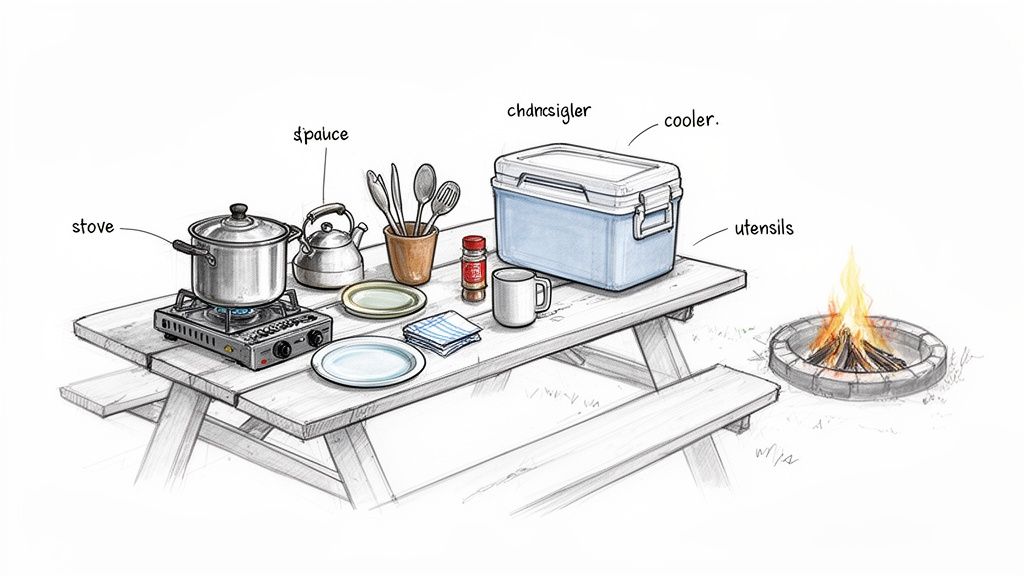
This part of your first time camping checklist is all about getting that kitchen set up. We'll cover the essentials for cooking, keeping food cool, and cleaning up without any fuss, so you can focus on the good stuff.
The Heart Of The Kitchen: Your Stove And Cooler
A reliable two-burner propane stove is a great starting point for any new camper. They're very simple to use—if you've ever used a gas grill, you'll be fine. Just don't forget to pack a small canister of propane fuel and a lighter.
Next to your stove, a good cooler is essential for keeping food fresh and safe. Here's a helpful tip: pre-chill your cooler the night before with a "sacrificial" bag of ice. The next morning, empty the meltwater, add fresh ice, and then pack your food. It’s a small step that makes your ice last much longer.
Your camp kitchen is more than just a place to cook. It's the central gathering spot, a place for morning coffee conversations and evening stories shared over a warm meal. Keep it simple, and let it be the backdrop for connection.
Essential Cooking And Cleaning Tools
You don’t need to bring your entire home kitchen into the woods. A small, thoughtfully chosen kit is all it takes to make great meals outside.
- Cookware: One pot with a lid and one frying pan can handle almost anything you'll want to cook.
- Utensils: A spatula, a big stirring spoon, a sharp knife, and a small cutting board will see you through.
- Dinnerware: Pack a plate, bowl, and fork/spoon for each person. An insulated mug for that morning coffee is a must.
- Cleaning: A small basin or a collapsible sink, biodegradable soap, and a sponge make cleanup easy. We've got more tips in our guide on how to wash dishes while camping.
This desire to get outside is bigger than ever. With over 11 million new households starting to camp in the last five years, spending on gear has hit $61 billion. It's clear people are looking for these kinds of grounded experiences. You can find more about current camping industry trends at Accio.com.
Planning Simple And Hearty Meals
The best camp food is easy, requires minimal prep at the campsite, and doesn't create a huge mess. Think one-pot pastas, foil packets you can toss right into the campfire coals, or the classic burgers and hot dogs.
Plan your meals for each day before you leave, and do as much prep work as you can at home—chop your veggies, marinate your meat, mix your pancake batter. This saves a lot of time and hassle at camp. Another trick is to pack your cooler in reverse order: the food for your last day goes on the bottom, and the first day's meals go on top. It keeps everything organized and easy to find.
Gear for Comfort, Safety, and Light
Once you've sorted out your shelter and sleep system, it's the smaller details that really make a campsite feel like home. These are the supporting players on your first time camping checklist—the gear that adds comfort, safety, and a bit of magic once the sun goes down.
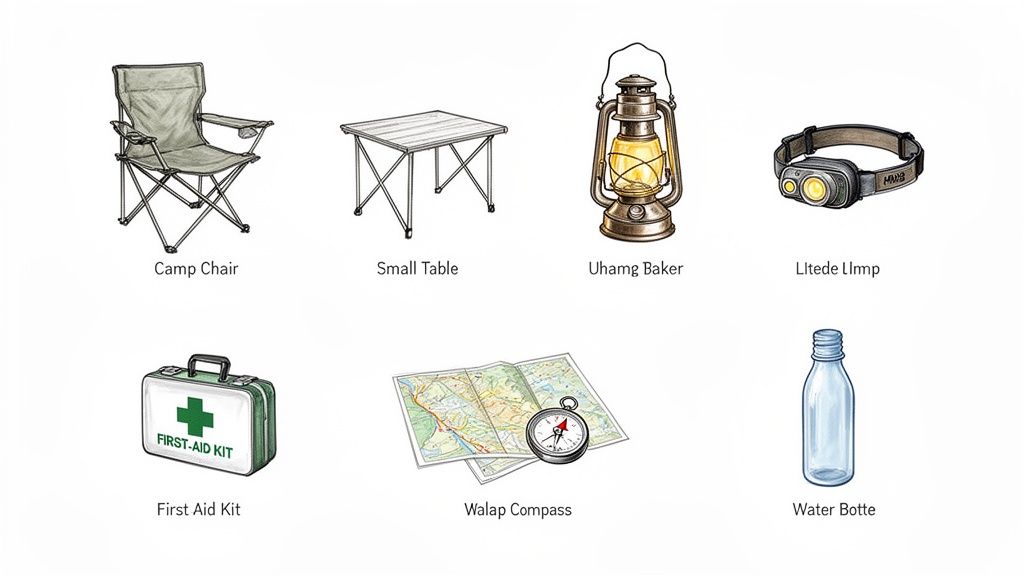
This part of your list is all about creating a space where you can actually relax. It's about the simple pleasure of a good camp chair, the warm glow of a lantern, and the quiet confidence that comes from knowing you're prepared.
Creating Your Outdoor Living Room
Having a comfortable place to sit that isn't a damp log or the dirt ground is a game-changer. It’s what lets you linger by the fire, read a book in the afternoon sun, or just sit and watch the world go by.
- Camp Chairs: This might be the single most important piece of camp furniture. Find one that’s easy to fold but sturdy enough to really relax in. A chair with a high back can feel like pure luxury after a day of activity.
- A Small Table: Even if your site has a big picnic table, a small, portable roll-top table is incredibly useful. It can hold drinks by the fire, act as a prep station next to the stove, or just keep your phone and keys off the ground.
Lighting Up the Night
When darkness falls, your campsite completely transforms. The right lighting makes it easy to navigate, cook, and hang out, creating a warm, inviting atmosphere that feels both safe and cozy.
A headlamp is essential. It keeps your hands free for everything—cooking dinner, rummaging through your tent, or making that late-night walk to the restroom. A simple LED model is all you need.
Beyond your personal headlamp, a lantern is perfect for casting a soft, ambient glow over the whole campsite. Whether it’s a classic propane model or a modern rechargeable LED, it becomes the central beacon for your evening.
The right lighting does more than help you see; it shapes the feeling of your campsite after dark. A headlamp provides focused, practical light for tasks, while a lantern creates a shared space of warmth and connection.
The Foundation of Safety and Peace of Mind
Finally, a few key safety items provide the peace of mind that allows you to fully relax. This is the gear you hope you never need, but you’ll be incredibly glad to have it if you do.
- First-Aid Kit: Pack a well-stocked kit or buy a pre-made one designed for the outdoors. Make sure it has the basics: bandages of all sizes, antiseptic wipes, blister treatment, and pain relievers.
- Navigation: Even at a well-marked state park, bring a physical map and a compass. Your phone’s GPS is great until the battery dies or you lose service. Knowing how to use them is even better.
- Multi-Tool: A good multi-tool or even a simple pocket knife is endlessly useful for small repairs, opening packages, and a dozen other camp tasks you won't see coming.
This growing interest in getting outside is reflected in the market itself; the global camping and caravanning market was valued at USD 66.37 billion and is expected to grow significantly. For new campers, this just means more choices and better gear than ever before. You can read the full research about these market findings on Grand View Research.
Dressing For The Outdoors: Clothing And Personal Items
What you wear camping has a quiet but significant impact on your comfort. This isn't about fashion; it's about staying warm, dry, and comfortable through changing conditions so you can actually enjoy being outside.
The most effective way to do this is to think in layers. A simple layering system lets you adapt to anything the day brings, from a cool, misty morning to a sun-drenched afternoon, without much fuss.
The Simple Art Of Layering
Layering is a straightforward, three-part system that works together to manage both temperature and moisture. When you get this right, you'll stay comfortable through just about anything.
- Base Layer: This is what you wear right against your skin. Its job is to pull moisture away to keep you dry. Look for merino wool or synthetics. It's best to avoid cotton—it holds onto moisture and can make you feel cold the second you stop moving.
- Mid Layer: Your insulation. A cozy fleece jacket or a puffy vest is perfect here. It's designed to trap your body heat and keep you warm.
- Outer Layer: This is your shell, your protection from wind and rain. A simple waterproof or water-resistant jacket is all you need to block out the elements and stay dry.
By adding or shedding these layers, you can regulate your temperature all day long. It's a simple, smart way to respond to the outdoors.
Beyond The Basics: Personal Comforts
Beyond your main clothes, a few personal items are important for staying comfortable and safe. These are the small things that make a huge difference out on the trail or around the fire.
First up, sun protection. A wide-brimmed hat, a good pair of sunglasses, and reliable sunscreen are essential, even on cloudy days. The sun can be stronger when you're outside all day.
Next, think about campsite comfort. A good insect repellent can salvage an otherwise perfect evening. And packing eco-friendly toiletries, like biodegradable soap and a quick-dry towel, lets you freshen up while respecting the environment you came to enjoy.
Packing your clothing and personal items is an act of self-care. It’s about anticipating your needs with a little foresight, ensuring small discomforts don’t get in the way of the whole experience.
This section of your first time camping checklist is all about getting your personal kit ready. One last tip: always pack a separate, comfortable set of clothes just for sleeping. Changing into clean, dry layers before bed is a simple ritual that signals to your body it’s time to rest, leading to a much better night's sleep in the tent.
Your Printable Checklist And Final Thoughts
As your trip gets closer, the simple act of packing can feel like a grounding ritual. It’s where scattered thoughts turn into a clear plan, and a mental list becomes something you can actually hold. Below is a straightforward, printable first time camping checklist, broken down by category. Use it to check things off, and feel the calm of being prepared settle in.
This list isn't about getting everything perfect. It's about being thoughtful, so you can leave the worry behind and just be present for the experience.
A Gentle Pre-Departure Checklist
Right before you walk out the door, a few final checks can make a huge difference in setting a peaceful tone for your trip. This isn’t more stuff to do—think of it as a final, quiet check-in with yourself.
- One Last Weather Check: Take a quick peek at the forecast. It’ll help you make any last-second adjustments to your clothing layers and confirm you’re ready for whatever the day holds.
- Share Your Itinerary: Let a friend or family member know where you’re going and when you’ll be back. It’s a simple act of care that brings peace of mind to you and them.
- Leave It Better: Set an intention to leave your campsite cleaner than you found it. This one small commitment connects you to the place and to every camper who comes after you.
Your goal isn't just to have a good time, but to feel present. Thoughtful preparation is what makes that possible. It quiets the logistical side of your brain, freeing you to notice the small wonders of the world around you.
Layering Your Clothing for Comfort
We’ve talked about layering, but seeing it laid out can really make the concept click. The idea is to build a simple, adaptable system that keeps you comfortable no matter what the weather decides to do.
The diagram below shows how a base layer, mid layer, and outer layer work together to manage moisture and trap warmth.
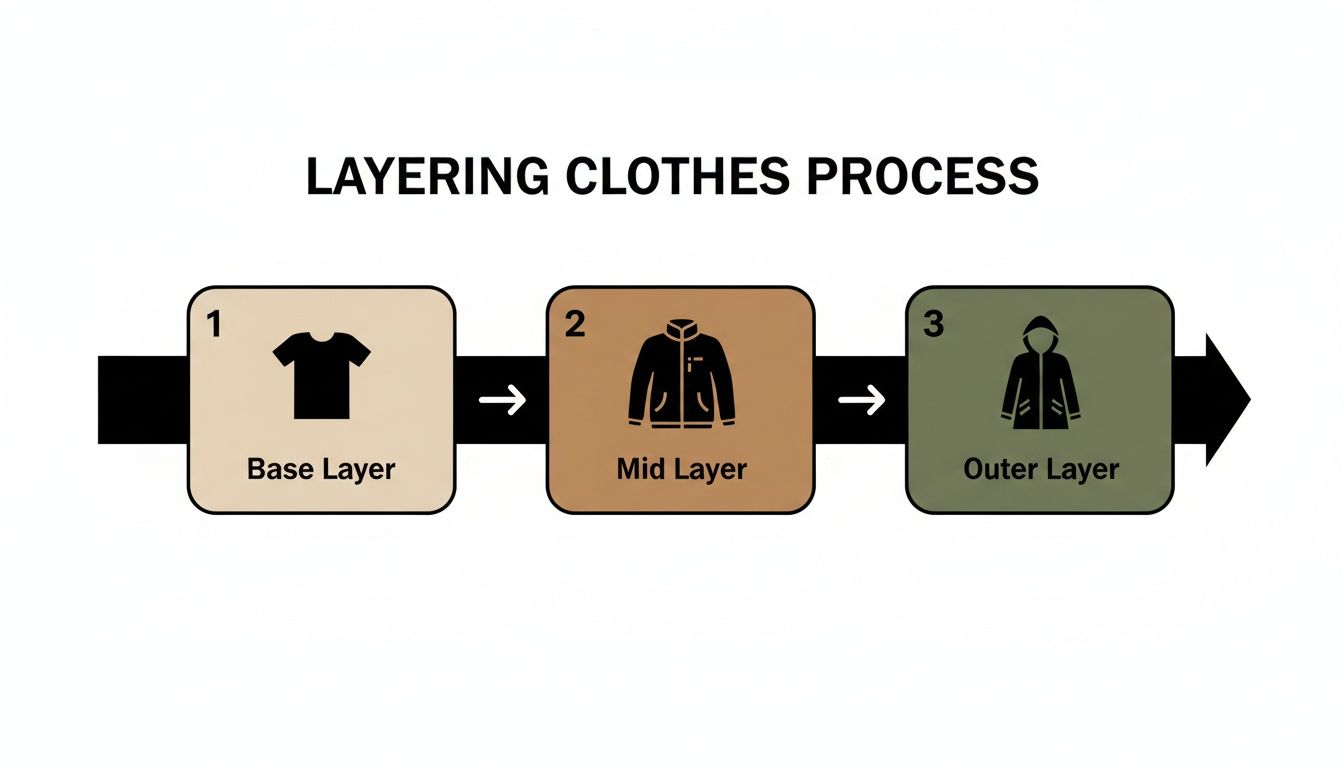
Each piece has a job. Together, they create a versatile toolkit that lets you adjust to changing conditions just by adding or removing a single layer.
Printable First Time Camping Checklist
Here’s a comprehensive checklist you can print out and use while packing. It’s designed to cover all the essentials without feeling overwhelming. Just check things off as you go.
| Category | Item | Packed (Checkbox) |
|---|---|---|
| Shelter | Tent (with poles, stakes, and guylines) | ☐ |
| Footprint or ground tarp | ☐ | |
| Mallet or hammer for stakes | ☐ | |
| Sleep System | Sleeping bag (check temperature rating) | ☐ |
| Sleeping pad or air mattress | ☐ | |
| Pillow(s) | ☐ | |
| Extra camp blanket | ☐ | |
| Camp Kitchen | Camp stove and fuel | ☐ |
| Lighter or matches | ☐ | |
| Pot/pan for cooking | ☐ | |
| Cooking utensils (spatula, tongs) | ☐ | |
| Eating utensils (fork, spoon, knife) | ☐ | |
| Plates and bowls | ☐ | |
| Mugs or cups | ☐ | |
| Cooler and ice | ☐ | |
| Reusable water bottles | ☐ | |
| Trash bags (pack it in, pack it out) | ☐ | |
| Soap and sponge | ☐ | |
| Campsite & Lighting | Camp chairs | ☐ |
| Camp table | ☐ | |
| Headlamp (with extra batteries) | ☐ | |
| Lantern | ☐ | |
| Clothing & Footwear | Base layer (wool or synthetic) | ☐ |
| Mid layer (fleece or puffy jacket) | ☐ | |
| Outer layer (waterproof rain jacket) | ☐ | |
| Hiking pants/shorts | ☐ | |
| T-shirts | ☐ | |
| Socks (wool or synthetic, pack extra) | ☐ | |
| Underwear | ☐ | |
| Sleepwear | ☐ | |
| Sturdy shoes or hiking boots | ☐ | |
| Camp shoes (sandals or slip-ons) | ☐ | |
| Hat (for sun or warmth) | ☐ | |
| Safety & First Aid | First-aid kit | ☐ |
| Sunscreen | ☐ | |
| Insect repellent | ☐ | |
| Map of the area and compass | ☐ | |
| Multi-tool or knife | ☐ | |
| Personal Items | Toiletries (toothbrush, toothpaste, etc.) | ☐ |
| Quick-dry towel | ☐ | |
| Any personal medications | ☐ | |
| Power bank for electronics | ☐ | |
| Phone and charging cables | ☐ | |
| Book, cards, or journal | ☐ |
This list is a great starting point. As you camp more, you'll learn what’s essential for you and what you can leave behind.
Final Thoughts Before You Go
We hope this guide has left you feeling reassured, prepared, and genuinely excited for your first camping trip. Remember that every seasoned camper was once a beginner. Be gentle with yourself, embrace the learning process, and focus on the simple joy of just being outside.
The real goal is to create space for quiet mornings, good food, and shared stories under an open sky. You have everything you need to begin.
At Fort Robin, we believe the best adventures are the ones that feel like coming home. We're here to help you gather the thoughtful, reliable gear you need to feel comfortable and confident outdoors. Explore our curated gear and get ready for your next trip.
Crafted with the Outrank app

