

A Guide to Staying Warm While Camping on Cold Nights
Staying warm while camping isn't about enduring the elements. It’s a quiet practice built on a few simple ideas: dressing in thoughtful layers, creating a comfortable sleep sanctuary, and choosing your campsite with intention. By working with your body to manage moisture and insulate yourself from the cold ground, you can create a pocket of genuine comfort, no matter what the thermometer says.
Finding Comfort in the Cold
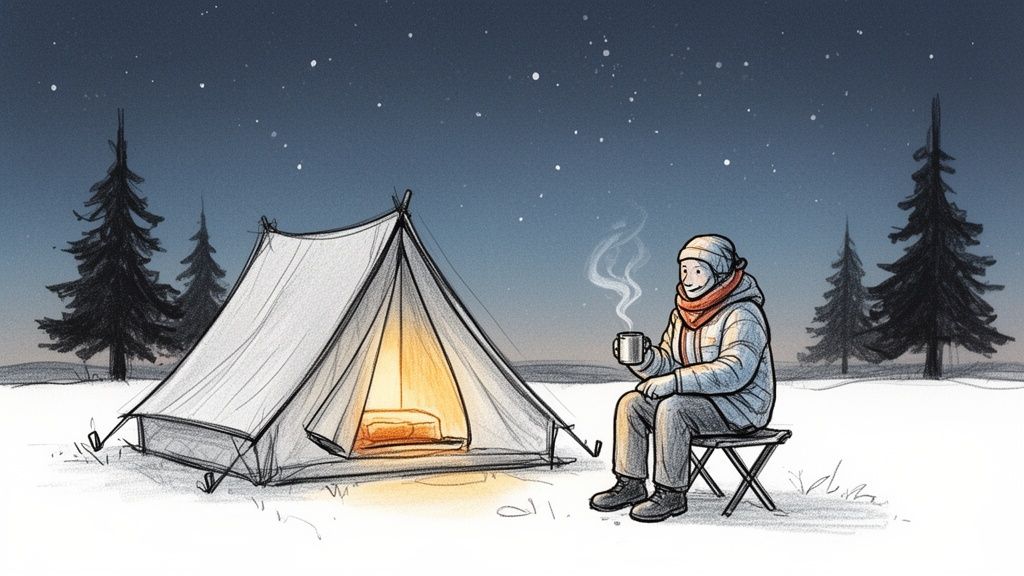
There’s a quiet magic to camping in the cooler months. The air feels crisp and clean, the stars seem brighter, and the summer crowds have drifted away, leaving behind a deeper sense of solitude and peace.
Many of us shy away from these trips, picturing long, shivering nights. But staying warm is not about brute force—it’s about creating genuine comfort. It's a practice of listening to your body and working with your gear, not against it. With a little knowledge, a chilly night under the stars can be transformed into a truly cozy, restorative experience.
This guide is an invitation to find that comfort for yourself. We'll explore the gentle details that make all the difference, moving beyond mere survival tips and into the art of creating a warm and welcoming space outdoors.
The Foundation of Warmth
True warmth while camping isn't just about piling on more blankets. It's built on a few interconnected ideas that work together to keep you comfortable. Understanding these concepts is the first real step toward enjoying any cool-weather adventure. For a wider look at strategies, you can also check out this practical guide on how to stay warm while camping.
Here’s what we’ll explore together:
- Thoughtful Layering: How to create a personal climate control system with your clothing.
- Your Sleep Sanctuary: Assembling a sleep system that insulates you from the ground up. The foundation of a warm night's sleep is a well-chosen insulated sleeping pad.
- Mindful Shelter: Using your tent and the natural landscape to your advantage.
- Fueling Your Inner Furnace: How food and hydration directly impact your body's ability to generate its own heat.
The goal is to feel so genuinely comfortable that the temperature becomes an afterthought. That way, you can focus on the quiet beauty around you—the sound of the wind, the glow of a campfire, and the peace of a silent, starry night.
The Art of Thoughtful Clothing Layers
Staying warm outdoors begins long before you climb into your sleeping bag. It starts with what you choose to wear. The idea of layering isn’t about piling on bulky sweaters—it’s about creating a personal climate control system that you can adjust as conditions change or your body warms up and cools down.
Think of your clothing as three distinct layers working in harmony. When you get it right, this system keeps you dry, traps your body heat, and shields you from the wind and rain. Understanding this simple concept is the key to feeling at ease from a chilly morning hike to a cold night around the campfire.
A well-planned layering system is one of the most effective ways to manage your body temperature and stay comfortable in any condition. Each layer has a specific purpose, and choosing the right materials is essential for how they perform.
Your Three-Layer System for Staying Warm
| Layer | Purpose | Common Materials | Best For |
|---|---|---|---|
| Base Layer | Moisture Wicking: Pulls sweat away from your skin to keep you dry. | Merino Wool, Polyester, Polypropylene | Next-to-skin comfort, preventing chills from perspiration. |
| Mid-Layer | Insulation: Traps your body heat to keep you warm. | Fleece, Down, Synthetic Insulation | Core warmth, adaptable to changing temperatures. |
| Outer Layer | Weather Protection: Shields you from wind, rain, and snow. | GORE-TEX, eVent, other waterproof/breathable fabrics | Protecting you and your insulating layers from the elements. |
This table is a simple framework, but the real art happens when you begin to mix and match these layers to suit the day's adventure.
The Foundation: Your Base Layer
The layer right against your skin is perhaps the most important one because its entire job is to manage perspiration. As you hike, gather wood, or set up camp, your body produces sweat. If that moisture stays on your skin, it cools you down quickly—water pulls heat away from your body about 25 times faster than air.
Your base layer needs to pull that moisture away from your skin so it can evaporate. This is often called wicking.
Because of this, your choice of fabric is everything.
- Merino Wool: This natural fiber is remarkable. It's soft, it breathes, it wicks moisture beautifully, and it continues to insulate even when it gets a little damp. It also naturally resists odor.
- Synthetics: Materials like polyester and polypropylene are also excellent at wicking. They're durable, they dry very quickly, and they are often more accessible in price than merino wool.
The one material to avoid for a base layer is cotton. It’s highly absorbent and loses all its warmth the moment it gets wet, which has led some experienced outdoor travelers to call it "the fabric of death."
The Insulation: Your Mid-Layer
This is your warmth layer. Its job is to trap the air your body heats up, creating a cozy microclimate around you. You can choose a thicker or thinner mid-layer depending on the temperature and your activity level.
Here are the most common choices for insulation:
- Fleece: Fleece is a go-to for good reason. It’s breathable, stays warm even if it gets a bit damp, and dries out quickly. Understanding the different kinds of fleece can help you fine-tune your system. This plush fleece vs fleece fabric guide is a great resource for exploring fabric choices more deeply.
- Down: Nothing quite matches down for its warmth-to-weight ratio. Down jackets and vests are incredibly warm for how light they are and pack down to a very small size. Their main drawback is that down insulation becomes ineffective when wet.
- Synthetic Insulation: This can be thought of as the practical cousin to down. It mimics the lofty structure of down but continues to insulate even when damp, making it a reliable choice for wet or unpredictable weather.
And remember, an extra layer can make all the difference when you stop moving. We’ve found that versatile camping blankets offer another adaptable layer you can drape over everything else while you’re resting or sleeping.
The Shield: Your Outer Layer
Your outermost layer, or shell, is your shield against the elements. It’s designed to block wind and seal out rain and snow, which allows your insulating mid-layer to do its job without getting soaked or flattened. A good shell can feel like a personal fortress.
Shells generally fall into two categories:
- Waterproof/Breathable Shells: These are often made with fabrics like GORE-TEX that keep rain and snow out while allowing sweat vapor to escape from the inside. That breathability is what keeps you from feeling clammy and wet from your own perspiration.
- Water-Resistant/Windproof Shells: These are lighter and more breathable, making them well-suited for windy but mostly dry days. They’ll fend off a light drizzle but will eventually become saturated in a steady downpour.
The art of layering is about being attentive. Don't wait until you're sweating to remove a layer, and don't wait until your teeth are chattering to add one back on. Before you start a steep uphill climb, you might unzip your jacket or take off your fleece. The moment you stop for a break, it's a good practice to put that insulating layer right back on to trap the heat you just built up.
Building Your Warm Sleep Sanctuary
A good night's sleep is the soul of any camping trip, especially when the air turns cool. It's during those quiet hours that our bodies rest and recharge, letting us wake up ready for whatever the day holds. Creating a warm, inviting place to sleep isn’t complicated; it's about building a sanctuary from the ground up, starting with the very surface you’ll be resting on.
Many of us focus on the loft of our sleeping bag, but the real secret to staying warm lies beneath you. The cold ground acts like a giant heat sink, constantly pulling warmth from your body through a process called conduction. Without a proper thermal barrier, even the most expensive sleeping bag can feel like it's failing you.
This is where your sleeping pad becomes the quiet hero of your sleep system.
The Ground-Up Approach
A sleeping pad's primary job isn't just comfort—it's insulation. Its ability to resist heat loss is measured by its R-value. Think of R-value as a simple warmth rating: the higher the number, the better the pad is at stopping the cold ground from stealing your heat.
For cool nights, a pad with an R-value of 4.0 or higher is a great starting point. For true winter conditions, you'll want to aim for 5.0 or above. Some experienced campers even layer two pads—a durable closed-cell foam pad below and a comfortable inflatable one on top—for maximum warmth and a bit of redundancy.
The most important shift in mindset is realizing you aren't just sleeping in a sleeping bag; you are sleeping on a pad. Your pad insulates you from below, and your bag insulates you from above. Both are essential parts of a single system designed to keep you warm.
Once your foundation is solid, you can turn your attention to what goes on top.
Choosing Your Cocoon: Sleeping Bags and Quilts
Your sleeping bag or quilt is your personal warm-air cocoon. Its insulation—whether down or synthetic—works by trapping countless tiny pockets of air that your body then heats up. This layer of still, warm air is what keeps the cold out and the coziness in. When choosing one, the temperature rating is your first guidepost, but it helps to know what those numbers really mean.
- Comfort Rating: This is the temperature at which a "cold sleeper" should feel comfortable. It’s often the most realistic number to go by for a good night's sleep.
- Limit Rating: This is the temperature where a "warm sleeper" might start to feel the chill but can still get through the night. Pushing this limit often leads to a long, shivery night.
When in doubt, it’s always wise to choose a bag rated for temperatures a little colder than you expect. You can always vent a bag that's too warm, but you can't magically add warmth to one that isn't enough. For a deeper dive, our guide on how to choose the right sleeping bag for camping adventures offers more detailed advice.
The principles of layering your clothes during the day apply just as well to your sleep system at night.
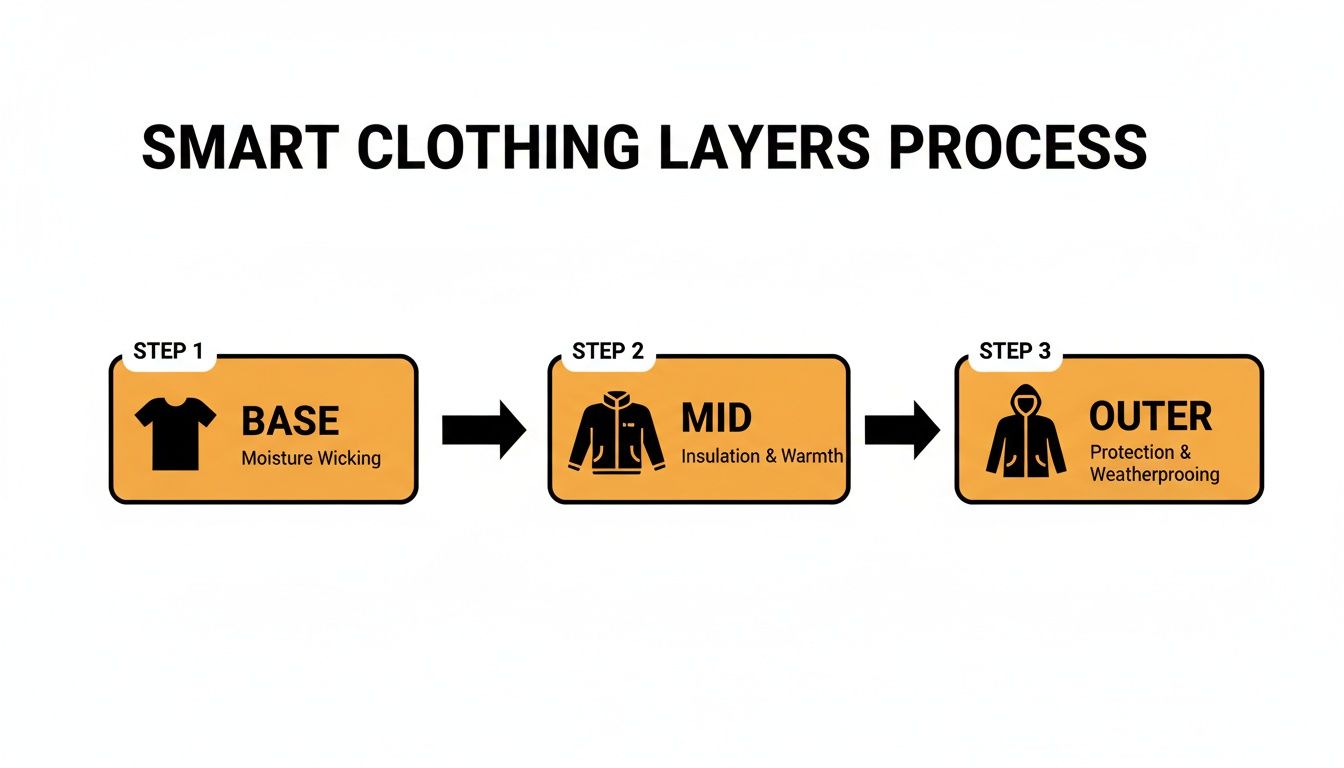
Each layer, from a moisture-wicking base to a protective outer shell, builds upon the last.
Small Comforts With a Big Impact
Beyond the core components of your pad and bag, a few small additions can transform your sleep setup from merely functional to genuinely comforting.
One of the oldest tricks in the book is the personal heater. Before climbing into bed, carefully fill a hard-sided water bottle (like a Nalgene) with hot—not boiling—water. Screw the lid on tight, check for leaks, and tuck it into the foot of your sleeping bag. It will radiate warmth for hours, pre-heating your space and giving your feet a cozy spot to land.
Adding a sleeping bag liner is another simple upgrade. These liners, often made of silk, fleece, or specialized thermal fabric, can add anywhere from 5 to 15 degrees of warmth to your bag. They also help keep the inside of your sleeping bag clean, which extends its life and performance.
Finally, don't forget your head. You lose a surprising amount of heat from an uncovered head, even when bundled up. Simply wearing a soft beanie to bed can make a huge difference in your overall warmth. It's a tiny piece of gear that brings an outsized amount of comfort.
How to Choose a Sheltered Campsite
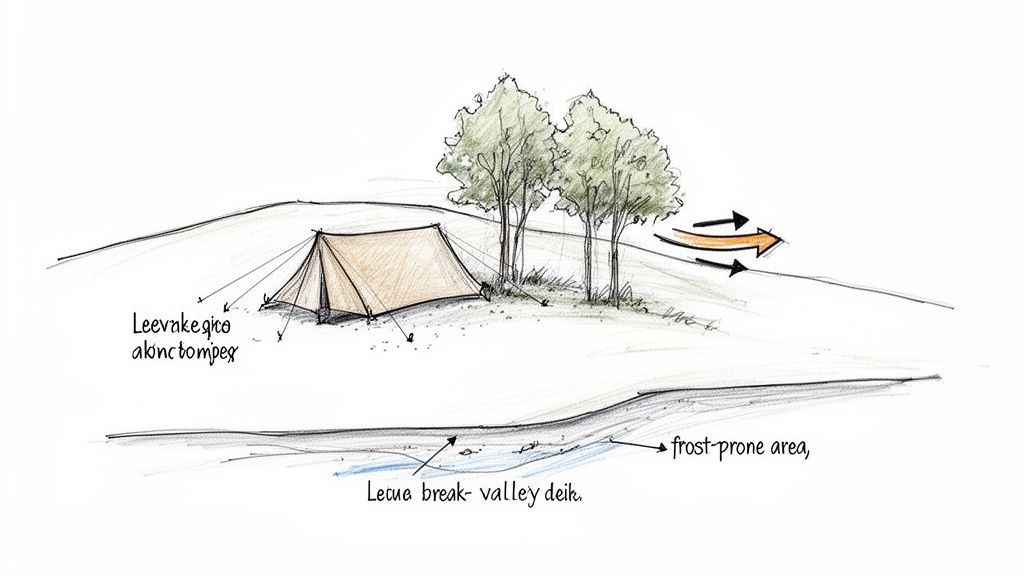
After you’ve dialed in your layers and built a solid sleep system, the last piece of the warmth puzzle is learning to see the landscape as your ally. Where you pitch your tent can make just as much difference as the gear you packed. It's a quiet skill, this art of reading the land, but it pays off with a noticeably warmer and more peaceful night's sleep.
Choosing a good campsite isn't just about finding a flat spot; it’s about finding a sheltered one. By thinking like the wind and understanding how cold air moves, you can find small pockets of protection that make a world of difference.
Working with the Wind
Wind is a thief. It relentlessly steals warmth from your body and your shelter through a process called convective heat loss, and a constant breeze can cut through even the best gear. Your goal is to find a place where the landscape itself can offer a shield.
Before you start unpacking, just stop and observe for a minute. Which way is the wind blowing? Look for natural windbreaks that can stand between you and that breeze.
- A stand of trees or a thicket of bushes can dramatically slow the wind, creating a calm, warm microclimate on their downwind side.
- Large boulders or a small hill can serve the same purpose, offering a solid barrier against powerful gusts.
Positioning your tent thoughtfully behind these natural features is a simple act of observation that’s fundamental to staying warm.
Understanding How Cold Air Moves
Cold air is denser and heavier than warm air, which means it behaves a lot like water. At night, it flows downhill and settles in the lowest possible places. This is why valley floors, open meadows, and the bottom of ravines almost always feel like the coldest spots around.
These low-lying areas are often called frost pockets for a good reason. They collect frigid air and can easily be several degrees colder than the slopes just a short distance away.
It’s almost always wiser to camp slightly up on a slope or a gentle rise rather than right at the bottom. This allows the coldest air to drain away below you, leaving you in a relatively warmer zone for the night.
It’s a subtle shift, but moving your tent just 50 feet up from the bottom of a meadow can mean the difference between waking up to frost and waking up comfortable.
Setting Up Your Shelter for Success
Once you’ve found your protected spot, a few final setup details can lock in your warm refuge. The way you orient and pitch your tent can either help or hinder your efforts.
First, think about your tent’s door. Whenever you can, face the door away from the wind. This simple move prevents gusts from blowing straight inside every time you get in or out, keeping that precious warm air from escaping.
Next, take the time to stake out your tent properly, using all the guylines. A taut pitch does more than just keep the tent stable; it ensures there's a good gap between the inner tent and the outer rainfly. That gap is crucial for airflow, which helps manage condensation—the moisture from your breath that can make the inside of your tent damp and chilly.
More people are discovering the outdoors than ever before, with some projections showing the global camping market growing substantially in the coming years. You can learn more about these camping and caravanning market trends here. By mastering these simple skills, you're not just staying warm; you're building the confidence to enjoy the outdoors in any season.
Fueling Your Body for Warmth
All the layers, pads, and shelters in the world are designed to do one thing: trap the heat your body is already making. The real engine of warmth comes from within. Think of your body as a small furnace—to keep it burning through a cold night, you have to give it the right fuel.
Food is that fuel. The simple act of digestion, a process called thermogenesis, literally generates heat. When temperatures drop, your body naturally burns more calories just to stay warm, so eating well isn't just about hunger. It's a foundational part of staying comfortable.
Eating for Inner Warmth
There’s a reason you crave rich, hearty foods on a cold day. Your body knows what it needs. To keep your internal furnace humming along, focus on meals packed with fats, proteins, and complex carbohydrates.
- Fats: These are your slow-burn logs for the fire. As the most calorie-dense fuel source, things like nuts, cheese, olive oil, and avocados provide a slow, steady release of energy that lasts for hours.
- Proteins: Besides helping your muscles recover, proteins take a while to digest, which means your body keeps producing heat longer. Camp-friendly options like jerky, beans, and lentils are perfect.
- Complex Carbohydrates: Forget the quick burn of a candy bar. Complex carbs found in oatmeal, whole-grain pasta, and quinoa break down slowly, giving you sustained energy instead of a spike and crash.
A hot, satisfying meal right before you turn in for the night can make a huge difference in your sleep quality. Something as simple as a one-pot stew with lentils or a rich pasta dish does more than just fill you up—it loads your furnace for the night ahead.
The Quiet Importance of Hydration
It's second nature to drink plenty of water on a hot summer hike, but it’s just as critical in the cold, even when you don't feel thirsty. Your body needs water for everything, including metabolizing food and circulating warm blood.
Dehydration is subtle in cold weather. You might not be sweating much, but you lose a surprising amount of water just by breathing. That little puff of steam you see when you exhale? That’s water vapor leaving your body. Even mild dehydration makes your blood thicker, so your heart has to work harder to pump it around, leaving you feeling colder faster.
Staying hydrated lets your body work efficiently, and that includes generating and circulating warmth. Sipping on warm drinks throughout the day is an easy—and enjoyable—way to keep up.
Warm Drinks for Comfort and Core Heat
There’s nothing quite like wrapping cold hands around a warm mug. It’s more than just a feeling; hot drinks actively help raise your core body temperature and keep you hydrated at the same time.
- Herbal Tea: A caffeine-free tea like peppermint or chamomile is a perfect way to wind down before bed.
- Hot Chocolate or Cider: These are classics for a reason. They deliver warmth, comfort, and a welcome dose of calories for a quick energy boost.
- Broth or Soup: A simple cup of hot broth can feel incredibly restorative. It gives you warmth, hydration, and a few electrolytes all at once.
Making a warm drink part of your evening routine is a small ritual that pays off big. It’s a chance to slow down, get comfortable, and give your body what it needs before settling in for a quiet night under the stars.
Simple Habits for a Warmer Night
Sometimes the difference between a restless, cold night and a deeply restorative one comes down to a few mindful habits right before you zip up for the night. Beyond the gear, these little rituals are about preparing your body and your space for a warm, comfortable sleep under the stars.
Think of them as quiet acts of care that turn a chilly evening into a cozy refuge.
One of the most common mistakes campers make is climbing into their sleeping bag feeling cold and expecting it to magically warm them up. Your sleeping bag is an insulator, not a furnace—it’s designed to trap the warmth you bring into it. If you get in cold, you’re just insulating the cold.
Prime Your Inner Furnace
Before you settle in for the night, get your blood moving. This doesn’t mean a full workout that leaves you sweaty, but just enough gentle movement to generate a bit of body heat.
- Light Stretches: A few minutes of slow, mindful stretching can warm up your muscles and ease any stiffness from the day.
- Jumping Jacks: Even just 20 or 30 jumping jacks or a brisk walk around your campsite is enough to raise your core temperature.
This quick burst of activity pre-warms your body, giving your sleeping bag the heat it needs to capture and hold onto all night. It’s a simple, proactive step that pays off in hours of comfort.
Another crucial habit is to never wait until you’re shivering to add a layer. The moment you feel the slightest chill while sitting around the fire or reading in your tent, put on that fleece or beanie. It takes far more energy for your body to fight its way back to warmth than it does to simply maintain it.
The goal is to anticipate your body's needs. By layering up before you feel properly cold, you stay ahead of the curve and preserve your energy and comfort with almost no effort. This small shift in mindset is one of the most powerful tools you have.
Finally, make sure everything you take into your sleeping bag is bone dry. Damp socks or a slightly wet base layer will actively pull heat from your body all night long. Taking a moment to change into a dedicated, dry set of sleep clothes is one of the most important steps for a warm night.
These small habits, practiced with intention, are what truly transform a cold night into a beautiful outdoor experience.
A Few Common Questions About Staying Warm
Once you've got the basics down, a few practical questions almost always pop up. It's one thing to know the theory, but another to put it into practice on a cold night.
Let's run through a few of the most common questions we get—the kind of stuff that can make or break your comfort out there.
Should I Use Two Sleeping Pads?
Yes, absolutely. Stacking two pads is one of the most effective ways to stop the ground from stealing your warmth. It’s a classic method for a reason.
The best combination is usually a closed-cell foam pad laid directly on the tent floor, with your comfier insulated air pad on top. The foam pad acts as a durable, puncture-proof barrier, while the inflatable pad provides the cushioning and the bulk of the insulation. You get the best of both worlds and a significant boost in your system's combined R-value.
What's the Biggest Mistake People Make?
Hands down, the most common mistake is going to bed wearing damp clothes or simply too many layers. It feels like the right thing to do—bundle up—but it often backfires.
Piling on too many clothes can actually compress your sleeping bag’s loft, which is what traps warm air. When that loft is squished, the bag can't do its job properly. Even worse, if your clothes are even slightly damp from the day's sweat, they will actively pull heat from your body all night long. It’s almost always better to change into a single, completely dry base layer before you get in your bag.
How Do I Stop Condensation Inside My Tent?
That icy drip on your face in the morning? That’s condensation, and it comes from your breath and any wet gear you brought inside. The only way to address it is with airflow, even when it’s freezing out.
You have to ventilate. Crack a vent near the top of your tent or unzip a small section of your door. That little bit of airflow lets all that moist air escape. It also helps to keep wet gear, like boots or a rain jacket, in your vestibule instead of inside with you.
At Fort Robin, we believe the best adventures are the ones where you feel comfortable, capable, and warm. We're here to help you find thoughtful gear for your next trip under the stars. You are welcome to explore our collection at https://fortrobin.com.

